Vitamin D has a reputation as a cure-all. It’s credited with preventing colds, cancer, heart disease, depression, hair loss and tiredness, and high-dose supplements are sold on the strength of that reputation. Over the past decade, large randomised trials have tested most of these claims directly. Taken together, they tell a fairly clear story. Correcting a real deficiency matters, and for some groups a modest daily dose is sensible. But for people whose levels are already adequate, extra vitamin D does very little. This guide sets out what the trials found, how much you actually need, and where this site’s other vitamin D articles fit.
This is general information drawn from published research and official guidance. It is not medical advice. If you have kidney disease, a calcium or parathyroid disorder, a condition that affects absorption (such as coeliac disease, inflammatory bowel disease or a past gastric bypass), are pregnant, or take regular medication, ask your doctor before taking vitamin D supplements.
In this article:
- What Vitamin D Does
- How Common Is Deficiency?
- Symptoms of Real Deficiency
- Sunlight and the Winter Gap
- Food Sources
- How Much Do You Need?
- What the Big Trials Found
- Colds and Respiratory Infections
- Should You Get Tested?
- D3 or D2?
- Can You Take Too Much?
- Frequently Asked Questions
- The Bottom Line
What Vitamin D Does
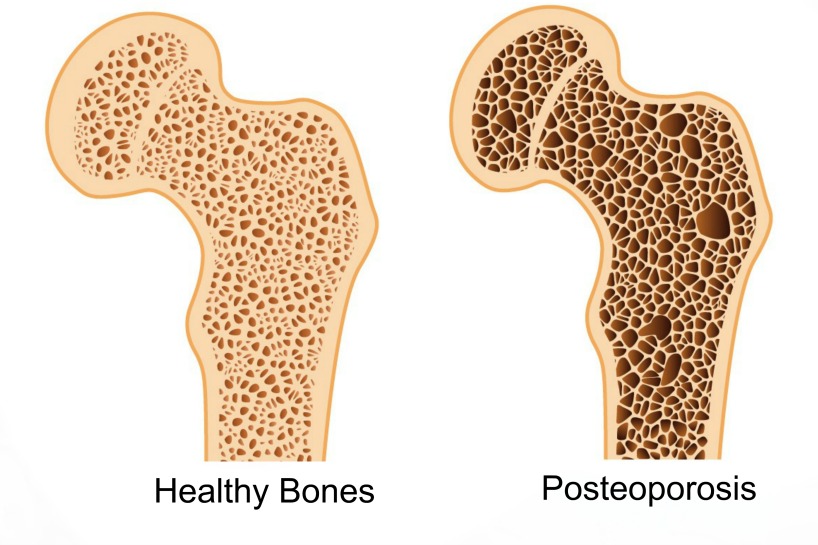
Vitamin D’s best-established job is helping the body absorb calcium and phosphate from food, which bones and muscles need. Without enough of it, bones can’t mineralise properly. Severe, long-lasting deficiency causes rickets in children (soft, weak bones that can bend, giving bowed legs) and osteomalacia in adults, which causes bone pain and muscle weakness.
Unlike most vitamins, food is not the main source. Most people make the bulk of their vitamin D in their skin when it is exposed to ultraviolet B (UVB) light from the sun. That is why where you live, the time of year and how much skin you expose all matter so much.
When doctors measure vitamin D, they test a blood marker called 25-hydroxyvitamin D, or 25(OH)D. Results are given either in ng/mL (common in the US and India) or nmol/L (common in the UK and Europe). 20 ng/mL is the same as 50 nmol/L.
How Common Is Deficiency?
It depends heavily on where the line is drawn. In India, a review of studies in apparently healthy people reported deficiency in roughly 70% to 90% of people across all age groups, despite the country’s abundant sunshine. A 2018 review in the Journal of Family Medicine and Primary Care pointed to increasingly indoor, urban lifestyles as a major reason, and noted that air pollution can interfere with vitamin D production in the skin.
That figure is not settled, though. A 2025 systematic review argued that applying cut-offs developed in Western populations has inflated the apparent burden in India, and that the country needs population-specific reference ranges. The disagreement matters because a “deficient” label on a lab report is often what prompts people to start high-dose supplements.
The Endocrine Society’s 2024 guideline adds a further complication. Its expert panel concluded that the evidence was not strong enough to set any specific blood-level threshold for adequacy or disease prevention. In other words, experts agree that very low levels are harmful, but there is no agreed “optimal” number.
Symptoms of Real Deficiency
Many people with low levels have no symptoms at all. When symptoms do appear, they are vague. Patient.info, a UK clinical information site, lists general tiredness and vague aches as the most common complaints. More severe deficiency can cause:
- Bone pain, often in the lower back, hips, pelvis, thighs and feet
- Muscle weakness, such as difficulty climbing stairs or getting up from a low chair
- In children, leg bone pain, muscle weakness and bowed legs (rickets)
Because tiredness and aches have many causes, they can’t confirm deficiency on their own. If you are tired all the time, it’s worth working through the common causes systematically rather than assuming it’s vitamin D. Our guide to increasing your energy levels naturally covers the main ones, and the blood tests to ask for when you’re tired all the time explains which tests are useful.
For a closer look at which symptoms really point to low vitamin D and which popular claims don’t hold up, see our breakdown of vitamin D deficiency symptoms: which signs are real and which are myths.
Hair loss is another common worry. Low vitamin D has been linked with some types of hair loss, but the evidence that supplements regrow hair is much weaker. We cover this in detail in vitamin D deficiency and hair fall, and the wider picture in our complete guide to hair growth and hair loss.
Sunlight and the Winter Gap
Your skin can only make vitamin D when the sun is high enough in the sky for UVB to get through the atmosphere. In winter, at higher latitudes, it isn’t.
A classic 1988 study by Webb, Kline and Holick in the Journal of Clinical Endocrinology & Metabolism exposed human skin samples to sunlight on cloudless days. In Boston (42°N), no vitamin D precursor was produced at all from November through February. In Edmonton, Canada (52°N), the gap ran from October through March. You can stand outside all day in a Boston January and make essentially no vitamin D.
This is why UK government advice, repeated by the NHS, is that everyone should consider a daily vitamin D supplement during autumn and winter. In the UK, the sun is too low from roughly October to early March. The NHS also notes that people with darker skin may not make enough vitamin D from sunlight even in summer, and that people who rarely go outdoors, such as those who are housebound or living in care homes, should take a supplement all year round.
Sunlight also carries risks. If you’re weighing sun exposure against skin ageing and skin cancer, see sun protection and photoaging.
Food Sources
Few foods contain much vitamin D naturally, which is why diet alone rarely covers the gap in winter. Figures from US dietary guidelines tables give a sense of scale:
- Salmon: roughly 380 to 570 IU per 3-ounce (85 g) serving, depending on the type
- Sardines: around 165 to 175 IU per 3 ounces
- Fortified milk: about 120 IU per cup (this varies by country and brand, and much milk is not fortified at all)
- Egg: about 44 IU per large egg
- Canned light tuna: around 40 IU per 3 ounces
Against a recommended intake of 600 IU a day, you can see why someone who doesn’t eat oily fish regularly will struggle to get enough from food.
How Much Do You Need?
Official intake recommendations are fairly modest. In 2011, the US Institute of Medicine (IOM) set the recommended dietary allowance (RDA) at:
- 600 IU (15 micrograms) a day for people aged 1 to 70
- 800 IU (20 micrograms) a day for people aged 71 and older
These amounts assume minimal sun exposure. The UK sets a lower figure: the NHS says 10 micrograms (400 IU) a day is enough for most people who take a supplement. One microgram equals 40 IU, which is useful to know because labels use both units.
The IOM set the tolerable upper intake level for adults at 4,000 IU (100 micrograms) a day. The NHS uses the same limit and advises adults not to take more than this, because it could be harmful. The upper limit is a safety ceiling, not a target.
The Endocrine Society’s 2024 guideline concluded that healthy adults under 75 are unlikely to benefit from taking more than the IOM’s recommended intake. It did suggest that some groups might benefit from supplementing without testing first: children and teenagers aged 1 to 18, pregnant people, adults with prediabetes, and adults aged 75 and over. If you fall into one of these groups, the dose is worth discussing with your doctor.
What the Big Trials Found
For years, the case for vitamin D rested on observational studies showing that people with low levels had more cancer, heart disease and fractures. But low vitamin D is also a marker of poor health: people who are ill, overweight or inactive tend to spend less time outdoors. Only randomised trials can show whether giving vitamin D actually changes the outcome. Several very large ones have now been completed.
Cancer and heart disease: VITAL
The VITAL trial (Manson and colleagues, New England Journal of Medicine, 2019) randomly assigned 25,871 US adults to 2,000 IU of vitamin D3 a day or a placebo. Over about five years, vitamin D did not lower the rate of invasive cancer. It didn’t lower major cardiovascular events either: 396 people in the vitamin D group and 409 in the placebo group had a heart attack, stroke or cardiovascular death, a difference that was not significant. There was a possible signal for fewer cancer deaths, which later analyses have explored, but no reduction in cancer cases.
Bones and fractures
Preventing fractures is the most intuitive reason to take vitamin D, so this result surprised many people. In a VITAL sub-study (LeBoff and colleagues, NEJM, 2022), 2,000 IU a day for a median of 5.3 years did not reduce total, non-vertebral or hip fractures compared with placebo. The result was the same regardless of people’s starting vitamin D level.
A large meta-analysis published in 2018 (Bolland, Grey and Avenell, Lancet Diabetes & Endocrinology) pooled 81 randomised trials with 53,537 participants. It concluded that vitamin D supplementation does not prevent fractures or falls and has no clinically meaningful effect on bone mineral density.
An important caveat applies to both: most participants were not deficient to begin with. These trials show that topping up adequate levels doesn’t help bones. They don’t show that treating genuine deficiency is pointless, and rickets and osteomalacia are real diseases caused by a lack of vitamin D.
Mortality: the D-Health trial
The Australian D-Health trial (Neale and colleagues, Lancet Diabetes & Endocrinology, 2022) gave 21,315 adults aged 60 and over either 60,000 IU of vitamin D3 once a month or a placebo. Over a median of 5.7 years, there were 562 deaths in the vitamin D group and 538 in the placebo group. There was no reduction in deaths from any cause. Most participants were not deficient at the start, and the authors suggested that monthly high-dose vitamin D may not be appropriate for people whose levels are already adequate.
Depression
The VITAL-DEP study (Okereke and colleagues, JAMA, 2020) followed 18,353 adults aged 50 and over who did not have depression at the start. Taking 2,000 IU of vitamin D3 a day for a median of 5.3 years did not prevent depression or clinically relevant depressive symptoms: 609 cases in the vitamin D group versus 625 on placebo. The authors concluded the results don’t support using vitamin D to prevent depression in adults.
Colds and Respiratory Infections
This is the area where vitamin D has looked most promising, and the evidence has shifted over time. A 2021 meta-analysis by Jolliffe and colleagues in Lancet Diabetes & Endocrinology, covering 37 randomised trials, found that vitamin D slightly reduced the risk of acute respiratory infections (odds ratio 0.92). The authors described the reduction as small.
A 2025 update by the same research group added newer trials. Its main analysis of 40 trials and 61,589 participants found a similar small effect (odds ratio 0.94), but it was no longer statistically significant. Put simply, if vitamin D protects against colds and chest infections at all, the effect is modest. It’s not a reason to take high doses, and it’s not a substitute for the measures covered in our guide to staying healthy through winter.
Should You Get Tested?
Routine vitamin D testing has become popular, often as part of health check packages. The Endocrine Society’s 2024 guideline suggests against routine testing in all the populations it studied, including healthy adults, because trials have not shown that targeting a particular blood level improves health outcomes. Healthy adults under 75, it says, don’t need their levels tested.
Testing still makes sense when there is a specific medical reason. The guideline gives examples such as low blood calcium or conditions that interfere with absorption, including inflammatory bowel disease and gastric bypass surgery. Your doctor may also test if you have symptoms of bone disease, such as persistent bone pain or muscle weakness. If you are having blood tests for other reasons, our article on things you must know before a blood test covers practical preparation.
D3 or D2?
Supplements come in two forms: vitamin D3 (cholecalciferol, the same form your skin makes) and vitamin D2 (ergocalciferol). A 2012 meta-analysis of randomised trials (Tripkovic and colleagues, American Journal of Clinical Nutrition) found that D3 raised blood levels more effectively than D2 overall.
The detail matters. The advantage was clear when vitamin D was given in large, infrequent doses (bolus dosing), but when it was taken daily, the difference between the two forms was not statistically significant. If you take a small daily dose, either form is reasonable.
Can You Take Too Much?
Yes, although it almost always comes from supplements, not sunlight or food. Excess vitamin D raises calcium absorption and releases calcium from bone, which leads to high blood calcium (hypercalcaemia). According to the MSD Manual, symptoms include loss of appetite, nausea and vomiting, followed by excessive thirst and urination, weakness and, eventually, kidney damage. Calcium deposits can form in the kidneys and other tissues, and some of this damage may be permanent.
The same source notes that taking 50,000 IU a day for several months can cause toxicity in adults, and that in cases of toxicity, blood levels are usually above 150 ng/mL (375 nmol/L). That’s far above the doses discussed in this guide, but it isn’t impossible to reach by mistake. High-strength products of 50,000 or 60,000 IU are widely sold and are meant to be taken weekly or monthly under medical supervision. Taking them daily, or combining several products, is how people get into trouble. In VITAL, 2,000 IU a day for about five years did not cause excess hypercalcaemia compared with placebo.
If you’re considering other supplements as well, see our evidence review of anti-aging supplements.
Frequently Asked Questions
What are the symptoms of vitamin D deficiency?
Often there are none. When symptoms appear, the most common are tiredness and vague aches. Severe deficiency can cause bone pain (especially in the lower back, hips, pelvis and legs) and muscle weakness, such as difficulty climbing stairs. In children, it can cause rickets. Because these symptoms have many causes, only a blood test can confirm deficiency.
How much vitamin D should I take a day?
The US recommended intake is 600 IU (15 micrograms) a day for people aged 1 to 70 and 800 IU (20 micrograms) for people over 70. The NHS advises 10 micrograms (400 IU) a day in autumn and winter. Adults shouldn’t take more than 4,000 IU (100 micrograms) a day unless a doctor advises it.
Can I get enough vitamin D from the sun in winter?
Often not, depending on where you live. A 1988 study found that skin exposed to sunlight in Boston (42°N) produced no vitamin D from November to February. That’s why the NHS advises everyone in the UK to consider a supplement in autumn and winter. People closer to the equator can make vitamin D year-round, but indoor lifestyles, covered clothing and darker skin all reduce how much they produce.
Does vitamin D prevent colds?
If it does, the effect is small. A 2021 meta-analysis of 37 trials found a slight reduction in respiratory infections, but a 2025 update with more trials found a similar small effect that was no longer statistically significant.
Is vitamin D3 better than D2?
D3 raised blood levels more effectively in a 2012 meta-analysis, particularly when given in large, infrequent doses. With daily dosing, the difference wasn’t statistically significant, so either form is reasonable for a small daily supplement.
Do I need a vitamin D test?
Usually not if you’re a healthy adult under 75. The Endocrine Society’s 2024 guideline suggests against routine testing, because trials haven’t shown that aiming for a particular blood level improves health. Testing is worthwhile if you have symptoms of bone disease, low calcium, or a condition that affects absorption.
The Bottom Line
- Vitamin D is essential for bones and muscles, and severe deficiency causes rickets and osteomalacia.
- Most people make it in their skin from sunlight. In winter at higher latitudes, the skin makes little or none.
- Recommended intakes are modest: 600 IU a day up to age 70 and 800 IU after that (the NHS advises 400 IU in autumn and winter). The adult upper limit is 4,000 IU a day.
- In large trials, extra vitamin D in people who weren’t deficient did not prevent cancer, heart disease, fractures, depression or early death.
- Any protection against colds and respiratory infections is small at best.
- Healthy adults under 75 generally don’t need routine testing.
- High-dose products (50,000 to 60,000 IU) are meant for weekly or monthly use under medical guidance. Taking them daily can cause toxicity.
Each of these topics is covered in more depth in the linked articles, and more will be added to this series over the coming weeks.