Most people who exercise regularly are training in the worst possible zone and don’t know it. Not too easy, not hard enough — just that uncomfortable middle ground that feels productive but delivers surprisingly little. If your workouts leave you moderately breathless and vaguely tired, there’s a good chance you’ve been stuck here for years.
The fix is counterintuitive: slow down. A lot.
Zone 2 cardio — low-intensity, steady-state exercise where you can hold a conversation — is what endurance athletes and longevity researchers keep coming back to. And once you understand why it works, you won’t be able to unsee it.
What Zone 2 Actually Feels Like
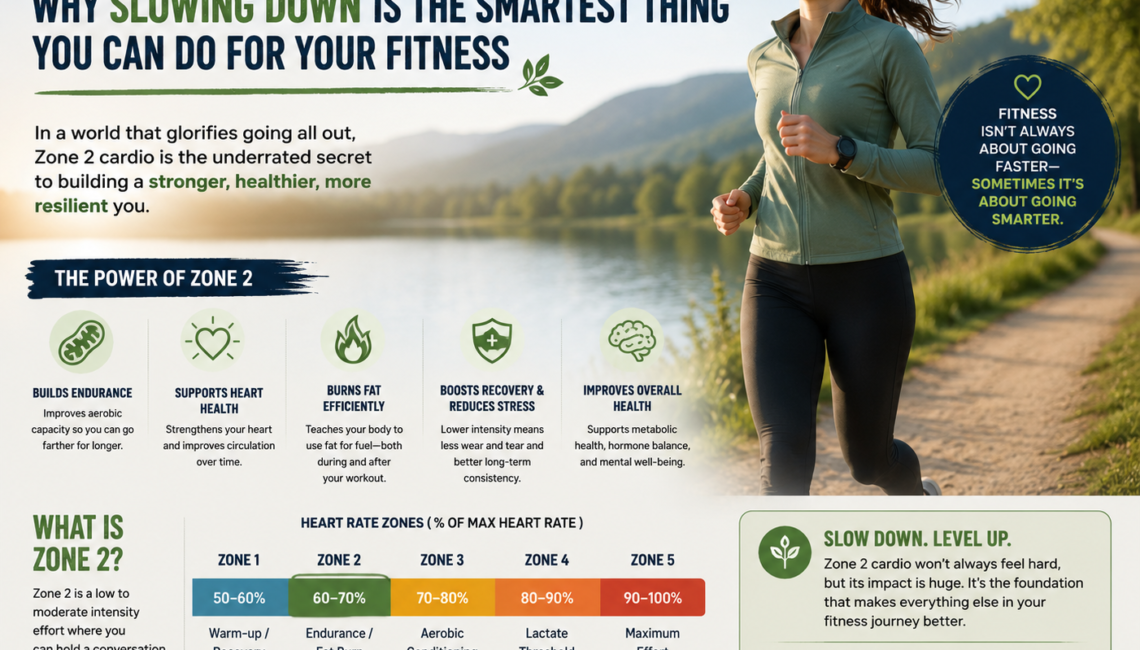
Zone 2 sits at roughly 60–70% of your maximum heart rate. A practical rule of thumb: 180 minus your age gives you your upper ceiling in beats per minute. For a 38-year-old, that’s around 142 bpm.
Here’s the honest description of how it feels: embarrassingly easy. If you’re used to pushing hard, Zone 2 will feel like you’re barely doing anything. You can breathe through your nose. You can have a phone call. You might feel slightly silly on the treadmill next to someone sprinting.
That discomfort — the social discomfort of going slow — is the only real barrier to Zone 2. Physiologically, your body is working hard in all the right ways.
Why It Works So Well for Fitness and Longevity
At this intensity, your body fuels itself primarily by burning fat and relies heavily on your mitochondria — the tiny structures inside muscle cells that produce energy. Zone 2 is the single most effective stimulus for building new mitochondria and making existing ones more efficient.
Why does that matter? Because mitochondrial density isn’t just a fitness metric. It affects how energetic you feel during the day, how quickly you recover from illness or stress, and how well your body manages blood sugar. People with more mitochondria are simply more metabolically healthy — and they tend to age better.
VO2 max — your body’s peak capacity to use oxygen — is one of the strongest predictors of how long you’ll live. Stronger than cholesterol. Stronger than blood pressure. Zone 2 builds the aerobic base that raises VO2 max steadily over months. You won’t feel it week to week, but six months of consistent Zone 2 work produces changes that show up in lab results.
And for anyone managing weight: training your body to burn fat at low intensities means fat oxidation becomes more efficient even at rest. That’s not a gimmick — it’s basic exercise physiology.
The “Gray Zone” Trap Most People Fall Into
Zone 3 — moderate intensity, slightly breathless, not quite conversational — is where most recreational exercisers live. It feels like real exercise. And it does produce some benefits. But it’s too hard to do frequently without accumulating fatigue, and not hard enough to build the speed and power that come from true high-intensity work.
Elite endurance athletes spend roughly 80% of their training time in Zone 2 and only 20% at high intensity. Most regular gym-goers flip this ratio — or just camp in Zone 3 the whole time.
The result is that they’re always a little tired, never fully recovering, and making slower progress than they expect for the effort they’re putting in.
How to Actually Start Doing This
You don’t need a heart rate monitor, though one helps. Start with the talk test: if you can speak in full, comfortable sentences without pausing to catch your breath, you’re in Zone 2. The moment you start clipping sentences short, you’ve drifted above it.
Pick whatever movement you enjoy — walking, cycling, swimming, rowing. The activity doesn’t matter. The intensity does.
Aim for three sessions a week, 40–60 minutes each. If that sounds like a lot of time for “easy” exercise, consider this: you can do Zone 2 while listening to a podcast, taking a call, or watching something. It doesn’t demand the kind of focused attention that hard workouts do.
One actionable tip: If you already run or cycle, try doing your next session entirely by feel — go slow enough that you could sing along to music if you wanted to. You’ll almost certainly need to slow down from your usual pace. Do it anyway for the full session and notice how you feel the next day.
Give It Eight Weeks Before You Judge It
Zone 2 adaptations are slow by design. The mitochondrial changes, the fat-burning improvements, the VO2 max gains — none of them show up after two weeks. This is why people quit: it doesn’t feel like it’s working.
But eight weeks in, something shifts. Your easy pace gets faster at the same heart rate. Your resting heart rate drops a few beats. You recover from hard efforts quicker. These are real, measurable changes — they just don’t happen on the timeline that modern fitness culture promises.
The athletes who stick with Zone 2 long enough always say the same thing: they wish they’d started sooner. You don’t have to train harder. You just have to train smarter — and sometimes that means slowing down on purpose.