Green tea has a reputation as one of the healthiest things you can drink, credited with burning fat, protecting the heart and even preventing cancer. Some of that reputation is earned. A lot of it comes from supplement marketing and lab studies that don’t translate to a cup of tea. So is green tea good for you, and is it really better than the black tea most people drink?
This article is part of our evidence-based guide to healthy drinks. Below we look at what large studies and clinical trials show for green, black and herbal tea, where the claims run ahead of the evidence, and the few situations where tea can cause problems. It is general information, not medical advice.
Green, Black and Herbal Tea: What’s the Difference?
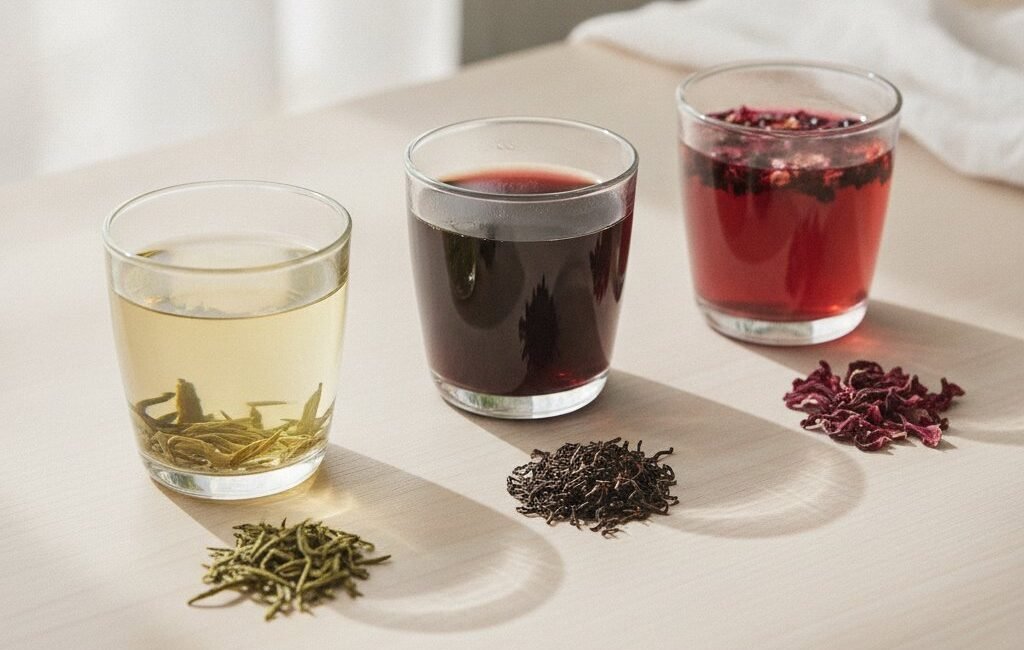
Green, black, white and oolong tea all come from the same plant, Camellia sinensis. The difference is processing:
- Green tea is heated soon after picking, which stops the leaves from oxidising. It keeps more of a group of compounds called catechins, the best known of which is EGCG (epigallocatechin gallate).
- Black tea is left to oxidise fully. Many catechins are converted into other compounds (theaflavins and thearubigins), which give it its darker colour and stronger taste.
- Oolong sits in between.
Herbal teas, such as hibiscus, chamomile or blue tea, are infusions of other plants. They contain no caffeine, and their effects depend entirely on the plant used.
Because green and black tea come from the same leaf, much of the research below applies to both.
Tea and a Longer Life: What the Big Studies Found
The strongest evidence for tea comes from large observational studies that followed tens or hundreds of thousands of people for many years.
Green tea in Japan
In 2006, Shinichi Kuriyama and colleagues published results from the Ohsaki cohort in JAMA. The study followed 40,530 Japanese adults aged 40 to 79 who had no history of stroke, heart disease or cancer at the start. People who drank more green tea had lower death rates from all causes and from cardiovascular disease. The link was strongest in women: those who drank five or more cups a day had about a 31% lower risk of dying from cardiovascular disease than women who drank less than one cup. Green tea was not linked to lower cancer deaths.
Black tea in the UK
In 2022, Maki Inoue-Choi and colleagues at the US National Cancer Institute published an analysis of nearly 500,000 UK Biobank participants in the Annals of Internal Medicine. Most drank black tea. Over a median of 11 years, people who drank two or more cups a day had a 9% to 13% lower risk of death from any cause than non-tea drinkers, with lower death rates from heart disease and stroke. The results were similar whether or not people also drank coffee, and regardless of genes affecting how fast they process caffeine.
What these studies can and can’t tell you
Both studies are observational. Tea drinkers may differ from non-drinkers in diet, income, smoking and other habits that researchers can’t fully adjust for, and the benefits are modest. Tea looks like a healthy part of a diet rather than a medicine.
Tea, Cholesterol and Blood Pressure: What the Trials Show
Randomised trials can test cause and effect, but tea trials tend to be small and short.
A 2013 Cochrane review by Louise Hartley and colleagues pooled 11 randomised trials with 821 participants, seven testing green tea and four testing black tea, each lasting at least three months. Tea led to modest reductions in LDL (“bad”) cholesterol and small reductions in blood pressure. But none of the trials measured actual heart attacks or strokes. The authors also warned that the trials were few and several were at risk of bias, so the results should be treated with caution.
Tea may nudge some heart risk factors in the right direction, but it doesn’t replace not smoking, regular exercise and managing blood pressure. Our heart health guide covers those in detail.
Does Green Tea Help You Lose Weight?
This is the most heavily marketed claim, and the evidence is weak.
A 2012 Cochrane review by Tamara Jurgens and colleagues looked at randomised trials of green tea preparations in overweight and obese adults. In six trials done outside Japan, the average difference in weight loss compared with control groups was just 0.04 kg, which is effectively zero. Trials in Japan showed differences of 0.2 to 3.5 kg, but they couldn’t be pooled and most weren’t statistically significant. Green tea also didn’t help people keep weight off after losing it. The reviewers concluded that any weight loss was small and unlikely to be clinically important.
If you’re choosing between green tea and green coffee for weight loss, see our green tea vs green coffee comparison. The honest answer for both is that neither is a meaningful weight-loss tool by itself. Where tea does help is as a replacement: an unsweetened cup instead of a soft drink removes a real source of sugar. Our article on sugary drinks and type 2 diabetes explains why that swap matters.
Herbal Tea: Hibiscus Has the Best Evidence
Most herbal teas have little high-quality human research behind them, but hibiscus is an exception.
In a 2010 randomised, double-blind trial published in the Journal of Nutrition, Diane McKay and colleagues at Tufts University gave 65 adults with prehypertension or mild hypertension either three 240 ml cups of hibiscus tea a day or a placebo drink, for six weeks. Systolic blood pressure fell by an average of 7.2 mmHg with hibiscus, compared with 1.3 mmHg with placebo. People with higher starting blood pressure saw larger drops.
It was a small, short trial, and hibiscus isn’t a substitute for medication. If you take blood pressure medication, check with your doctor before drinking it regularly. Claims that other herbal teas detox the body or cure specific conditions are not backed by strong evidence.
When Tea Can Cause Problems
For most people, a few cups of tea a day is safe. A few situations deserve care, and we cover more of them in our article on the side effects of tea.
Green tea extract supplements and the liver
Brewed green tea and concentrated green tea extract are not the same thing. In 2018, the European Food Safety Authority (EFSA) reviewed the safety of green tea catechins. It found evidence from clinical trials of liver effects at doses of 800 mg of EGCG a day or more, taken as a supplement, and described many reported cases of liver injury as unpredictable individual reactions. Traditionally brewed green tea was considered generally safe at normal intakes. If you take a green tea extract, especially in a “fat burner” product, check the dose and stop if you notice yellowing skin, dark urine or abdominal pain.
Very hot tea
In 2016, the International Agency for Research on Cancer classified drinking very hot beverages (above 65°C) as “probably carcinogenic to humans” (Group 2A) because of a link to oesophageal cancer. It’s the temperature, not the tea, that seems to be the problem. A 2019 study in the International Journal of Cancer, led by Farhad Islami, followed about 50,000 people in Golestan, Iran, and measured tea temperature directly. Drinking 700 ml or more a day at 60°C or hotter was linked to about a 90% higher risk of oesophageal squamous cell carcinoma. Letting your tea cool for a few minutes is an easy precaution.
Iron absorption
Compounds in tea bind to non-haem iron, the type found in plant foods and iron supplements, and reduce how much you absorb. A small 2017 trial in UK women found that waiting an hour after a meal before drinking tea reduced this effect. If you have low iron, or are taking iron tablets, drink tea between meals rather than with them. Our article on low ferritin and fatigue explains why iron stores matter even without anaemia.
Caffeine
A cup of green tea usually contains somewhere around 30 to 50 mg of caffeine, depending on the leaf and how long it’s brewed, and black tea typically contains a bit more. Both usually have less than a cup of coffee, but several cups late in the day can still affect sleep. See our guide to caffeine timing and energy for when to stop.
Sugar and milk
Most of the research is on plain tea, and sweetened bottled teas can contain a lot of sugar. Spiced milk tea like masala chai can be part of a healthy diet if you keep the sugar low.
So, Is Green Tea Good for You?
- Yes, as an everyday drink. Regular tea drinking, green or black, is linked to modestly lower death rates from heart disease and stroke in large studies.
- Black tea seems to be about as good. If you prefer black tea, there is no strong reason to switch.
- It’s not a weight-loss drink. Trials show little or no effect on weight, except where it replaces sugary drinks.
- Brewed tea is not the same as an extract. High-dose green tea supplements carry a small risk of liver injury that drinking tea doesn’t.
- Drink it unsweetened, not scalding, and away from iron-rich meals if your iron is low.
Along with water, unsweetened tea is one of the best everyday drinks you can choose. For how it compares with other drinks, including diet soda, see our complete guide to healthy drinks.
Frequently Asked Questions
Is green tea healthier than black tea?
Not clearly. Green tea keeps more catechins, but large studies link both green and black tea to lower death rates from heart disease. A UK study of nearly 500,000 people, most of whom drank black tea, found 9% to 13% lower all-cause mortality in people drinking two or more cups a day.
How many cups of green tea a day is safe?
For most healthy adults, several cups a day of brewed tea is considered safe. EFSA’s concern about liver effects applies to supplements providing 800 mg or more of EGCG a day, not normal tea drinking. Limit caffeine later in the day, and talk to your doctor if you’re pregnant or take regular medication.
Does green tea burn belly fat?
There’s no good evidence that it does. A Cochrane review of randomised trials found weight loss from green tea was small, mostly not statistically significant, and unlikely to be clinically important. Replacing sugary drinks with unsweetened tea is the more meaningful benefit.
Is it bad to drink tea with meals?
For most people, no. But tea reduces absorption of iron from plant foods and supplements. If you have low iron or anaemia, it’s better to drink tea at least an hour after meals.
This article is for general information and is not medical advice. If you have liver disease, low iron, high blood pressure, are pregnant or take regular medication, speak to a doctor or registered dietitian before making changes.
Sources
- Kuriyama S, et al. Green tea consumption and mortality due to cardiovascular disease, cancer, and all causes in Japan: the Ohsaki study. JAMA, 2006;296(10):1255–1265.
- Inoue-Choi M, et al. Tea consumption and all-cause and cause-specific mortality in the UK Biobank: a prospective cohort study. Annals of Internal Medicine, 2022;175(9):1201–1211.
- Hartley L, et al. Green and black tea for the primary prevention of cardiovascular disease. Cochrane Database of Systematic Reviews, 2013;(6):CD009934.
- Jurgens TM, et al. Green tea for weight loss and weight maintenance in overweight or obese adults. Cochrane Database of Systematic Reviews, 2012;(12):CD008650.
- McKay DL, Chen CO, Saltzman E, Blumberg JB. Hibiscus sabdariffa L. tea (tisane) lowers blood pressure in prehypertensive and mildly hypertensive adults. Journal of Nutrition, 2010;140(2):298–303.
- EFSA Panel on Food Additives and Nutrient Sources added to Food. Scientific opinion on the safety of green tea catechins. EFSA Journal, 2018;16(4):5239.
- International Agency for Research on Cancer. IARC Monographs Volume 116: Drinking coffee, mate, and very hot beverages, 2016.
- Islami F, et al. A prospective study of tea drinking temperature and risk of esophageal squamous cell carcinoma. International Journal of Cancer, 2020;146(1):18–25.