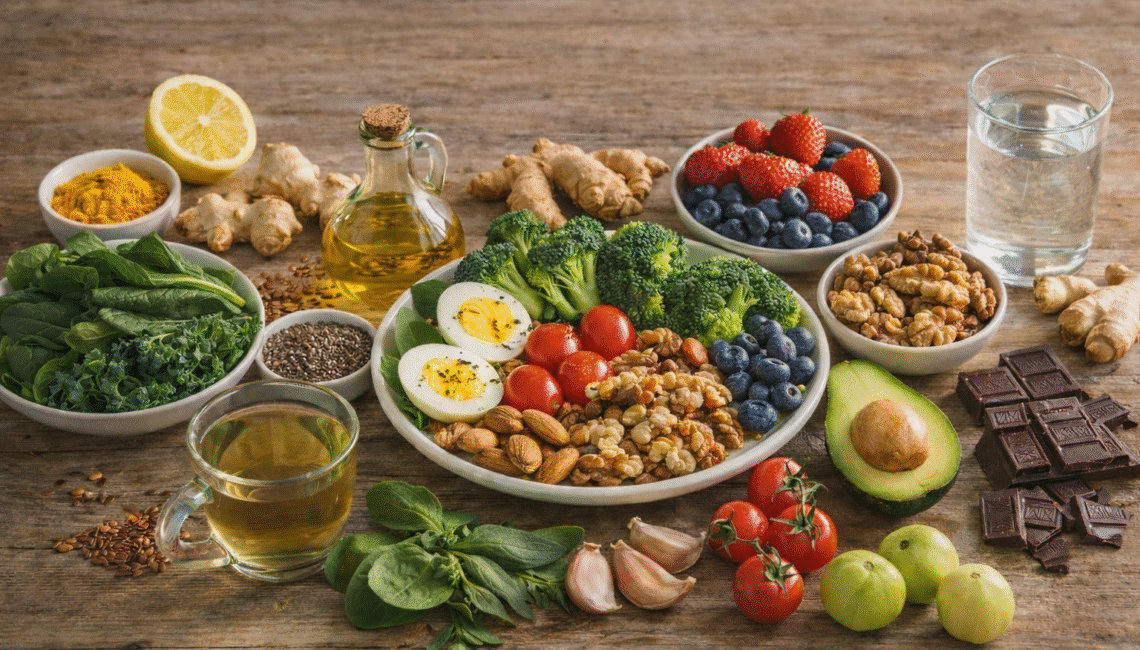
The word “superfood” gets thrown around so freely that it has lost most of its meaning. Every few months, a new berry or seed arrives from somewhere exotic, gets written about extensively, and disappears when the next one arrives.
This list is different. Every food on it has published research behind its anti-inflammatory effects. And most of them are not exotic imports — they are ingredients your grandmother probably had in her kitchen every day. The science has caught up to what traditional Indian cooking already knew by practice.
Understanding What Anti-Inflammatory Actually Means
A food described as anti-inflammatory does not put out fires. It modulates — it influences the molecular pathways that regulate inflammatory responses. The primary mechanisms include inhibiting NF-κB (the master inflammatory transcription factor), reducing pro-inflammatory cytokine production (IL-6, TNF-α, CRP), and providing antioxidants that reduce oxidative stress — a key driver of inflammatory signalling.
The effects are cumulative and long-term. No single meal changes your inflammatory status. A dietary pattern, maintained consistently, shifts inflammatory markers over weeks and months.
The 15 Foods
1. Haldi (Turmeric)
Curcumin in turmeric inhibits NF-κB directly and has been shown in multiple RCTs to reduce CRP and IL-6. Bioavailability is dramatically improved by black pepper and fat. Use in cooking daily, with a pinch of black pepper.
2. Adrak (Fresh Ginger)
Gingerols and shogaols inhibit COX-2 enzymes — the same pathway targeted by NSAIDs. More potent fresh than dried. A 2015 systematic review confirmed significant effects on pain and inflammatory markers in arthritis patients. Use fresh in tea, dal, and sabzi regularly.
3. Lehsun (Garlic)
Allicin — formed when garlic is crushed — has antimicrobial and anti-inflammatory properties. Reduces LDL oxidation and lowers blood pressure. Crush and rest for 10 minutes before cooking or adding to food to maximise allicin formation.
4. Fatty Fish (Mackerel, Sardines, Hilsa)
EPA and DHA — the omega-3 fatty acids in cold-water fish — are directly incorporated into cell membranes and serve as precursors to anti-inflammatory resolvins and protectins. Multiple meta-analyses confirm significant reductions in CRP and IL-6 with regular fish consumption. Bangda (mackerel) and sardines are affordable, high-DHA options widely available in Indian coastal cities.
5. Akhrot (Walnuts)
Among the plant foods with the highest omega-3 content (ALA), plus ellagic acid and polyphenols that reduce oxidative stress. A 2020 study in Journal of the American College of Cardiology found that daily walnut consumption reduced LDL and inflammatory markers. A handful (30g) daily is the evidence-based dose.
6. Palak (Spinach) and Dark Leafy Greens
Rich in vitamin K, which modulates inflammatory cytokine production. Also high in quercetin and kaempferol — flavonoids with NF-κB inhibiting properties. Magnesium (deficient in most Indians) is abundant in dark greens; magnesium deficiency is independently associated with elevated inflammatory markers.
7. Dal (Lentils and Legumes)
High in prebiotic fibre that feeds anti-inflammatory gut bacteria. Polyphenol-rich. Associated with reduced CRP in large observational studies. The staple of Indian cooking is also, not coincidentally, one of the most anti-inflammatory food categories in the research literature.
8. Amla (Indian Gooseberry)
One of the richest plant sources of Vitamin C in the world — up to 20 times more Vitamin C than oranges by weight. Vitamin C is a cofactor in collagen synthesis and a potent antioxidant that reduces oxidative inflammatory stress. Amla also contains tannins with demonstrated anti-inflammatory effects. Eaten fresh, as chutney, or as amla powder in water.
9. Dahi (Curd / Yoghurt)
Traditional Indian dahi contains Lactobacillus strains that support gut barrier integrity and reduce systemic inflammation via the gut-immune axis. A 2021 Stanford study found that fermented food consumption significantly reduced inflammatory markers over 10 weeks. Daily dahi is one of the most culturally embedded anti-inflammatory habits in Indian cuisine.
10. Tomatoes
Lycopene — the carotenoid responsible for tomatoes’ red colour — is a potent antioxidant associated with reduced risk of cardiovascular disease and cancer. Bioavailability of lycopene increases significantly when tomatoes are cooked with fat — which is exactly how most Indian cooking uses them (fried in ghee or oil as a masala base).
11. Green Tea
Epigallocatechin gallate (EGCG) — the primary polyphenol in green tea — has NF-κB inhibiting and antioxidant properties confirmed in multiple clinical trials. Two to three cups daily is the dose used in most research showing anti-inflammatory effects. Swap one daily chai for green tea for a measurable long-term benefit.
12. Kali Mirch (Black Pepper)
Piperine not only increases curcumin absorption — it has independent anti-inflammatory properties through COX-2 inhibition and NF-κB modulation. Used in Indian cooking across virtually every dish, it contributes modestly but consistently to anti-inflammatory patterns.
13. Beet (Beetroot)
Contains betalains — pigments with demonstrated anti-inflammatory and antioxidant properties — and dietary nitrates that improve vascular function and reduce arterial inflammation. A 2018 study in Nutrients found that beetroot juice reduced CRP and improved exercise recovery markers. Beet sabzi, salads, and juice are increasingly available and underutilised.
14. Flaxseed (Alsi)
The richest plant source of ALA omega-3 fatty acids. Also contains lignans with anti-inflammatory and phytoestrogenic properties. Ground flaxseed (not whole — must be ground for ALA to be absorbed) added to roti dough or smoothies is a practical way to increase omega-3 intake for vegetarians and vegans.
15. Coconut (Fresh and Coconut Oil)
Medium-chain triglycerides (MCTs) in coconut oil are rapidly metabolised for energy rather than stored, and have anti-inflammatory properties in several models. Fresh coconut in South Indian cooking, used in the context of a balanced diet, is not the inflammatory food it was labelled as during the anti-saturated-fat era. The evidence has shifted significantly on this.
The Pattern Matters More Than Individual Foods
The strongest evidence for anti-inflammatory diet effects comes from dietary patterns — not individual superfoods. The Mediterranean diet, the MIND diet, and traditional whole-food Indian diets all share the same foundation: abundant plant foods, quality fats, fermented foods, spices, minimal processed food.
Eating turmeric daily while consuming refined oil, sugar, and packaged snacks for the rest of your meals will not produce anti-inflammatory effects. The foods on this list work as part of a pattern, not as individual remedies.
Frequently Asked Questions
How long before anti-inflammatory foods change blood markers?
In intervention studies, consistent dietary pattern changes typically reduce CRP and IL-6 measurably within 6–12 weeks. The effect compounds over years.
Can I take supplements instead of eating these foods?
Some supplements (curcumin with piperine, omega-3 DHA/EPA, Vitamin D) have strong enough evidence at specific doses that they add value beyond food alone. But whole foods provide fibre, synergistic compounds, and phytonutrients that supplements do not replicate. Food first, supplements where specific deficiencies exist.
The Bottom Line
Most of these foods are already present in Indian kitchens. The anti-inflammatory diet is not an import from California wellness culture — it is largely a return to the whole-food, spice-rich, fermented-food, legume-heavy cooking that Indian grandmothers practised without needing a scientific paper to justify it. The research has simply given us the molecular explanation for what worked in practice for centuries.
This article is for informational purposes only. Consult a healthcare professional or registered dietitian for personalised dietary advice.