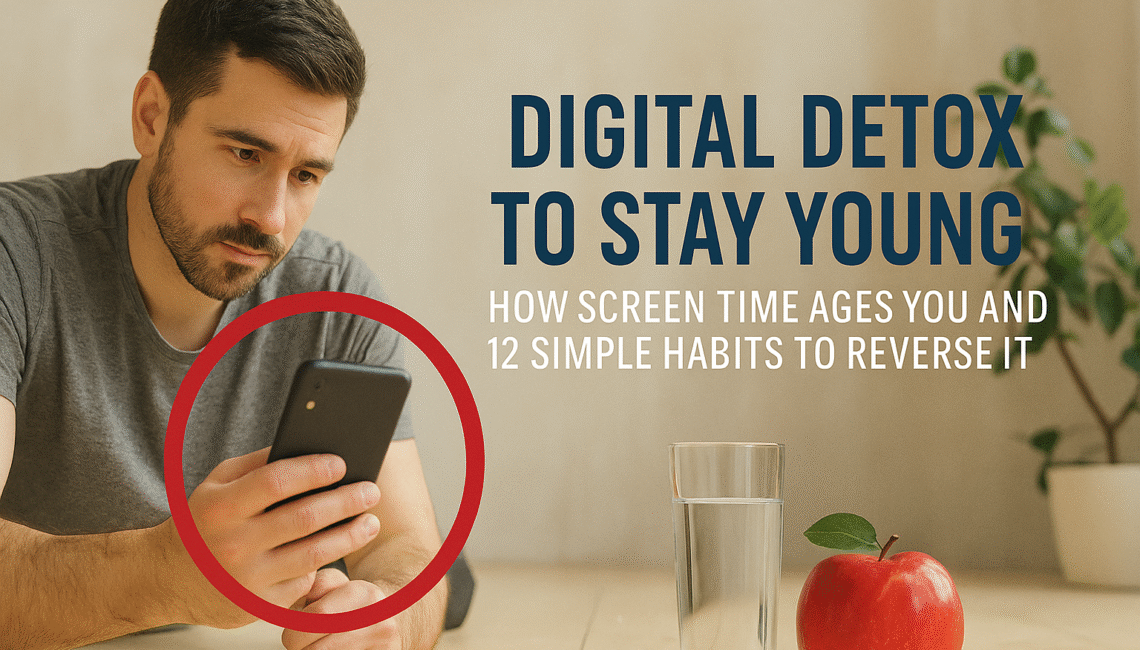
I tracked my screen time for the first time two years ago and was genuinely shocked. Six hours and forty minutes per day — across phone, laptop, and television. That is 45 hours a week. More time than a full-time job, spent looking at screens.
The number was shocking not because I felt addicted — I felt like I was working, staying informed, staying connected. That is the insidious quality of modern screen use. It rarely feels excessive in the moment. The consequences accumulate invisibly, in sleep architecture, cortisol levels, postural stress, and the chronic low-grade overstimulation that the nervous system was never designed to handle.
How Screens Accelerate Biological Ageing
The mechanisms are more specific than vague “it is bad for you” warnings suggest:
Sleep Architecture Disruption
Blue light from screens suppresses melatonin production by up to 85% in the hours before sleep, according to a 2014 study in the Proceedings of the National Academy of Sciences. The result is delayed sleep onset, reduced deep sleep, and reduced REM sleep. Chronic sleep disruption accelerates cellular ageing through reduced glymphatic brain cleaning, elevated inflammatory markers, and telomere shortening. The phone on the bedside table is one of the most effective ageing accelerators in the modern home.
Chronic Cortisol Elevation
The endless scroll of news, social media comparisons, and notifications creates a perpetual low-level stress response. Each notification triggers a cortisol spike — small but cumulative. Chronically elevated cortisol promotes visceral fat deposition, suppresses immune function, impairs memory consolidation, and accelerates telomere shortening. The nervous system cannot distinguish between a Twitter argument and a physical threat — it responds the same way biochemically.
Sedentary Behaviour
Screen time and sedentary behaviour are nearly synonymous for most people. Research consistently shows that prolonged sitting — regardless of whether you exercise for 30 minutes in the morning — has independent metabolic consequences including elevated triglycerides, reduced HDL cholesterol, and increased inflammatory markers. Six hours of sitting cannot be fully compensated by a 30-minute walk.
Eye Strain and Forward Head Posture
Extended screen use causes chronic ciliary muscle fatigue (contributing to myopia progression, particularly in children) and the “tech neck” posture — head forward, shoulders rounded — that creates chronic cervical muscle tension and impaired lymphatic drainage in the neck and jaw region. Each centimetre the head moves forward of the neutral position adds approximately 4.5 kg of load on the cervical spine.
12 Practical Digital Detox Habits
These are not about eliminating screens — that is neither realistic nor the goal. They are about creating intentional friction and boundaries that protect sleep, reduce cortisol, and give the nervous system genuine recovery time.
- No phone for the first 30 minutes after waking. Morning phone use sets a cortisol-reactive neurological tone for the entire day. Start with sunlight, water, and deliberate movement before engaging with any screen.
- Phone out of the bedroom entirely. Use a conventional alarm clock. The bedroom should be a no-screen zone. This single habit has more impact on sleep quality than most supplements marketed for sleep.
- 60-minute screen-free period before bed. Not 10 minutes — 60. Use this time for light reading (physical book), conversation, a brief walk, or a breathing practice.
- Batch notifications — check messages three times per day, not continuously. Each notification interrupts deep work and triggers a cortisol response. Turning off non-essential notifications reduces this stimulus load substantially.
- One screen-free meal per day. Eating while watching a screen disrupts the cephalic phase of digestion and leads to consistently larger meal sizes. Meals eaten without screens are associated with better satiety, better digestion, and more social connection.
- 2-minute movement break every hour of screen work. Set a timer. Stand, walk briefly, look at a distant object. The metabolic and postural benefits are independent of longer exercise.
- The 20-20-20 eye rule. Every 20 minutes, look at something 20 feet away for 20 seconds. Reduces ciliary muscle fatigue and the eye strain headaches associated with prolonged close-screen work.
- Remove social media apps from your phone. Access social platforms from a laptop browser only. The friction of opening a laptop rather than tapping a phone app dramatically reduces mindless scrolling. This is arguably the highest-leverage single change for most people.
- One full offline day per week. This sounds extreme until you try it. A Sunday with no social media, minimal phone use, and deliberate outdoor or social time produces a measurable shift in cortisol levels and subjective wellbeing by the following week.
- Use grey-scale mode on your phone. Colour is a primary engagement trigger in app design. Grey-scale mode makes the phone visually less compelling without reducing functionality. Available in iPhone Accessibility settings and Android Display settings.
- No screens during the first and last hour of your workday. Use these periods for planning, review, and mental transition. The quality of work in screen-free thinking time often exceeds the quantity of screen-filled hours.
- Track your screen time weekly. Awareness is the prerequisite of change. Screen Time (iOS) and Digital Wellbeing (Android) provide weekly reports. The data is usually more confronting than people expect — which is precisely why it is useful.
Frequently Asked Questions
Does blue light blocking glasses help?
The evidence is mixed. Blue light glasses reduce some degree of eye strain but the sleep-disruption effect of screens is only partially mediated by blue light — the cognitive stimulation and arousal from content also play major roles. Screen distance and brightness reduction are as important as spectrum filtering. Blue light glasses alone are not a substitute for screen-free time before bed.
Is it realistic to reduce screen time when my work requires screens?
The goal is not to reduce work-required screen use — it is to reduce the passive, habitual screen use that surrounds work. Most people find that their discretionary screen time (social media, news scrolling, streaming) accounts for 2–3 hours per day that can be partially reclaimed without affecting work output.
The Bottom Line
The six hours and forty minutes I tracked two years ago is now closer to four hours on weekdays. The change was not dramatic discipline — it was mostly structural: phone out of the bedroom, social apps deleted, notifications batched. The downstream effects on sleep quality, morning energy, and anxiety were noticeable within two weeks. Screens are not going away, and the goal is not asceticism. The goal is intentionality — because the default, unmanaged screen relationship is costing most people more than they realise, in years of sleep, cortisol, and quiet attention.
For any concerns about digital addiction or anxiety, please consult a qualified mental health professional.