My father turns 72 this year. He still cycles 15 kilometres most mornings, still reads without glasses, still has the handshake of someone decades younger. His friends from the same generation vary enormously — some look and function at least 10 years older than he does, others are largely similar. Same birth cohort. Dramatically different trajectories.
The science of biological ageing has advanced enough in the last decade that we now have a fairly good picture of what drives the gap. It’s not primarily genetics — twin studies consistently find that genetics accounts for only about 25-30% of longevity variation. The rest is lifestyle, environment, and the daily choices accumulated over decades.
Here are 10 evidence-based strategies for slowing biological ageing that go beyond the obvious and include some that genuinely surprised me when I first encountered the research.
1. Prioritise VO2 Max — Not Just “Exercise”
VO2 max is your maximum oxygen uptake during intense exercise — a measure of cardiovascular fitness that has emerged as one of the strongest single predictors of lifespan in multiple large studies. A 2018 study in JAMA Network Open followed 122,000 patients and found that low cardiorespiratory fitness was associated with mortality risk comparable to smoking — and that improving fitness from “low” to “moderate” was more beneficial than going from “moderate” to “elite.”
The surprise isn’t that exercise matters — it’s that the type matters specifically. Zone 2 cardio (conversational pace, sustained effort) builds your aerobic base and keeps your mitochondria (the energy factories in your cells) young and numerous. High-intensity intervals push your VO2 max higher. Strength training preserves muscle mass, which declines predictably with age without resistance training stimulus. A complete programme needs all three.
My father’s morning cycle? That’s mostly Zone 2. It’s not glamorous. It is highly effective.
2. Your Sleep Duration Matters Less Than Your Sleep Architecture
The advice to “get 7-8 hours” is correct but incomplete. What happens during sleep matters as much as how long it lasts. Deep slow-wave sleep (SWS) is when your brain runs its glymphatic waste clearance system — essentially a physiological car wash that removes the beta-amyloid and tau proteins associated with Alzheimer’s disease. REM sleep is when emotional processing and memory consolidation occur.
Deep sleep declines naturally with age. Alcohol — even a single drink in the evening — dramatically suppresses deep sleep. Eating close to bedtime raises core body temperature and suppresses deep sleep. Late-night screen use delays melatonin release and shifts the timing of sleep cycles.
The anti-ageing protocol for sleep: no alcohol within 3-4 hours of bedtime, no food within 2-3 hours, cool room temperature (18-19°C), dark and quiet environment. These changes often improve deep sleep quality more than sleeping longer does.
3. Chronic Loneliness Ages You Biologically (This Is Not Metaphor)
Nobel laureate Elizabeth Blackburn, who discovered telomeres, found that chronic loneliness is associated with accelerated telomere shortening — a direct measure of cellular ageing. Social isolation activates the same neuroendocrine stress response as physical threat: elevated cortisol, increased inflammatory markers, suppressed immune function.
A meta-analysis published in PLOS Medicine (2015) found that poor social relationships were associated with a 29% increased risk of coronary heart disease and a 32% increased risk of stroke. The effect size is comparable to smoking 15 cigarettes daily.
India, despite its reputation as a deeply social culture, faces a modern epidemic of urban loneliness — particularly among people who’ve migrated to cities for work, leaving community networks behind. This matters for health in the most literal, biological sense. Investing in relationships is anti-ageing medicine.
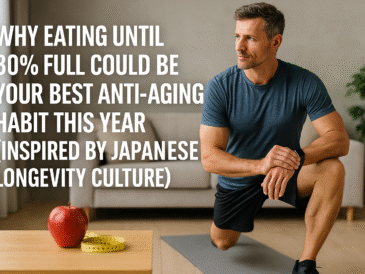
4. Eat Until 80% Full (The Hara Hachi Bu Principle)
The Japanese concept of Hara Hachi Bu — stopping eating when you’re 80% full rather than completely satisfied — has been linked to the exceptional longevity of Okinawa’s population, which historically had the world’s highest concentration of centenarians. Chronic moderate caloric restriction (without malnutrition) activates longevity pathways including sirtuins and AMPK, reduces oxidative stress, and decreases the chronic low-grade inflammation associated with accelerated ageing.
You don’t need to count calories. The practice is simpler: eat slowly enough for satiety signals to register (they take about 20 minutes), use smaller plates, and stop before you feel completely full. The feeling of “just enough” rather than “I couldn’t eat another bite” is the target.
5. Cold Exposure Activates Genuine Anti-Ageing Pathways
Cold showers and cold water immersion have moved from fringe practice to mainstream research interest. Studies show that cold exposure activates brown adipose tissue (metabolically active fat that burns energy to generate heat), increases norepinephrine by 200-300% (a powerful mood and focus enhancer), and stimulates the release of cold-shock proteins that protect against cellular stress.
A 2020 study in Cell Metabolism found that cold exposure enhanced mitochondrial biogenesis — the growth of new mitochondria — a process directly linked to healthy cellular ageing. In Indian winters, even moderately cold tap water constitutes a meaningful cold exposure stimulus for someone accustomed to warm showers.
Start with 30 seconds of cold at the end of your usual shower and work up from there. The initial discomfort is real; the adaptation is also real and happens faster than you’d expect.
6. Muscle Mass Is Longevity Currency
Sarcopenia — the age-related loss of muscle mass — begins in your 30s at a rate of about 3-8% per decade without resistance training, accelerating after 60. Muscle is not just cosmetic. It’s a metabolically active tissue that regulates blood glucose, stores glycogen, secretes anti-inflammatory myokines during contraction, and determines your functional capacity as you age.
Grip strength — simply how hard you can squeeze — has emerged as a surprisingly powerful predictor of cardiovascular mortality and all-cause mortality in multiple large cohort studies. It’s a proxy for overall muscle health. Strength training 2-3 times per week, starting at any age, meaningfully reverses sarcopenia and builds the functional reserve that determines whether your 70s and 80s are spent independently active or dependent on assistance.
You don’t need a gym. Bodyweight training — push-ups, squats, lunges, rows with a bedsheet — provides genuine stimulus. The key is progressive overload: consistently making the movement harder over time.
7. Inflammation Management Is Anti-Ageing
The concept of “inflammaging” — chronic low-grade inflammation as a central driver of ageing — has become one of the dominant frameworks in geroscience. Unlike acute inflammation (which is necessary and helpful), chronic inflammation persistently damages cells, accelerates telomere shortening, and underlies most major age-related diseases: cardiovascular disease, type 2 diabetes, Alzheimer’s, many cancers.
What drives chronic inflammation? Visceral body fat (particularly dangerous), processed foods with high advanced glycation end-products (AGEs), chronic stress with elevated cortisol, poor sleep, sedentary behaviour, and dysbiosis of the gut microbiome.
Anti-inflammatory levers: omega-3 fatty acids (walnuts, flaxseed, fatty fish), polyphenol-rich foods (berries, dark greens, turmeric, green tea), adequate sleep, stress management, and — most powerfully — regular exercise, which releases anti-inflammatory myokines from muscles and reduces visceral fat.
8. Learn New Skills — Genuinely New, Not Just Familiar Practice
Cognitive reserve — the brain’s resilience against age-related decline — is built by challenging your brain with genuinely novel learning, not just doing familiar things more. Crossword puzzles, for people who regularly do crosswords, provide cognitive maintenance but not the same neuroplasticity stimulus as learning something genuinely unfamiliar.
Studies of musicians who began learning later in life, language learners, and people who took up novel creative skills show increased grey matter density and stronger neural connectivity compared to age-matched controls. The mechanism is BDNF (brain-derived neurotrophic factor) — a protein that supports neuron growth and connection — which rises with novel learning and exercise.
Learning to cook a new cuisine, taking up a musical instrument, learning a new language, or mastering any genuinely unfamiliar skill is literally brain medicine. The difficulty is the point.
9. Sun Exposure Is a Two-Way Street — Get the Benefit Without the Damage
Vitamin D deficiency — endemic in urban India despite our abundant sun — is associated with accelerated cellular ageing, higher cardiovascular risk, immune dysfunction, and cognitive decline. Getting adequate vitamin D through sensible sun exposure (15-20 minutes of midday sun on arms and face, 3-4 times weekly, without sunscreen during that window) is preferable to supplementation for several reasons, including the production of other photoprotective compounds that don’t come in a pill.
The nuance: this applies to sensible exposure, not extended unprotected sun. UV damage from chronic overexposure accelerates skin ageing and raises cancer risk. Short, regular sun exposure for vitamin D synthesis, combined with sun protection for extended outdoor time, is the optimal approach — not sun avoidance.
10. Purpose and Meaning Are Biologically Measured
This sounds philosophical, but it has measurable biology. A 2019 study in JAMA Network Open found that a strong sense of purpose in life was associated with reduced all-cause mortality risk and lower rates of cardiovascular disease in a nationally representative sample of US adults over 50. The effect was independent of other health behaviours.
Purpose is associated with lower cortisol levels, better sleep quality, stronger immune function, and higher rates of health-promoting behaviour. In Okinawa — one of the original Blue Zones — the concept of “ikigai” (roughly: reason for being, the thing that gets you up in the morning) is considered central to longevity. Japanese centenarians typically articulate a clear ikigai even at 100.
This doesn’t require dramatic life changes. For many people, purpose comes from contribution — mentoring, volunteering, community involvement, raising children or grandchildren with intention. The feeling of mattering to others and having something meaningful ahead of you is, in biological terms, a longevity signal.
Frequently Asked Questions
Can these habits actually reverse biological ageing or only slow it?
Both — though the research language is careful. Biological age, measured by DNA methylation clocks (like the Horvath clock), has been shown to decrease with interventions including diet, exercise, and sleep improvement in randomised trials. A 2021 study in Aging Cell found that an 8-week lifestyle programme including diet, exercise, stress management, and sleep improvements reduced biological age by 3.23 years on average. Slowing is more consistent in the evidence than reversal, but meaningful improvement in measured biological age is achievable.
At what age is it too late to start?
Never. The HERITAGE Family Study showed cardiovascular fitness improvements from exercise training in participants up to 75. Strength gains from resistance training have been documented in people in their 90s. The brain continues making new neurons (neurogenesis in the hippocampus) into old age, stimulated by exercise and novel learning. Starting at 60 is better than starting at 70, but starting at 70 is enormously better than not starting at all.
Which of these matters most?
If forced to rank: sleep quality and exercise (particularly cardiovascular fitness and strength) have the largest evidence base and effect sizes. But they interact with each other and with the other factors — poor sleep reduces exercise motivation, sedentary behaviour worsens sleep, inflammation impairs both. The compounding effect of multiple habits working together is greater than any single intervention. Start with whatever feels most tractable for your current life.
The Long Game
My father has no idea what VO2 max is and has never heard of inflammaging. He eats simply, cycles daily, maintains close friendships, has a strong sense of purpose, and sleeps soundly. He’s been doing these things for decades — not because he read the research, but because they felt right and sustainable.
The research has largely caught up to what long-lived populations around the world have been demonstrating for generations. None of the ten things on this list are extreme or difficult to access. What they require is consistency and the recognition that the daily choices you make now are being cumulatively written into your biology — one way or the other.