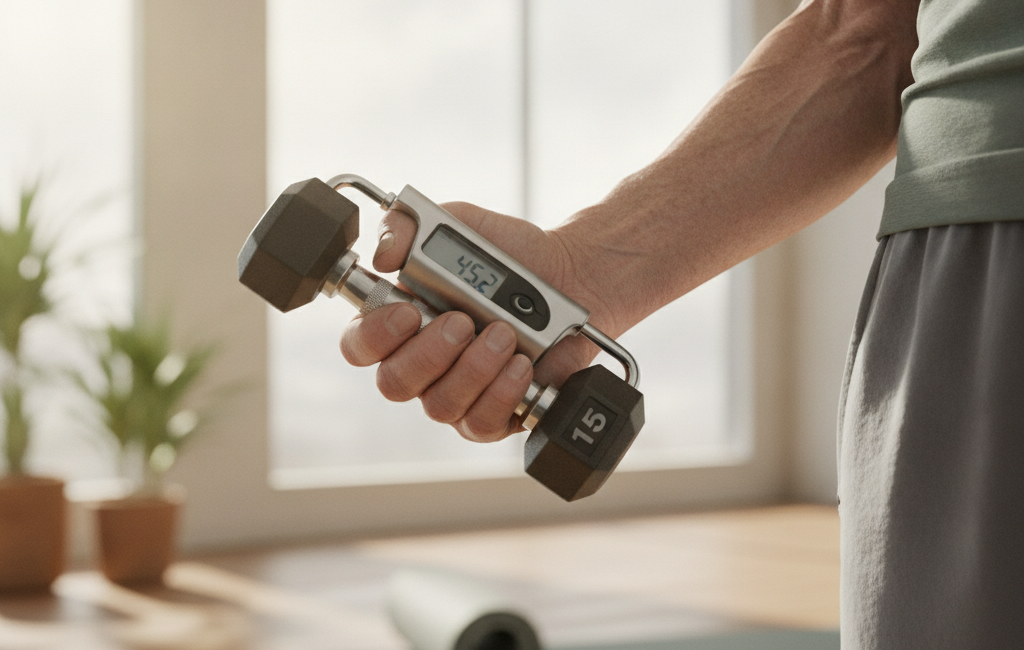
A cheap plastic dynamometer can predict how long you’ll live better than a lot of things doctors measure routinely. That’s not a marketing line — it’s what one of the largest longevity studies ever conducted found when it tracked grip strength against nearly a decade of health outcomes across 17 countries.
This is a deeper look at what that evidence actually says, and what the research on resistance training and muscle mass supports for slowing the age-related muscle loss driving those numbers. It’s a companion piece to our grip strength longevity test article and part of our complete guide to staying young.
The PURE study: what 140,000 people across 17 countries showed
The headline study here is Leong et al., published in The Lancet in 2015, using data from the Prospective Urban Rural Epidemiology (PURE) study — one of the largest longitudinal cohorts in existence, spanning roughly 140,000 adults across 17 countries with a range of income levels, followed for about four years on average.
Participants had their grip strength measured with a handheld dynamometer at enrollment. After adjusting for other risk factors (age, sex, physical activity, smoking, and more), the researchers found that every 5 kg decline in grip strength was associated with:
- 16% higher risk of all-cause mortality (hazard ratio 1.16, 95% CI 1.13–1.20)
- 17% higher risk of cardiovascular mortality (hazard ratio 1.17, 95% CI 1.11–1.24)
- 17% higher risk of non-cardiovascular mortality (hazard ratio 1.17, 95% CI 1.12–1.21)
- 7% higher risk of myocardial infarction (heart attack)
- 9% higher risk of stroke
What makes this notable isn’t just the size of the effect — it’s that grip strength turned out to be a stronger predictor of death than systolic blood pressure, a measurement doctors check at nearly every visit. And the association held up consistently across countries with very different income levels, diets, and healthcare systems, which is part of why it’s been taken seriously rather than dismissed as a fluke of one population.
Why grip strength predicts mortality at all
Grip strength itself isn’t what keeps you alive — nobody dies from a weak handshake. The reason it’s such a strong predictor is that it’s a fast, cheap proxy for overall skeletal muscle mass and function, which in turn reflects several things happening in the body at once: neuromuscular health, nutritional status, systemic inflammation, and how much lean tissue you’ve retained as you age.
This is the same logic behind why researchers use grip strength as a simple clinical marker of sarcopenia — the progressive, age-related loss of muscle mass and strength that typically accelerates after age 40 and speeds up further after 60. Sarcopenia isn’t just a cosmetic or fitness concern. Lower muscle mass is linked to reduced metabolic reserve, higher fall and fracture risk, slower recovery from illness or surgery, and — per the PURE data above — higher mortality risk independent of other factors.
What resistance training evidence actually supports
If declining grip strength (as a marker of declining muscle mass) tracks with mortality risk, the obvious next question is whether resistance training can meaningfully slow or reverse that decline. Here the evidence is solid, though more nuanced than “lift weights, live forever” headlines suggest.
Systematic reviews and meta-analyses of resistance training in older adults with sarcopenia consistently find:
- Significant improvements in muscle strength are well-supported and consistent across studies — this is the most robust finding in the literature.
- Improvements in muscle mass itself are more modest. Several recent systematic reviews note that while resistance training reliably improves strength and physical function (grip strength, knee extension strength, gait speed), the effect on actual muscle mass gains is smaller, and aging appears to blunt the hypertrophy (muscle-building) response compared to younger adults doing the same training.
- Duration matters. Meaningful improvements in muscle mass are generally only observed with programs lasting 12 weeks or longer — shorter interventions tend to show strength gains without significant mass changes.
- Intensity matters, with a tradeoff. Higher training intensities (roughly 70-85% of one-rep max) tend to be more effective at inducing muscle growth, but this intensity range can be poorly tolerated by frail or functionally limited individuals, which is why clinical guidelines emphasize individualized progression rather than a single fixed protocol.
Major clinical bodies, including the International Conference on Frailty and Sarcopenia Research (ICFSR), now recommend resistance training as the first-line intervention for sarcopenia — ahead of nutritional supplementation alone, which appears to work better as a complement to training than as a standalone fix.
The practical takeaway
None of this means you need to chase a specific grip strength number as an end in itself, or panic over a single weak-feeling handshake. The PURE study measured a population-level association, not an individual prediction — plenty of factors affect any one person’s outcomes. But the direction of the evidence is consistent and, at this point, hard to dismiss: preserving muscle strength and mass as you age is one of the more directly actionable levers for long-term health that current research supports, and resistance training — done consistently, over months rather than weeks — is the intervention with the best evidence behind it.
A reasonable, low-effort starting point if you’ve never done any structured resistance training: two to three sessions a week covering the major muscle groups (legs, back, chest, shoulders, arms, core), progressing the weight or resistance gradually over 12+ weeks. If you have existing health conditions, are frail, or are returning to exercise after a long break, check with a doctor or physical therapist before starting a new program.
Frequently Asked Questions
Can I improve my grip strength specifically, or do I need to train my whole body?
Grip strength responds to direct training (deadlifts, farmer’s carries, dead hangs, grip-specific tools), but it’s best understood as a marker of overall muscle health rather than an isolated target. The mortality research is about what grip strength reflects — overall muscle mass and function — not about grip strength as an isolated muscle to train in isolation.
Is muscle mass or muscle strength more important for longevity?
Based on current evidence, strength (functional output) appears to matter at least as much as raw muscle mass, and resistance training improves strength more reliably than it improves mass, especially in older adults. This is part of why grip strength — a strength measure, not a mass measure — turned out to be such a useful predictor in the PURE study.
At what age should I start worrying about sarcopenia?
Age-related muscle loss can begin as early as the 30s and 40s and tends to accelerate after 60, but resistance training is protective at any age and there’s no evidence of a cutoff where it stops helping. Starting earlier simply means you’re working from a higher baseline.
Does this apply if I already exercise regularly but don’t lift weights?
Cardiorespiratory exercise (walking, running, cycling) has its own strong longevity evidence base, covered in our pillar guide, but it doesn’t substitute for resistance training’s specific effect on muscle strength and mass. The two are complementary, not interchangeable.
This article is for informational purposes and is not medical advice. Consult a healthcare provider before starting a new exercise program, especially if you have existing health conditions.


