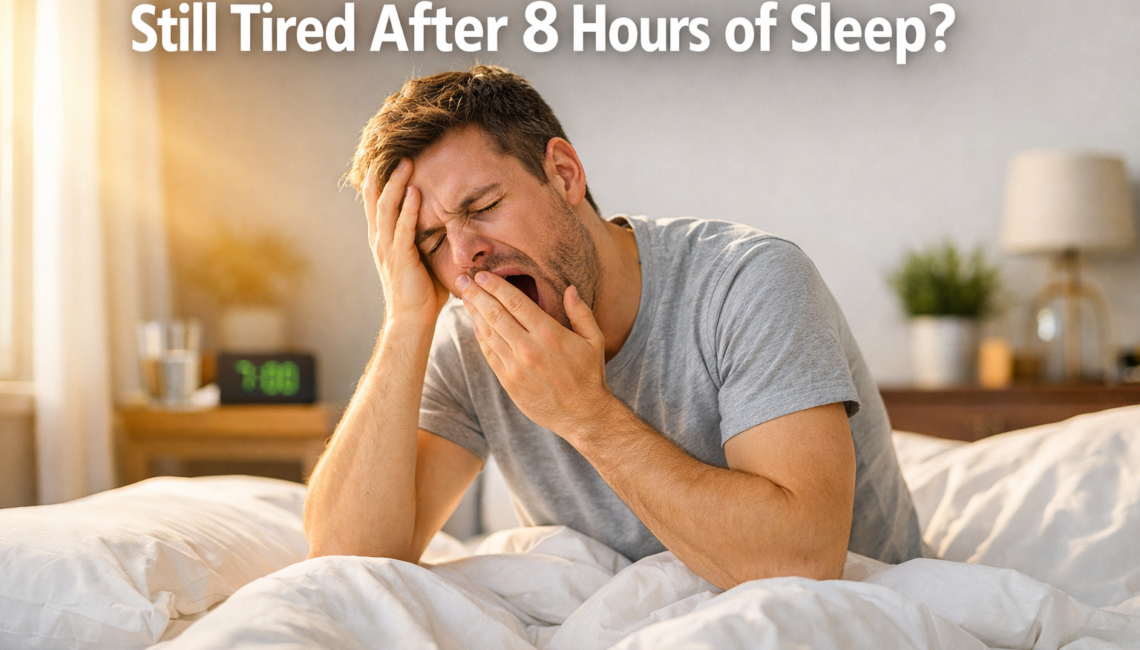
If there is one health complaint I hear more than any other, it is this: “I sleep enough but I’m always tired.” It is dismissed so frequently — as stress, as laziness, as “just how some people are” — that many people have stopped mentioning it to their doctors at all.
I want to be direct: persistent fatigue despite adequate sleep is almost never just how you are. It is a symptom. Something specific is causing it. And most of the causes are identifiable with a standard blood panel and addressable with targeted interventions.
Why Hours in Bed ≠ Restorative Sleep
Before addressing systemic causes, it is worth separating sleep duration from sleep quality. Eight hours of fragmented, light sleep is not the same as eight hours of deep, uninterrupted sleep. Several things fragment sleep architecture without you knowing:
- Sleep apnoea: Extremely common and dramatically underdiagnosed in India. The airway repeatedly collapses during sleep, causing micro-arousals every few minutes that prevent deep sleep stages. The person sleeps 8 hours and wakes exhausted. Snoring, waking with headaches, and feeling unrested are key indicators. A sleep study (polysomnography) is the diagnostic test — home versions are now available and relatively affordable.
- Blood sugar instability: If blood sugar drops in the middle of the night (common in people with insulin resistance who eat high-carbohydrate dinners), cortisol is released to correct it — which disrupts sleep architecture without causing obvious awakening. You sleep through the disruption but do not enter deep sleep stages effectively.
- Phone use before bed: Blue light suppresses melatonin and delays REM onset. Even people who fall asleep quickly after phone use get less REM and deep sleep in the first half of the night.
The Six Most Common Medical Causes of Persistent Fatigue
1. Iron Deficiency (Especially Low Ferritin)
The most commonly missed cause in women. Iron is essential for oxygen transport and energy production at the cellular level (as a cofactor in mitochondrial enzymes). Low ferritin — the storage form of iron — causes fatigue even when haemoglobin is still normal. A serum ferritin below 30 ng/mL routinely causes debilitating fatigue; optimal levels for energy and hair health are above 70 ng/mL. Test specifically for serum ferritin — not just a CBC or haemoglobin.
2. Hypothyroidism
The thyroid gland controls your body’s metabolic rate. An underactive thyroid produces insufficient thyroid hormone, slowing every cellular process. The result: fatigue, weight gain, feeling cold, brain fog, constipation, dry skin, and hair loss. TSH above 4.0 mIU/L suggests hypothyroidism; many functional medicine practitioners treat at TSH above 2.5 in symptomatic patients. Subclinical hypothyroidism (slightly elevated TSH without dramatically low T4) is extremely common in Indian women. Test TSH, Free T3, and Free T4.
3. Vitamin D Deficiency
Vitamin D receptors are present in almost every tissue in the body, including brain cells and mitochondria. Severe Vitamin D deficiency causes profound fatigue through its effects on energy metabolism and immune function. A 2015 study in North American Journal of Medical Sciences found that correcting Vitamin D deficiency improved fatigue scores significantly in deficient patients. With 70–80% of Indians estimated to be deficient, this is a high-yield test.
4. Vitamin B12 Deficiency
B12 is essential for red blood cell formation, nerve function, and DNA synthesis. Strict vegetarians and vegans who do not supplement are at very high risk — B12 is found almost exclusively in animal foods. Symptoms of deficiency: fatigue, tingling in hands and feet, poor memory, mood changes, and megaloblastic anaemia. In India, B12 deficiency is extremely prevalent in vegetarian populations but chronically under-tested.
5. Insulin Resistance and Pre-Diabetes
When cells become resistant to insulin, glucose cannot enter cells efficiently for energy production. The result is cellular energy deficit even when blood sugar is elevated — the paradox of having fuel everywhere but being unable to use it. Fatigue after meals, particularly after high-carbohydrate meals, is a characteristic symptom. Test with fasting insulin (not just fasting glucose) and HbA1c. A fasting insulin above 10 μIU/mL suggests meaningful insulin resistance even with normal fasting glucose.
6. Chronic Low-Grade Infection or Inflammation
Persistent viral infections (Epstein-Barr, CMV), dental infections, chronic sinusitis, and gut dysbiosis all create systemic immune activation that drives persistent fatigue. The immune system’s inflammatory response is energetically expensive. hs-CRP (high-sensitivity C-reactive protein) is a useful screening marker for systemic inflammation even when the specific source is not obvious.
The Blood Panel to Request
Rather than accepting “everything is normal” after a basic panel, ask specifically for:
- Serum ferritin (not just haemoglobin)
- 25-OH Vitamin D
- TSH, Free T3, Free T4
- Serum B12 and folate
- Fasting insulin and HbA1c
- hs-CRP
- Complete liver function tests (SGOT, SGPT — non-alcoholic fatty liver is a surprisingly common cause of fatigue)
What You Can Do While Waiting for Test Results
- Consistent sleep and wake time, even on weekends — circadian disruption alone causes significant fatigue
- Reduce refined carbohydrates at dinner — improves sleep architecture and blood sugar stability overnight
- Brief morning sun exposure — regulates circadian rhythm and contributes to Vitamin D
- Check for sleep apnoea symptoms — snoring, dry mouth on waking, daytime sleepiness — and ask your doctor for a referral if present
Frequently Asked Questions
My doctor says all my tests are normal but I’m still exhausted. What now?
Ask specifically whether ferritin, 25-OH Vitamin D, Free T3/T4, fasting insulin, and B12 were in the panel. “Normal” on a basic CBC tells you relatively little about these causes. If all specific tests are genuinely normal, ask for a referral to a sleep specialist to rule out sleep apnoea and a review of your medication list (many common medications, including blood pressure medications and antihistamines, cause significant fatigue as a side effect).
Can anxiety and depression cause physical fatigue even with normal blood work?
Yes — depression and anxiety are associated with significant physical fatigue through their effects on cortisol, sleep architecture, and mitochondrial function. These are not “just in your head” — they are biologically mediated. Mental health conditions deserve the same investigative rigour as physical ones.
The Bottom Line
Persistent fatigue despite adequate sleep is a signal, not a character trait. In most cases, a thorough blood panel will reveal a correctable cause. The commonest in India are iron (ferritin), Vitamin D, thyroid, and B12 — often in combination, particularly in women who are vegetarian. Do not accept “you’re just tired” as a complete answer. Tiredness has a reason. Find the reason.
Always consult a qualified physician before making changes to your health management based on any article.