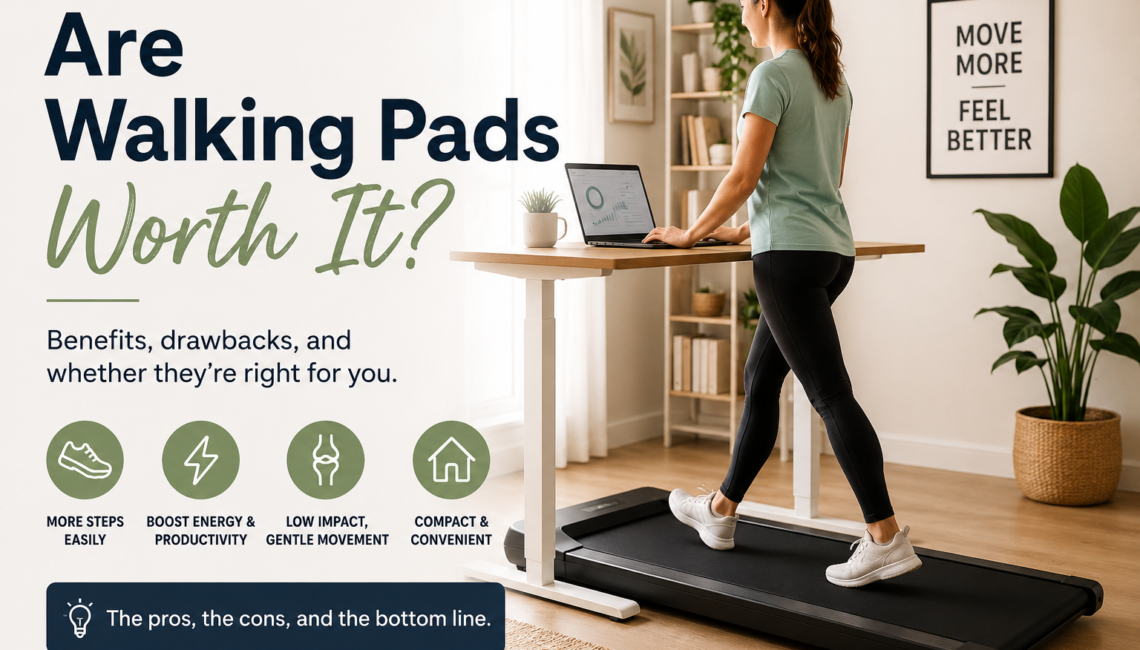
My gym membership costs me nothing per visit, because I stopped going in February. The walking pad under my desk, though? I’ve logged over 400 kilometres on it since then, mostly without noticing. That’s the strange magic of this gadget: it doesn’t ask you to find time to exercise. It hijacks time you were already spending sitting down and answering emails.
And that’s exactly why walking pads have quietly become the best-selling fitness gadget of the work-from-home era. Not because they’re impressive. Because they’re boring enough to actually use.
Why a Walking Pad Works When the Gym Doesn’t
The fitness industry has a dirty little secret: motivation is a terrible long-term strategy. Gyms know this — their entire business model depends on people paying for memberships they don’t use. A walking pad flips the equation. You don’t need motivation to walk at 3 km/h while reading Slack messages. You just need to step on the belt.
Behavioural scientists call this lowering the activation energy. I call it cheating, in the best possible way. The hardest part of any workout is starting it — changing clothes, travelling somewhere, mentally committing to 45 minutes of effort. A walking pad removes every single one of those steps. The “workout” begins the moment you stand up. There’s no sweat to shower off afterwards, no gym bag to pack, no class schedule to plan around.
Compare that to a regular treadmill. They’re bigger, louder, more expensive, and they live in a corner shouting “you should be running” until you drape laundry over them. A walking pad makes a much smaller promise — just walk — and small promises are the ones we keep.
What All That Slow Walking Actually Does to Your Body
Let’s be clear about what a walking pad won’t do: it won’t give you a runner’s VO2 max or build serious muscle. If that’s your goal, you still need real training. But the science on breaking up sitting time is genuinely striking.
A sedentary office worker takes around 3,000–4,000 steps a day. Add two or three hours of slow desk-walking and you’re suddenly at 12,000–15,000 steps without carving out a single extra minute from your day. Research on “exercise snacking” and frequent low-intensity movement shows this pattern improves blood sugar control after meals, reduces the stiffness and back pain that come from marathon sitting sessions, and burns a meaningful number of extra calories — roughly 100–150 per hour at a slow pace. Do that for three hours a day, five days a week, and you’ve created the energy deficit of two extra gym sessions weekly. From walking. Slowly. While working.
The post-meal effect deserves special mention. Walking for even 15–20 minutes after lunch blunts the glucose spike that normally sends you into the 3 p.m. slump. I now take my least demanding meeting of the day right after lunch, on the pad, and the afternoon crash has mostly disappeared. That alone justified the purchase for me.
How to Pick a Walking Pad That Won’t End Up Under Your Bed
The market is flooded with options from roughly ₹15,000 to ₹60,000 (or $150 to $600), and most of the cheap ones share the same handful of motors and decks with different stickers on them. Here’s what actually separates a keeper from a regret:
- Motor noise matters more than top speed. You’ll use this during calls. Anything above 55–60 decibels will get you side-eye on video meetings. Look for reviews that mention noise specifically, not just the spec sheet claim.
- Weight capacity is where budget models cut corners — and an under-rated motor strains, whines, and dies early. Buy a pad rated at least 20–25 kg above your body weight.
- Skip the folding handlebar versions if you only plan to walk slowly at a desk. The bar gets in the way, adds cost, and you’ll never run on a 1-metre belt anyway, whatever the marketing photos suggest.
- A remote control beats app-only control every time. Fishing your phone out and opening an app to change speed is exactly the kind of friction this gadget exists to eliminate.
One honest warning: the belt and deck on budget pads wear out. Lubricate the belt every month or two (most come with silicone oil), and expect a ₹15,000 pad to last two or three years of daily use, not ten. I’d still call that a bargain per kilometre.
The Desk Setup That Makes or Breaks It
Here’s where most people go wrong: they buy the pad and keep their sitting-height desk. That doesn’t work. You need a standing desk, or at minimum a desk converter, so your screen and keyboard rise to walking height. Your elbows should rest at roughly 90 degrees while you type, and the top of your monitor should sit at eye level — otherwise you’ll walk with your neck craned down and trade back pain for neck pain.
Start slower than feels natural. Seriously. Begin at 2 km/h for the first week, even if it feels like you’re barely moving. Your typing accuracy will be rubbish at first — mine was — but within a few days your brain stops noticing the movement and your hands settle down. Most desk-walkers find their cruising speed between 2.5 and 4 km/h. Above that, typing falls apart and you’re better off saving faster walks for calls where you’re mostly listening.
So Should You Buy One?
Ask yourself one question first: how many hours did you sit yesterday? Not exercise — sit. If the answer is eight or more, and you work from home even part of the week, a walking pad will probably change your daily movement more than any other gadget you could buy at the price. More than the smartwatch. More than the smart ring that tells you, in beautifully designed graphs, that you sat too much.
That’s the thing about trackers — they measure the problem. A walking pad is one of the few gadgets that actually solves it.
If you do get one, here’s your first assignment: don’t try to walk all day. Pick two fixed slots — your morning email block and the hour after lunch — and walk only then for the first two weeks. Build the habit narrow and deep, then expand. The people whose pads gather dust are the ones who tried to do everything in week one.
Your step counter won’t know what hit it.