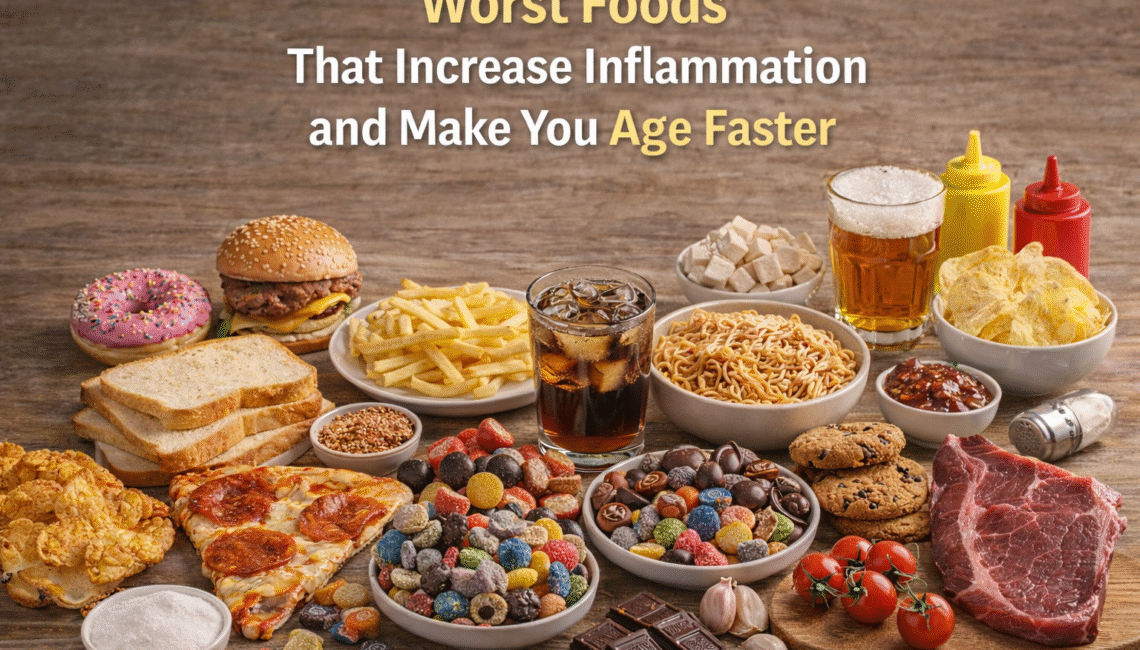
I want to start with an honest admission: this list includes several foods I eat regularly. And the goal of writing it is not to eliminate joy from eating or to create anxiety around food — it is to understand which foods, consumed in large amounts habitually, drive the biological process that ages us from the inside.
Chronic inflammation — the persistent, low-grade inflammatory state associated with most age-related diseases — is not primarily driven by genetics or bad luck. It is largely diet-dependent. And the modern Indian urban diet, particularly over the last two decades, has shifted substantially toward the foods that fuel it.
1. Refined Vegetable Oils (The Most Underappreciated Culprit)
Soybean oil, sunflower oil, corn oil, and most generic “refined vegetable oil” sold in India are extremely high in omega-6 polyunsaturated fatty acids (PUFAs). In the right ratio with omega-3 fatty acids, omega-6 is necessary and healthy. The problem is the ratio in modern diets: humans evolved on an omega-6 to omega-3 ratio of roughly 4:1. The average urban Indian diet today runs approximately 20:1 to 30:1.
This imbalance drives eicosanoid production — inflammatory signalling molecules derived from arachidonic acid, an omega-6 metabolite. Chronically elevated omega-6 promotes the same inflammatory pathways targeted by ibuprofen — meaning the oils most widely sold in Indian markets are, at population scale, a major driver of chronic inflammation.
The practical shift: cooking with cold-pressed mustard oil, ghee, or coconut oil — traditional Indian fats that were displaced by refined vegetable oils in the 1980s and 90s — is genuinely better for inflammatory markers. This is not nostalgia; it is supported by the lipid biochemistry.
2. Refined Carbohydrates and Maida
White flour (maida) — the base of biscuits, bread, naan, and most packaged snacks — has had the fibre, germ, and bran removed, leaving essentially pure starch. This starch digests rapidly, causing blood glucose spikes followed by insulin surges. Repeated blood glucose spikes produce advanced glycation end products (AGEs) — compounds formed when sugar molecules bind to proteins and fats in ways that produce crosslinked, damaged structures. AGEs directly damage collagen (accelerating skin ageing and arterial stiffening), activate inflammatory receptors (RAGE — receptor for advanced glycation end products), and accumulate in blood vessels.
A 2007 study in the American Journal of Clinical Nutrition found that a high-glycaemic diet significantly elevated CRP levels in healthy women. The effect was independent of total caloric intake.
3. Ultra-Processed Foods and Industrial Trans Fats
Ultra-processed foods — defined by the NOVA classification as products manufactured with ingredients not found in a typical kitchen, including artificial flavours, emulsifiers, and stabilisers — are consistently associated with elevated inflammatory markers in large epidemiological studies. A 2019 study in JAMA Internal Medicine following over 100,000 French adults found a 10% increase in ultra-processed food consumption associated with a 10% increase in cancer risk — largely mediated through chronic inflammation.
In India, this category has exploded over the last decade: packaged biscuits, instant noodles, namkeen mixtures with partially hydrogenated oils, flavoured chips, and packaged bread products. Many still contain industrial trans fats — now banned in several countries but still present in some Indian products.
4. Sugar-Sweetened Beverages
Liquid sugar — in cold drinks, packaged juices, flavoured milk drinks, and energy drinks — delivers large glucose loads with none of the fibre that would slow absorption in whole fruit. Fructose, specifically (a major component of table sugar and high-fructose corn syrup), is metabolised almost exclusively in the liver, where excess amounts are converted to triglycerides and promote non-alcoholic fatty liver disease — itself a significant driver of systemic inflammation.
A single 500 ml cola delivers approximately 55 grams of sugar — well above the WHO’s recommended daily limit of 25 grams for adults. The inflammatory effect of regular consumption accumulates over years.
5. Excess Alcohol
Alcohol metabolism produces acetaldehyde — a toxic intermediate that directly damages intestinal lining cells, increases gut permeability, and triggers liver inflammation. Regular excess alcohol consumption (above 1–2 standard drinks daily) is one of the most potent inducers of systemic inflammation available. Elevated CRP, liver enzyme abnormalities, and gut dysbiosis are consistently found in regular heavy drinkers. The gut-permeability effect is particularly relevant: alcohol-induced leaky gut allows bacterial endotoxins to enter the bloodstream, driving systemic inflammation even when the person is not currently drinking.
6. Processed Meats
Bacon, sausages, deli meats, and salami contain nitrates and nitrites (preservatives), saturated fat in large amounts, high sodium, and often advanced glycation end products from high-heat processing. A 2010 Harvard meta-analysis in Circulation found that processed meat consumption — but not unprocessed red meat — was significantly associated with heart disease risk. The WHO has classified processed meats as Group 1 carcinogens based on sufficient evidence of colorectal cancer risk. In an Indian context, these are increasingly available and popular in urban areas.
A Practical Note on Proportionality
Eating a biscuit does not cause chronic inflammation. Chronic inflammation is driven by patterns — habitual, repeated exposure over years. The concern is not the occasional pakora or the biryani at a wedding. The concern is refined oil used for every meal, daily packaged snacks, a cola with lunch every day, and maida-based products at every breakfast.
The anti-inflammatory version of Indian eating already exists — it is the traditional home-cooked whole-food diet that generations before us ate. Dal, sabzi, whole grain roti, curd, seasonal vegetables, spices. The inflammatory modern diet is the departure from that baseline, not the baseline itself.
Frequently Asked Questions
Is ghee inflammatory or anti-inflammatory?
Traditional ghee (clarified butter from grass-fed cows) contains butyrate — the same short-chain fatty acid that feeds gut lining cells and has anti-inflammatory properties. It also has a healthy saturated fat profile that is more stable under cooking heat than polyunsaturated oils. In moderate amounts, traditional ghee is not pro-inflammatory and may be mildly anti-inflammatory. The “ghee is bad” advice came from oversimplified saturated fat research that has since been significantly revised.
Does eating rice increase inflammation?
White rice has a higher glycaemic index than brown rice, but the glycaemic response depends enormously on what it is eaten with. Rice consumed with dal, sabzi, and raita (protein, fibre, fat) has a significantly blunted blood sugar response compared to rice eaten alone. Traditional Indian rice-based meals are not inherently inflammatory. The problem arises when rice is consumed in very large portions with minimal accompaniments — particularly in the context of insulin resistance.
The Bottom Line
The foods that drive chronic inflammation in modern Indian diets are, in large part, recent additions: refined vegetable oils, ultra-processed packaged products, sugary drinks. The traditional Indian kitchen — mustard oil, ghee, dal, sabzi, fermented foods, whole spices — was largely anti-inflammatory by design. The path away from chronic inflammation is not exotic. It largely involves eating more like the generation before last did.
This article is for educational purposes. Consult a registered dietitian for personalised dietary guidance.