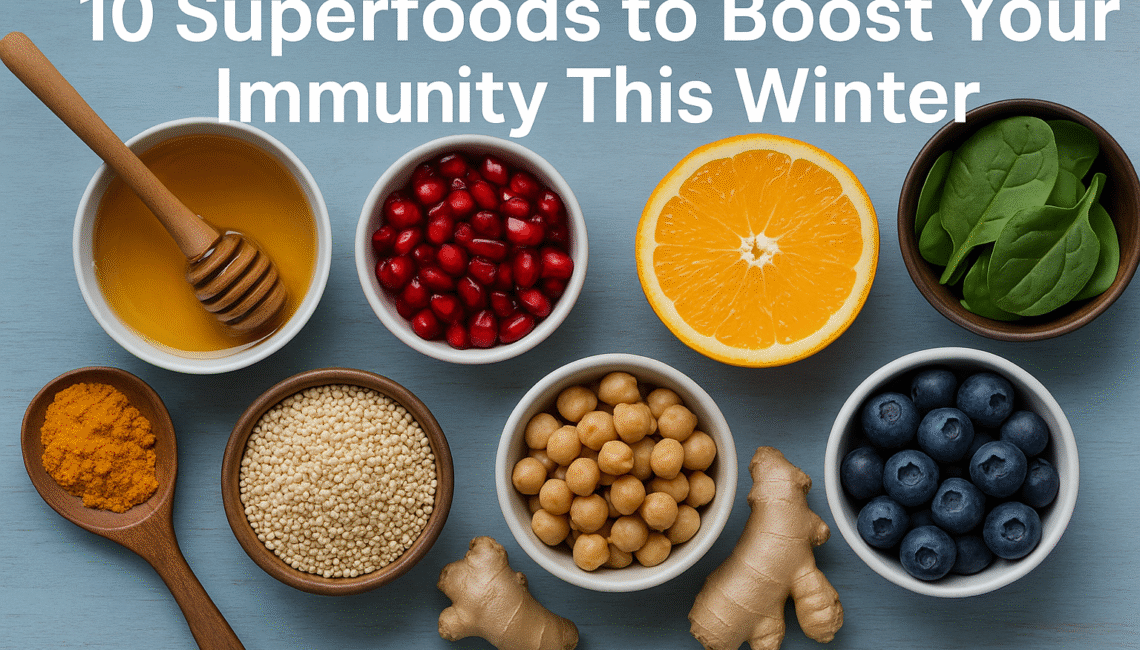
My grandmother never used the word “superfood.” She said “thanda mat khao” (don’t eat cold things) in winter and pressed a small bowl of chyawanprash into my hands every morning from October to March. She made methi ladoos in January. She added ginger and black pepper to everything. She was not following a nutrition protocol — she was doing what every Indian grandmother did, drawing on centuries of Ayurvedic observation that turned out, when modern research finally caught up, to be remarkably well-founded.
Winter in India means dropping temperatures, shorter days, drier air, and the respiratory virus season that runs November through February across the northern plains. It’s the time when your immune system is under most pressure. What you eat during these months genuinely influences how well you navigate cold and flu season.
Here are 10 foods that measurably support immune function in winter — with the research explaining why, and the practical Indian context for how to actually eat them.
1. Amla (Indian Gooseberry)
Amla is perhaps the single most nutritionally dense immunity food available in India, and it’s seasonal — peak amla season runs from November to February, precisely when you need immune support most.
One fresh amla (roughly 100g) contains approximately 600-700mg of vitamin C — more than 20 oranges. But what makes amla particularly potent is that its vitamin C is bound with tannins that stabilise it against heat degradation; cooking amla doesn’t destroy its vitamin C the way it does in most other sources. A 2011 study in the European Journal of Clinical Nutrition found that amla extract enhanced the activity of natural killer cells (a critical frontline immune defence) significantly compared to placebo.
How to eat it: One fresh amla a day is ideal. If fresh isn’t accessible, amla powder (amlaki churna) in warm water works. Chyawanprash — which has amla as its primary ingredient — is the most palatably convenient way for people who find fresh amla too sour.
2. Turmeric (Haldi)
Turmeric’s active compound curcumin has been studied extensively for its effects on immune regulation. A 2007 review in Advances in Experimental Medicine and Biology documented curcumin’s ability to modulate over 700 genes involved in immune and inflammatory responses — it’s both anti-inflammatory when inflammation is excessive and immune-stimulating when the immune system needs activation. This dual action makes it unusually valuable.
The challenge is bioavailability — curcumin is poorly absorbed on its own. Two things dramatically improve absorption: black pepper (piperine in black pepper increases curcumin absorption by 2,000%) and a fat source (curcumin is fat-soluble). The traditional Indian combination of haldi in warm full-fat milk with a pinch of black pepper and honey — haldi doodh — is essentially an optimised delivery system that nutrition science has confirmed works exactly as intended.
How to eat it: Haldi doodh (turmeric milk) at bedtime through winter. Add it to dals, subzis, and rice dishes as well — the cumulative daily exposure matters more than a single large dose.
3. Ginger (Adrak)
Ginger contains gingerols and shogaols — compounds with potent anti-viral and anti-inflammatory properties. A 2013 study published in the Journal of Ethnopharmacology found that fresh ginger inhibited human respiratory syncytial virus (RSV, a common cause of winter respiratory infections) from attaching to cells in the airway. The mechanism: specific compounds in fresh ginger blocked the viral proteins needed for cell entry.
Importantly, the study found fresh ginger significantly more effective than dried ginger at this specific antiviral action. For immunity, fresh adrak beats ginger powder.
How to eat it: Fresh ginger tea is the most effective winter preparation. Grate or slice fresh ginger (thumb-sized piece), steep in boiling water for 10 minutes, add honey and lemon. Adrak chai counts — the ginger in Indian tea is a genuine immune contribution, not just flavouring.
4. Garlic (Lehsun)
Garlic’s allicin compound is one of the most studied natural antimicrobials. A randomised controlled trial published in Advances in Therapy (2001) found that participants who took a daily allicin supplement had 63% fewer colds over 12 weeks compared to placebo — and when they did get colds, they recovered significantly faster.
The key variable: allicin forms only when garlic is chopped or crushed, through an enzymatic reaction, and it degrades with high heat. Cooking garlic extensively at the start of a dish (as some recipes instruct) reduces allicin content substantially. Adding crushed garlic near the end of cooking, or eating a small amount raw, preserves more of its active compounds.
How to eat it: Crush 2-3 cloves of garlic and let them sit for 5-10 minutes before cooking (this maximises allicin formation). In Indian cooking, adding garlic paste toward the end of tadka, or having a raw garlic clove with lunch if tolerated, gives better immune benefit than early-cooked garlic.
5. Sesame Seeds (Til)
Til is a winter staple in North India for good reason — sesame seeds are rich in zinc, selenium, and vitamin E, all of which are critical for immune cell production and function. Zinc deficiency impairs T-cell development and reduces the body’s ability to mount an immune response; even mild zinc deficiency (common in vegetarian diets that rely heavily on grains and legumes with high phytate content) is associated with increased infection susceptibility.
Til ladoos (sesame seed balls with jaggery) eaten through winter in North India provide zinc, iron, magnesium, and slow-release energy in a single traditional food. Makar Sankranti’s til-gur isn’t just tradition — it’s well-timed seasonal nutrition.
How to eat it: Til ladoos, til chikki, or simply roasted sesame seeds added to chutneys, salad dressings, and rice dishes. 2-3 tablespoons daily through winter is a useful target.
6. Methi (Fenugreek)
Fenugreek seeds and leaves are rich in diosgenin and saponins that support immune function, along with iron and folate that are needed for immune cell production. Methi has been used in Ayurvedic practice as a winter tonic for centuries — traditional methi ladoos were given to new mothers and elderly family members specifically for winter strength.
Modern research has confirmed anti-inflammatory and immunomodulatory effects of fenugreek compounds. Fresh methi saag (fenugreek greens) is available abundantly in Indian markets from November to January — one of the gifts of Indian winter produce timing.
How to eat it: Fresh methi saag in parathas, subzi, or dal. Methi ladoos (traditional preparation with ghee and jaggery) as a warming winter snack. Methi dana (seeds) soaked overnight and consumed in the morning is a common Ayurvedic practice that supports both immunity and digestion.
7. Citrus and Seasonal Fruits
Indian winter brings excellent citrus: santra (mandarin oranges), narangi, mosambi (sweet lime), and by January, early kinnow from Punjab. These are arriving at exactly the right time immunologically — peak vitamin C season aligned with peak respiratory virus season.
Vitamin C supports the proliferation of T and B lymphocytes (the immune system’s key adaptive response cells), enhances natural killer cell activity, and reduces the severity and duration of upper respiratory tract infections when taken regularly (not just at the first sign of illness). The evidence for vitamin C is strongest when consumed consistently as food, not just taken as a supplement at illness onset.
How to eat it: 2-3 pieces of seasonal citrus fruit daily through winter. Mosambi juice (fresh squeezed, not carton) is an excellent vehicle. Combine with other immune foods for synergistic effect.
8. Giloy (Tinospora Cordifolia)
Giloy is one of the most researched Ayurvedic herbs for immune function, and it became widely known during COVID-19 when the Ministry of AYUSH recommended it as part of immune support protocols. The scientific basis is real: giloy contains berberine and other alkaloids that have been shown in multiple studies to enhance macrophage activity and increase the production of immune signalling molecules.
A 2010 study published in the International Journal of Applied and Basic Medical Research found that giloy extract significantly enhanced the phagocytic activity (pathogen-eating ability) of macrophages in animal models. Human clinical evidence is more limited but consistent with this mechanism.
One important caution: giloy can potentiate autoimmune activity. People with autoimmune conditions (lupus, rheumatoid arthritis, inflammatory bowel disease) should consult their physician before regular giloy use.
How to eat it: Giloy kadha (decoction) — boil fresh or dried giloy stem in water for 10-15 minutes, strain, drink warm. Giloy powder in warm water or honey. Available in most Indian pharmacies and online as Guduchi churna.
9. Black Pepper (Kali Mirch)
Black pepper deserves a spot on this list not just for its supporting role with turmeric, but for its own immune properties. Piperine enhances the bioavailability of numerous nutrients and has direct anti-inflammatory effects. Pepper’s volatile oils have demonstrated antimicrobial activity against several respiratory pathogens in laboratory studies.
In Ayurvedic practice, black pepper is a component of the classical formulation Trikatu (three pungents: black pepper, long pepper, ginger) used specifically for respiratory health and immunity in winter. The combination of all three is more potent than any individually — a principle that modern pharmacology calls synergism.
How to eat it: Add freshly ground black pepper to everything — not just as flavouring, but deliberately, with a mindset that it’s doing something. Black pepper in kadha, in haldi doodh, on fruit salads, in dal. The traditional Indian hand with spices is essentially an immune medicine protocol.
10. Ghee
This one surprises people who’ve been told for decades that saturated fat is the enemy. Ghee’s rehabilitation in nutrition science has been significant. It contains butyrate, a short-chain fatty acid that feeds the gut’s epithelial cells and supports the gut-associated lymphoid tissue (GALT) — the largest component of the immune system, housing approximately 70% of the body’s immune cells.
Ghee also contains fat-soluble vitamins A and K2 (when made from grass-fed/pasture-raised cow milk, as traditional Indian ghee should be) that support mucosal immunity — the first-line barriers in your respiratory tract. The traditional winter practice of a spoonful of ghee with food, or ghee on hot rotis and dal, has a meaningful nutritional basis beyond mere comfort.
This applies to ghee in moderation — 1-2 teaspoons daily as part of meals, not taken by the tablespoon. The context of an overall balanced diet matters.
How to eat it: Traditional use: a spoonful of ghee on hot dal-rice or on rotis. In the morning on toast or added to warm oatmeal. As a cooking medium for gentle-heat preparations where its high smoke point (250°C) is an advantage.
Frequently Asked Questions
Can I just take supplements instead of these foods?
For some nutrients (zinc, vitamin D if you’re deficient), supplements are appropriate and effective. But whole foods provide cofactors, phytonutrients, and synergistic compounds that isolated supplements don’t replicate. The 700 genes that curcumin modulates aren’t all addressed by an isolated curcumin pill the way haldi in food with fat and pepper is. Eat the foods; supplement where dietary gaps exist or deficiency is confirmed.
How quickly will I notice a difference from eating these foods?
Immune function changes aren’t felt directly — you don’t feel your NK cell activity increase. What you notice, over a winter of consistent eating, is frequency and severity of illness: fewer colds, shorter duration when they happen, less severe respiratory symptoms. Give it a full season and compare with previous winters. The effect is real but cumulative, not overnight.
Is chyawanprash actually worth eating or is it just tradition?
Yes, it’s genuinely effective — and well-studied for an Ayurvedic formulation. A 2010 randomised controlled trial in Phytotherapy Research found that chyawanprash supplementation significantly improved immune parameters in healthy adults. Its primary active ingredient is amla, combined with 49 other herbs that provide synergistic immune support. The traditional preparation (made with ghee, honey, and sesame oil as carriers) is better absorbed than modern low-fat versions. One tablespoon daily in winter is a well-founded practice.
What about vitamin D in Indian winters?
This is critically underappreciated. Vitamin D is essential for immune function — it directly activates immune cells and regulates the inflammatory response. Despite India’s sunny reputation, urban Indians are chronically vitamin D deficient. ICMR surveys consistently find over 70% of urban Indians deficient. In winter, when sun angles are lower and people spend more time indoors, this worsens. If you haven’t tested your vitamin D level recently, get a 25(OH)D blood test. Deficiency is supplementable; don’t just eat superfoods and ignore a D3 supplement if your levels are low.
Winter Is When These Foods Make the Most Difference
There’s a reason Indian traditional winter foods are what they are — amla, til, methi, adrak, haldi. These foods are available at their peak exactly when immune support is most needed. The seasonal alignment isn’t coincidence; it’s centuries of observational learning baked into culture.
My grandmother’s winter protocol — the chyawanprash, the methi ladoos, the haldi doodh, the fresh ginger chai — was essentially an optimised immune support regimen. She just called it winter food. The research has now confirmed why it works. Eat accordingly.