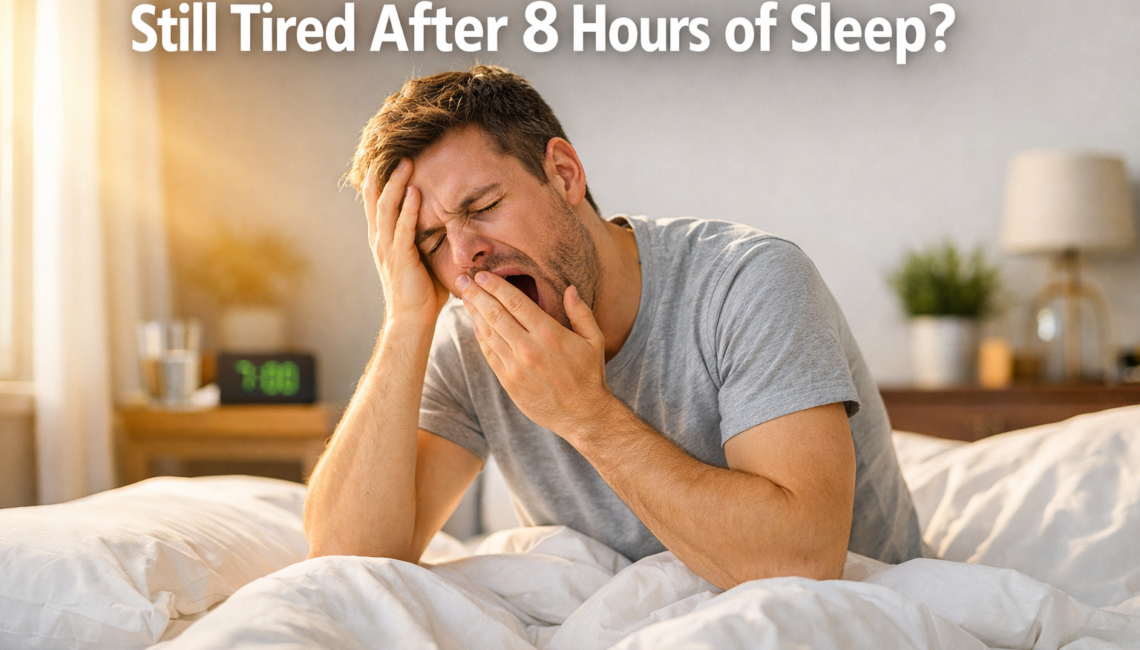
Do you wake up after a full night’s sleep and still feel exhausted? You slept for 7–8 hours, yet your body feels heavy, your mind feels foggy, and energy is missing even before the day begins.
If this sounds familiar, you’re not alone.
Many people today experience persistent tiredness despite adequate sleep, and the reason is often not laziness, age, or lack of sleep, but something deeper happening inside the body and lifestyle.
In this article, we’ll explore real, practical reasons why you may feel tired all the time even after sleeping enough — and what you can realistically do about it.
Is It Normal to Feel Tired After Sleeping 8 Hours?
Occasional tiredness is normal. But feeling tired every single day, even after proper sleep, is not normal and should not be ignored.
Your body is designed to:
- Repair itself during sleep
- Restore energy
- Balance hormones
If that process is not working properly, something is interfering with it.
Common Signs of Chronic Fatigue
You may be dealing with underlying fatigue if you experience:
- Morning tiredness even after long sleep
- Brain fog or poor concentration
- Body heaviness or muscle weakness
- Low motivation
- Afternoon energy crashes
- Irritability or mood changes
- Needing caffeine just to function
Let’s now look at the real causes behind this problem.
1) Poor Sleep Quality (Not Sleep Duration)
Sleeping 8 hours does not always mean restful sleep.
You may be in bed for 8 hours, but if your sleep quality is poor, your body doesn’t fully recharge.
Common causes of poor sleep quality:
- Frequent waking during the night
- Light sleep due to noise or light
- Late-night screen exposure
- Stress or overthinking before sleep
- Irregular sleep schedule
Your body needs deep sleep stages to restore energy. If those stages are disrupted, you wake up tired.
What helps:
- Fix a consistent sleep and wake time
- Avoid screens at least 60 minutes before bed
- Keep the room dark and quiet
- Eat a light dinner (avoid heavy meals late at night)
2) Vitamin and Mineral Deficiencies (Very Common)
One of the most common causes of constant tiredness is nutrient deficiency.
Common deficiencies linked to fatigue:
- Vitamin D
- Vitamin B12
- Iron
- Magnesium
Even mild deficiency can cause low energy, weakness, body pain, and mood changes.
Signs you might have a deficiency:
- Bone or muscle pain
- Hair fall
- Frequent illness
- Tingling or numbness
- Pale skin
Important: Only a blood test can confirm deficiency. Avoid self-diagnosing.
3) Chronic Stress and Mental Exhaustion
Your body may be sleeping, but your nervous system may not be resting.
Long-term stress keeps your body in “alert mode,” even during sleep.
Common sources of chronic stress:
- Work pressure
- Financial worries
- Family responsibilities
- Emotional overload
- Overthinking at night
Stress increases cortisol (stress hormone), which can disrupt deep sleep and lead to morning fatigue.
What helps:
- Slow breathing (3–5 minutes) before sleep
- Write your worries on paper to “empty” the mind
- Light stretching
- Reduce mentally stimulating content at night
4) Blood Sugar Imbalance
Many people feel tired despite sleep because their blood sugar fluctuates.
This can happen due to:
- Skipping meals
- Excess sugar or refined carbs
- Long gaps between meals
When blood sugar drops suddenly, energy crashes and brain fog increases.
What helps:
- Eat balanced meals with enough protein
- Reduce sugar and refined carbs
- Eat at regular intervals
5) Dehydration (Often Ignored)
Mild dehydration can make you feel tired, dizzy, weak, and unable to focus.
Common signs of dehydration:
- Dark urine
- Dry mouth
- Headaches
- Low energy
Sleep cannot fix dehydration — your cells need water to function.
Simple fix:
- Start your day with water
- Sip water throughout the day
- Increase water intake in hot weather
6) Lack of Physical Activity
It may sound surprising, but not moving enough can cause fatigue.
A sedentary lifestyle reduces blood circulation and oxygen delivery, which leads to low stamina and body heaviness.
What helps:
- 20–30 minutes of walking daily
- Gentle stretching
- Break long sitting hours (stand up every 45–60 minutes)
7) Poor Gut Health
Your gut plays a big role in nutrient absorption, energy production, and immunity.
If your gut is not healthy, even good food doesn’t convert into energy properly.
Signs of gut issues:
- Bloating
- Gas
- Constipation or loose stools
- Frequent acidity
If you want to go deeper into inflammation and healthy aging (which can also contribute to fatigue), you can read this related post:
Combatting Inflammation: Natural Strategies for a Younger You
8) Sleep Apnea or Breathing Issues (Often Undiagnosed)
Some people sleep for 8 hours but do not get oxygen-rich sleep.
Sleep apnea can cause interrupted breathing, micro-awakenings, and poor oxygen supply.
Common signs:
- Loud snoring
- Dry mouth in the morning
- Daytime sleepiness
- Morning headaches
If you suspect this, it’s worth discussing with a doctor.
9) Hormonal Imbalance
Hormones regulate energy, sleep, and metabolism. Imbalances (like thyroid issues) can cause persistent tiredness even after good sleep.
Possible symptoms include:
- Unexplained weight changes
- Cold or heat intolerance
- Mood swings
- Hair fall
Blood tests are required to diagnose hormonal issues.
10) Mental Health Factors
Mental exhaustion is as real as physical fatigue.
Conditions like anxiety, low mood, or emotional burnout can drain energy even if you sleep well.
The mind and body are deeply connected.
What Most People Do Wrong
Many people try to fix fatigue by:
- Drinking more coffee
- Sleeping longer
- Ignoring symptoms
This often worsens the problem because caffeine can mask fatigue but does not solve the cause.
What Actually Helps (A Realistic Approach)
Instead of chasing quick fixes, focus on root causes.
Step-by-step approach:
- Improve sleep quality (not just duration)
- Eat balanced meals
- Stay hydrated
- Reduce stress gradually
- Get basic blood tests if fatigue persists
- Move your body daily
- Seek medical advice if symptoms continue
When Should You See a Doctor?
You should consult a professional if:
- Fatigue lasts more than 2–3 months
- It affects daily functioning
- You experience unexplained weight changes
- There is body pain or breathlessness
- Sleep doesn’t refresh you at all
Early evaluation can prevent long-term issues.
Frequently Asked Questions (FAQs)
Can stress alone cause constant tiredness?
Yes. Chronic stress can exhaust the nervous system and disrupt sleep quality.
Is feeling tired after sleeping a sign of vitamin deficiency?
Very often, yes — especially Vitamin D, B12, or iron deficiency.
Can dehydration really cause fatigue?
Yes. Even mild dehydration reduces energy and focus.
Does age cause tiredness?
Age alone doesn’t cause fatigue. Lifestyle and health factors matter more.
Can walking daily improve energy?
Yes. Regular walking improves circulation and stamina over time.
Final Thoughts
Feeling tired all the time even after sleeping 8 hours is not something you should ignore or accept as normal.
Your body is communicating that something needs attention — whether it’s sleep quality, nutrition, stress, or internal balance.
Instead of blaming yourself, start listening to your body. Small, consistent changes can restore energy over time.
Key takeaway: Good sleep is not just about hours — it’s about quality, balance, and lifestyle.