Top 15 Anti-Inflammatory Foods That Slow Aging Naturally
Aging is a natural part of life, but aging faster than necessary is not. Many people today feel tired, stiff, bloated, or mentally dull even in their 30s and 40s. While this is often blamed on “getting older,” the real cause is often hidden inside the body — chronic inflammation.
This low-level, long-term inflammation quietly damages cells, tissues, and organs, accelerating the aging process. The good news is that what you eat every day can either increase inflammation or calm it down.
In this article, we’ll explore the top anti-inflammatory foods that help slow aging naturally, support your immune system, protect your organs, and help you feel lighter, stronger, and more youthful over time.
Important: This article complements our main guide on Inflammaging and Aging, where we explain how inflammation makes you age faster.
Why Anti-Inflammatory Foods Matter for Aging
Inflammation is not always harmful. Short-term inflammation helps your body heal injuries and fight infections. The problem starts when inflammation becomes constant and never fully switches off.
Over time, chronic inflammation:
- Damages healthy cells
- Slows down metabolism
- Weakens digestion and immunity
- Increases belly fat
- Speeds up skin aging
- Affects brain and heart health
Anti-inflammatory foods work by providing antioxidants, fiber, healthy fats, and plant compounds that help the body repair itself and reduce inflammatory signals.
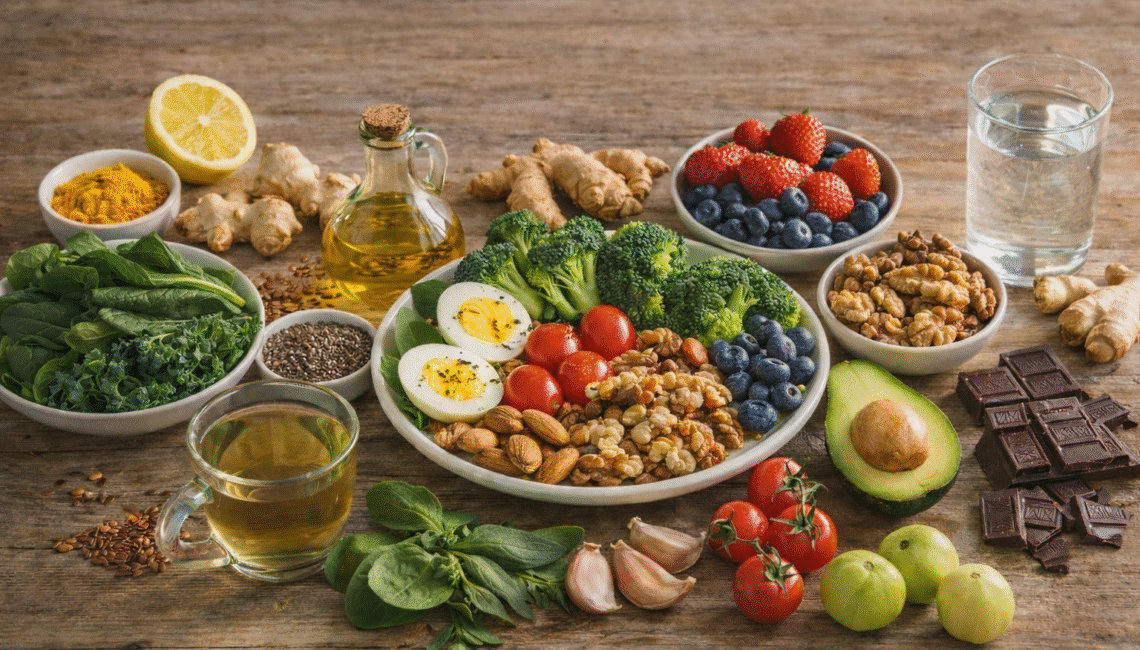
Top 15 Anti-Inflammatory Foods That Help You Stay Younger
1. Turmeric
Turmeric is one of the most powerful natural anti-inflammatory foods. Its active compound, curcumin, helps reduce inflammation at the cellular level.
Benefits:
- Reduces joint pain and stiffness
- Supports brain and heart health
- Slows skin aging
How to use: Add turmeric to curries, vegetables, or drink turmeric milk before bed. Combine with black pepper for better absorption.
2. Ginger
Ginger contains gingerol, a compound with strong anti-inflammatory and antioxidant effects. It has been used for centuries in traditional medicine.
Benefits:
- Improves digestion
- Reduces muscle and joint pain
- Boosts immunity
How to use: Ginger tea, grated ginger in meals, or warm water with ginger in the morning.
3. Garlic
Garlic acts like a natural antibiotic and anti-inflammatory agent. It helps fight infections and reduces oxidative stress in the body.
Benefits:
- Supports heart health
- Improves immunity
- Reduces inflammation-related aging
How to use: Use fresh garlic in dals, sabzis, soups, and chutneys.
4. Green Leafy Vegetables
Vegetables like spinach, methi, sarson, kale, and bathua are rich in antioxidants, fiber, and essential vitamins.
Benefits:
- Detoxify the body
- Improve gut health
- Support skin and eye health
How to use: Cook as sabzi, add to soups, dals, or smoothies.
5. Amla (Indian Gooseberry)
Amla is one of the richest natural sources of Vitamin C and antioxidants.
Benefits:
- Boosts immunity
- Improves skin and hair health
- Protects cells from damage
How to use: Amla juice, raw amla, or amla chutney.
6. Berries (Blueberries, Strawberries)
Berries are packed with antioxidants called flavonoids that fight inflammation and oxidative stress.
Benefits:
- Protect brain health
- Improve memory
- Slow visible aging
How to use: Eat fresh or add to yogurt and smoothies.
7. Nuts (Almonds, Walnuts)
Nuts provide healthy fats, Vitamin E, and minerals that help reduce inflammation.
Benefits:
- Support heart health
- Reduce oxidative stress
- Improve skin elasticity
How to use: Eat a small handful daily.
8. Seeds (Flaxseed, Chia Seeds)
Seeds are rich in omega-3 fatty acids, which are well-known anti-inflammatory fats.
Benefits:
- Reduce joint inflammation
- Support digestion
- Balance hormones
How to use: Sprinkle over salads, yogurt, or add to smoothies.
9. Olive Oil / Cold-Pressed Oils
Healthy fats reduce inflammation and protect the heart.
Benefits:
- Reduce inflammation markers
- Improve cholesterol levels
- Support brain health
How to use: Use in salads or light cooking.
10. Green Tea
Green tea contains catechins that fight inflammation and oxidative stress.
Benefits:
- Improves metabolism
- Protects skin from aging
- Supports heart health
How to use: Drink 1–2 cups daily without sugar.
11. Yogurt & Fermented Foods
Probiotics support gut health, which plays a major role in inflammation control.
Benefits:
- Improve digestion
- Boost immunity
- Reduce gut inflammation
How to use: Curd, buttermilk, fermented vegetables.
12. Tomatoes
Tomatoes contain lycopene, a powerful antioxidant.
Benefits:
- Protect skin from damage
- Support heart health
- Reduce inflammation
How to use: Cooked tomatoes are even more beneficial.
13. Dark Chocolate (70% Cocoa)
Dark chocolate contains flavonoids that fight inflammation when consumed in moderation.
Benefits:
- Improves mood
- Supports heart health
- Reduces oxidative stress
How to use: 1–2 small pieces occasionally.
14. Fatty Fish (Salmon, Sardines)
Fatty fish are rich in omega-3 fats.
Benefits:
- Reduce joint inflammation
- Support brain health
- Slow aging
How to use: 1–2 servings per week.
15. Water
Hydration is often overlooked but plays a key role in reducing inflammation.
Benefits:
- Flushes toxins
- Supports digestion
- Keeps skin youthful
How to use: Drink water regularly throughout the day.
How to Build an Anti-Inflammatory Plate Daily
A simple rule to follow:
- Half plate vegetables
- One-quarter protein
- One-quarter whole grains
- Healthy fats in small amounts
This balance helps calm inflammation naturally.
Final Thoughts
You don’t need expensive supplements or extreme diets to slow aging. By choosing anti-inflammatory foods daily, you help your body heal, protect itself, and age gracefully.
Start small — add one or two of these foods to your meals today. Over time, these small choices create powerful changes that help you stay young from the inside.
Disclaimer: This article is for informational purposes only and does not replace medical advice. Always consult a healthcare professional for personalized guidance.