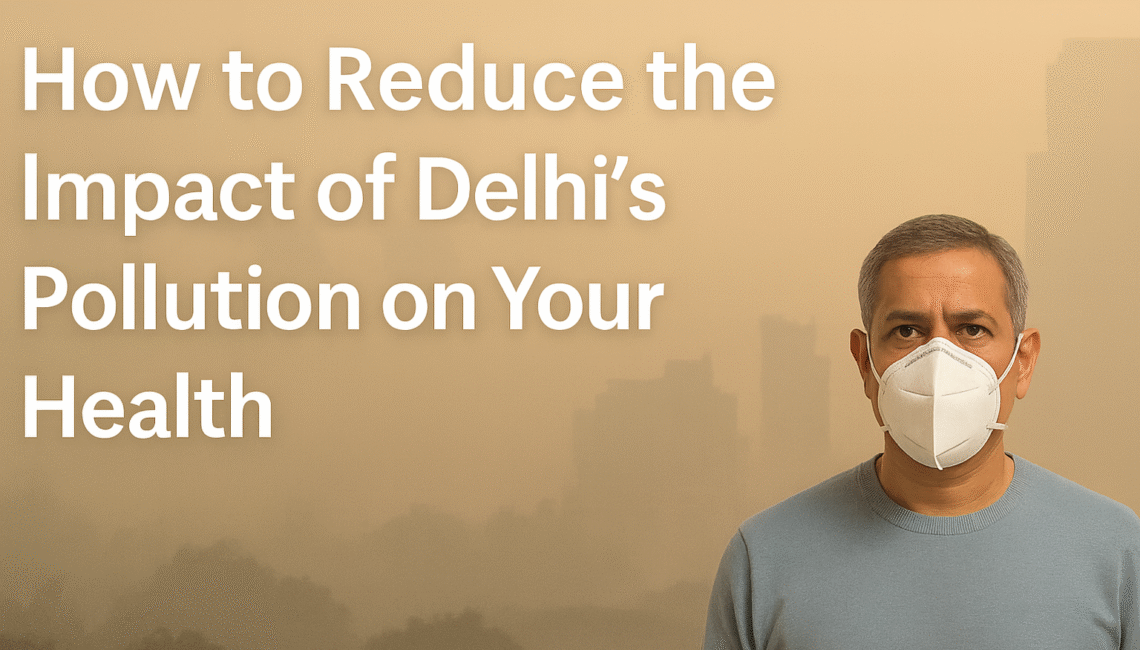
My cousin called me from Gurugram on a November morning last year. She’d woken up at 3 AM unable to breathe properly — chest tight, eyes burning, a rasping cough she couldn’t shake. The AQI that day was 478. “Hazardous,” the app said, as if that label somehow made it easier to accept.
She’s 34, fit, a yoga instructor. And the Delhi air had brought her to her knees.
If you live in or around Delhi, you already know this story. You’ve tasted that metallic bitterness in your throat. You’ve watched the skyline dissolve behind a brown-grey curtain. You’ve checked the AQI app and felt that low-grade dread settle in before you even open your door.
The question isn’t whether Delhi’s air is dangerous — it is, by every measurable standard. The question is: what do you actually do about it, in practical terms, living a real life in this city?
Understanding What You’re Actually Breathing
Delhi’s air pollution isn’t just “dirty air.” It’s a specific cocktail of toxins, and understanding what’s in it helps you protect yourself more intelligently.
PM2.5 — the invisible assassin: These are ultrafine particles 2.5 micrometres or smaller — about 30 times thinner than a human hair. They bypass your nose’s filtration entirely, travel deep into your alveoli, and enter your bloodstream directly. A 2023 study in The Lancet Planetary Health found that long-term PM2.5 exposure in Delhi-NCR was associated with a 2.7-year reduction in life expectancy compared to WHO guidelines.
PM10 — the one your nose catches (partially): Larger particles from dust, construction, and road traffic. Your mucus membranes trap many of these, but sustained exposure causes chronic inflammation of the airways.
NO₂ and SO₂: Vehicle emissions and industrial activity release nitrogen and sulphur dioxides. These are the gases responsible for that burning sensation in your eyes and throat. NO₂ is particularly damaging to children’s developing lungs.
Ozone (O₃): Forms when sunlight reacts with vehicle emissions. Unlike winter particulate pollution, ozone peaks on sunny summer afternoons — a different hazard that most people don’t think about in the warmer months.
Heavy metals: Lead, arsenic, chromium — particularly elevated near industrial corridors in Noida, Faridabad, and parts of outer Delhi. These accumulate in your body over years.
The Body’s Reaction: Why Some People Suffer More
Not everyone in Delhi reacts the same way to pollution, and this confuses people. “My neighbour has lived here 30 years and she’s fine,” is a common refrain. But “fine” is relative — chronic low-grade damage doesn’t always announce itself dramatically.
Research from the Indian Council of Medical Research (ICMR) found that Delhi residents show elevated markers of systemic inflammation even on “moderate” AQI days compared to people living in cleaner cities. The damage is cumulative and largely silent until it isn’t.
Higher-risk groups in Delhi include:
- Children under 12 (lungs still developing, breathe faster, more exposure per kg body weight)
- Adults over 60 (reduced respiratory reserve, more likely to have pre-existing cardiac issues)
- Anyone with asthma, COPD, or bronchitis
- Pregnant women (PM2.5 crosses the placenta — linked to preterm birth and low birth weight)
- Outdoor workers: auto drivers, traffic police, street vendors, construction workers
- Runners and cyclists — the harder you breathe, the more you inhale
Your Home: The First Line of Defence
Most Delhiites spend 18-20 hours a day indoors. Your home’s air quality directly determines most of your exposure.
Air Purifiers: What Actually Works
The single highest-impact purchase for a Delhi family is a good air purifier with a True HEPA filter (captures 99.97% of particles ≥0.3 microns) and an activated carbon layer (for gases and VOCs). Look for a CADR (Clean Air Delivery Rate) appropriate for your room size — roughly 2/3 of your room’s square footage in CFM.
Brands that have performed well in independent testing in Indian conditions include Dyson, Coway, Xiaomi Mi Air Purifier (solid budget option), and Blueair. Avoid purifiers that claim to use “ionisation only” without HEPA — they don’t adequately remove particulates and some generate ozone.
Key practical points:
- Run your purifier continuously during high-pollution months (October to February), not just at night
- Keep doors and windows closed when AQI is above 150 — the sealing is imperfect but significantly reduces indoor PM2.5
- Replace HEPA filters as recommended; a clogged filter becomes ineffective and the purifier starts recirculating particles
- One purifier per major room — a single unit in the bedroom doesn’t clean the kitchen where you’re cooking
Indoor Plants: Helpful But Not a Solution
The NASA Clean Air Study is widely cited, but its findings are often misapplied. Plants do remove some VOCs from air, but you would need hundreds of plants per room to match a single decent air purifier’s effect on particulates. Plants are lovely for other reasons — get them if you like them — but don’t rely on them for pollution protection.
Ventilation Strategy
Counterintuitively, the worst thing you can do on high-pollution days is cook with the kitchen window open. Gas cooking generates significant PM2.5 itself; combined with outdoor air coming in, your kitchen becomes one of the most toxic spaces in Delhi. Use an exhaust fan that vents outside, keep the kitchen door partially closed from living areas, and consider a small purifier specifically for the kitchen.
Masks: The Only Protection Outdoors
COVID normalised mask wearing in India, and that habit has direct value for pollution protection — but only if you’re wearing the right mask.
N95/N99 respirators: These are genuinely protective against PM2.5. The N95 filters 95% of airborne particles, N99 filters 99%. They must fit snugly with no gaps — a beard or poor fit negates the protection entirely. 3M and Honeywell make reliable options; look for BIS-certified Indian brands as well.
Surgical masks and cloth masks: Provide minimal PM2.5 protection. They filter large particles and droplets but particles in the 2.5 micron range pass through freely. Better than nothing on high-dust days; inadequate when AQI is above 200.
When to mask outdoors: When AQI exceeds 150 (Unhealthy), wear an N95 for any extended outdoor time. Above 200 (Very Unhealthy), avoid outdoor exercise and minimise all outdoor exposure regardless of masking.
Nutrition for Pollution Defence
This is the part that often gets overlooked. You cannot “eat your way out” of Delhi pollution, but specific nutrients measurably reduce the oxidative damage that PM2.5 causes in your body.
A 2019 study published in Environmental Health Perspectives found that people with higher dietary antioxidant intake showed significantly lower markers of oxidative stress after pollution exposure compared to those with poor diets.
The Pollution-Fighting Plate
Vitamin C: 500mg daily from food or supplements directly counteracts PM2.5-induced oxidative damage in lung tissue. Indian diet is actually well positioned here — amla (Indian gooseberry) has 20 times the vitamin C of an orange. One fresh amla a day is more effective than a supplement, and our grandmothers knew this long before the research confirmed it.
Omega-3 fatty acids: Reduce the systemic inflammation triggered by PM2.5 inhalation. Flaxseeds (alsi), walnuts, and fatty fish (mackerel/bangda, sardines) are excellent sources. If you’re vegetarian, a quality algae-based omega-3 supplement is worth considering during peak pollution months.
Turmeric (haldi): Curcumin has been studied specifically for its protective effects against air pollution-induced lung inflammation. The key is combining it with black pepper (piperine increases absorption by 2000%) and a fat source — our traditional haldi milk in warm full-fat milk with a pinch of black pepper is basically an evidence-based anti-pollution drink.
Leafy greens: Spinach (palak), methi (fenugreek leaves), and sarson (mustard greens) — readily available in Delhi winters — are rich in folate, which supports DNA repair from pollution-induced damage.
Jaggery (gur): Traditional belief holds that gur “clears the throat” after pollution exposure. There’s actually some basis for this — jaggery contains antioxidants and trace minerals absent from refined sugar. Coal miners in older India were given gur as part of their daily ration. While it’s not a pollution cure, replacing refined sugar with jaggery is a sensible swap.
Exercise in Delhi: When and How
This is the dilemma every health-conscious Delhiite faces. Exercise is one of the best things you can do for your long-term health. But exercising outdoors when AQI is 400 dramatically increases your pollution intake — you breathe 10-15 times more air per minute during vigorous exercise than at rest.
The practical framework:
- AQI under 100: Exercise outdoors freely. Morning is generally better — particulates from the previous day’s vehicle traffic have partially dispersed and the air is less stagnant
- AQI 100-150: Short outdoor exercise is acceptable; avoid prolonged intense sessions. Walk; don’t run
- AQI 150-200: Move exercise indoors. This is the threshold where the pollution dose from vigorous exercise begins to outweigh the cardiovascular benefit
- AQI above 200: Indoors only. No outdoor running, cycling, or sports regardless of how fit you are
For gym-goers: check whether your gym has air purification. Many modern gyms in Delhi now advertise “HEPA-filtered air” — worth asking about before paying a membership.
Children and Delhi Air: Extra Care Needed
Children’s lungs are still developing through age 18. PM2.5 exposure in childhood has been linked to permanently reduced lung capacity — damage that doesn’t reverse even if they move to a cleaner city as adults. This makes protecting children in Delhi a genuine priority, not an overreaction.
- Check school indoor air quality — advocate for air purifiers in classrooms
- Limit outdoor sports during peak pollution months (November-January). Many Delhi schools now have pollution protocols; ensure yours does
- Children’s N95 masks are available (3M makes them) — properly fitted, they provide real protection during school commutes
- Increase vitamin C and antioxidant-rich foods during high-pollution months
- Watch for persistent coughs, frequent respiratory infections, or reduced stamina — these can be early signs of pollution-related lung stress
Monitoring Tools: Know Before You Go
Real-time AQI monitoring has improved enormously in Delhi over the past few years. Use these:
- SAFAR India (safar.iitm.res.in): The most accurate Delhi-specific data, run by IIT Mumbai in collaboration with the Ministry of Earth Sciences. Shows forecasts, not just current AQI
- IQAir: Global app with Delhi monitoring stations; shows PM2.5-specific data separately from the combined AQI figure
- DPCC website: Delhi Pollution Control Committee — official government data from 40 stations across the city
The AQI near your home may differ significantly from the headline number for “Delhi” — a station in Anand Vihar consistently reads much higher than one in Lodhi Garden, for example. Find the station nearest you.
Frequently Asked Questions
Can I drink steam or do saline gargles to remove pollution particles from my lungs?
Steam inhalation soothes irritated airways and may help with mucus clearance, but it doesn’t remove PM2.5 from lung tissue — particles that deep have already entered the bloodstream. It can provide comfort relief during high-pollution periods but shouldn’t be mistaken for a treatment. Saline nasal rinses (jal neti) are more evidence-backed for clearing PM10 particles deposited in nasal passages.
Are air purifiers effective against Delhi’s wintersmog or is it different from regular PM2.5?
Winter smog in Delhi is heavily PM2.5-based, which means True HEPA filters are effective against it indoors. The smog also contains higher NO₂ and SO₂ in winter inversions — this is where the activated carbon layer matters. A combined HEPA + activated carbon purifier handles both types.
My child’s school has them running on the ground in November. What should I do?
This is worth raising formally with the school, citing the ICMR guidelines and the Delhi government’s Graded Response Action Plan (GRAP) which includes provisions for outdoor activity restrictions. Many schools have not updated their physical education policies to account for pollution levels. A written request citing specific AQI thresholds (outdoor exercise should stop above 150) is reasonable and increasingly common.
Is moving out of Delhi the only real solution?
It’s the most complete solution, yes. But most people can’t or won’t relocate for this reason alone, and the measures above do meaningfully reduce your risk. The combination of indoor air purification, appropriate masking, anti-inflammatory nutrition, and smart exercise timing can bring your effective PM2.5 exposure substantially below what unprotected outdoor exposure would be — and that matters for your long-term health.
The Long View
My cousin who called me that November morning has since made several changes: air purifier running in every room, N95 on her commute, amla and walnuts added to her diet, outdoor yoga sessions moved indoors from October to February. She still teaches yoga in Delhi. She still deals with bad air days. But that 3 AM choking episode hasn’t repeated.
Perfect protection from Delhi’s air isn’t possible unless you leave. But meaningful protection is. The combination of indoor air quality management, smart outdoor behaviour, and nutrition support can make living in this city substantially safer than doing nothing and hoping for the best.
Check your AQI app. Run your purifier. Eat your amla. And keep advocating — publicly and loudly — for the policy changes that will actually clean this city’s air. The individual measures matter. The systemic changes matter more.