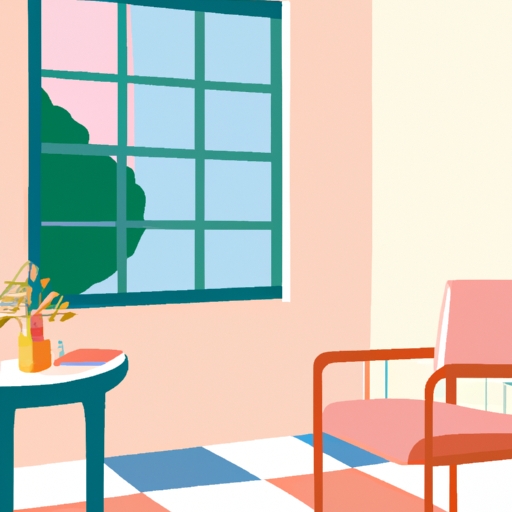
Three years ago I spent four days over a single Diwali week clearing my flat. Not cleaning — actually removing things. Old clothes I hadn’t worn in years, gadgets I’d bought with enthusiasm and forgotten, books I told myself I’d read but wouldn’t, decorative objects that had accumulated like sediment. By the end I’d filled eleven bags for donation and charity and one for the bin.
The change in how I felt in that space was immediate and out of proportion to what had happened. The flat wasn’t significantly larger. Nothing functional had changed. But the visual quiet — surfaces cleared, drawers closed properly, the absence of things competing for attention — produced a calm I hadn’t felt there in years.
I became curious about why. What I found in the research was more interesting than I expected.
What Clutter Actually Does to Your Brain
Clutter is not a neutral presence. Your brain processes every object in your visual field as a potential task, problem, or decision — even unconsciously. A 2011 study from Princeton Neuroscience Institute used fMRI to show that visual clutter competes for neural resources and reduces working memory capacity and the ability to focus. The more objects in your visual environment, the more your brain must filter out to concentrate on what you’re trying to do.
A 2009 UCLA study observed 32 families in their Los Angeles homes and found a direct correlation between high clutter density and elevated cortisol levels in the women of those households. The effect was specific and measurable: more stuff in the home predicted higher stress hormones throughout the day. Strikingly, the correlation was not as strong for men in the same study — suggesting women may bear a disproportionate cognitive burden of household clutter, something that has implications for how minimalism discussions are framed in family contexts.
Cortisol is the body’s primary stress hormone. Chronically elevated cortisol suppresses immune function, disrupts sleep, increases inflammatory markers, and accelerates cellular ageing. A cluttered home is, in a physiological sense, a mild but constant stressor.
The Sleep Connection
A study published in Sleep journal found that people who described their bedrooms as cluttered or who had difficulty completing household tasks (which often correlates with accumulated stuff) had measurably worse sleep quality and higher rates of insomnia compared to people in tidy, organised sleeping environments.
The mechanism is likely a combination of elevated baseline cortisol (as above), the visual restlessness of a cluttered space that makes it harder for the brain to shift into the relaxed state conducive to sleep, and the rumination triggered by visual reminders of undone tasks. Your bedroom environment is directly influencing your sleep architecture.
For people sleeping in urban Indian homes where space is at a premium and multiple uses are packed into single rooms, this research is particularly relevant. A bedroom that doubles as a study or storage space — full of screens and papers and piled clothing — is not optimised for recovery sleep. Small improvements in visual quiet in the sleeping area can have outsize effects on sleep quality.
Minimalism and Decision Fatigue
Decision fatigue — the deterioration in decision quality after making many decisions — is well-established in psychology research. Every decision you make draws on a finite cognitive resource that depletes over the course of a day. The more trivial decisions you make (what to wear, what to eat, which version of a thing to use), the less cognitive capacity remains for the decisions that actually matter.
This is why Steve Jobs wore the same outfit every day. It’s why Barack Obama, when asked why he only wore grey or blue suits, said “I’m trying to pare down decisions. I don’t want to make decisions about what I’m eating or wearing — because I have too many other decisions to make.”
A minimalist wardrobe — fewer, better-chosen clothes that all work together — eliminates a category of daily micro-decisions. A simplified pantry — staple ingredients you know well rather than dozens of specialty items you bought once — makes cooking decisions easier and faster. Fewer possessions means fewer decisions about maintenance, storage, replacement, and organisation. The cumulative cognitive energy saved is meaningful.
The Consumption-Happiness Trap
Hedonic adaptation — the tendency to return to a baseline level of happiness regardless of positive or negative life events — is one of the most replicated findings in psychology. The new phone is exciting for a week; then it becomes normal. The new sofa doesn’t make the room feel special after a month; it just becomes the sofa. We buy things expecting a lasting uplift in wellbeing that doesn’t arrive or doesn’t stay.
Research on what actually produces lasting wellbeing points consistently toward experiences (not things), relationships, engagement with meaningful work, and health. Spending money on dinner with friends provides more lasting wellbeing than the same money spent on a new jacket. Experiences don’t sit in a drawer accumulating clutter; they become part of your story.
Minimalism, viewed through this lens, isn’t about deprivation. It’s about shifting investment from things — which adapt quickly — to experiences, relationships, and health — which provide more durable returns on the investment of time, money, and attention.
Environmental Minimalism and Nature Connection
When you simplify your physical environment, you often become more attuned to what remains and what’s outside it. The Japanese concept of “ma” — meaningful empty space — suggests that absence is not merely the lack of presence, but a quality in itself. An uncluttered room has a quality of spaciousness that a full one lacks, even at the same physical dimensions.
Many people who embrace minimalism report becoming more present — more aware of natural light, of the sounds outside, of the quality of a single good piece of furniture or a few meaningful objects. This heightened sensory presence is associated in research on mindfulness with lower stress, reduced rumination, and greater satisfaction with everyday experience.
Practical Minimalism: Where to Actually Start
Minimalism as a lifestyle philosophy has accumulated some unhelpful associations — stark white apartments, expensive Muji storage, social media aesthetics. The practical version is much simpler and more accessible:
Start With One Category
The overwhelm of “declutter my whole home” is why most people don’t start. Pick one category: clothing, or books, or the kitchen counter, or one specific drawer. Apply a simple question: “Do I use this regularly and does it serve a purpose, or did I buy it speculatively and not use it?” Anything in the second category is a candidate for removal.
The One-In-One-Out Rule
Once you’ve achieved a level of simplicity you’re satisfied with, maintaining it requires a rule: when something new comes in, something goes out. This applies to clothes, books, kitchen gadgets, décor. Without this rule, entropy wins and clutter accumulates by default.
Create One Truly Clear Surface
Even if your entire home is chaotic, a single cleared surface — a desk, a kitchen counter, a bedside table — creates a psychological anchor. A cleared surface in your workspace reduces cognitive load for the work done there. A cleared bedside table removes visual restlessness from your sleeping environment. Start there and see how it feels before expanding.
The Indian Context: Minimalism Isn’t Anti-Culture
Indian homes, particularly across generations, have often accumulated things as expressions of prosperity or because nothing was ever discarded. There can be emotional weight to clearing things from family homes — objects connected to memory, gifts that feel like obligations, clothes that belonged to people no longer here.
Minimalism doesn’t require eliminating these meaningful objects. It’s about distinguishing between things held for genuine meaning versus things held by default inertia. The antique brass lamp from your grandmother is not clutter. The thirty-year-old stationary sets from offices long closed probably is.
Frequently Asked Questions
Doesn’t minimalism require money — to buy fewer but expensive quality items?
This is the version of minimalism that gets marketed, but it’s not the core practice. Decluttering what you have costs nothing. The stress reduction from a cleared environment is free. The decision fatigue reduction from a simpler wardrobe works equally whether your simpler wardrobe is from Zara or a local market. “Buy less but better” is good advice if you’re about to buy something — it’s not a required expenditure for minimalist living.
I have children and the idea of a minimalist home seems impossible. Any advice?
Focus on your own spaces first — your bedroom, your workspace, your bathroom. These are where you have full control and where the benefits are most direct for you. Children’s spaces are a different conversation involving different stakeholders. Getting your own environment to a calmer baseline gives you more capacity to deal with the chaos elsewhere. Many parents find that simplifying their personal spaces makes the general household chaos feel more manageable.
How do I deal with family members who don’t share this philosophy?
Focus on your own things and shared spaces where you can get buy-in. Minimalism applied to someone else’s belongings without consent is not minimalism; it’s conflict. Share your experience rather than evangelising. If your stress decreases and your sleep improves, the results speak. But the choice to simplify belongs to each person; you can model it without imposing it.
Less Leaves Room for More
Those eleven bags I cleared from my flat three years ago represent roughly two decades of accumulated things. The clearest thing I remember from the week after is this: I started reading again. Not scrolling, not watching — reading. I had cleared not just physical space but something in my attention that had been occupied by the ambient management of a cluttered environment.
Minimalism isn’t about owning as few things as possible. It’s about owning things intentionally — and discovering that when the environment around you quiets down, something in you does too. That quiet has health consequences that are, as it turns out, measurable in your cortisol levels and your sleep quality and your ability to focus.
Clear one surface this week. See what it does to your nervous system. Then decide if you want more of that.