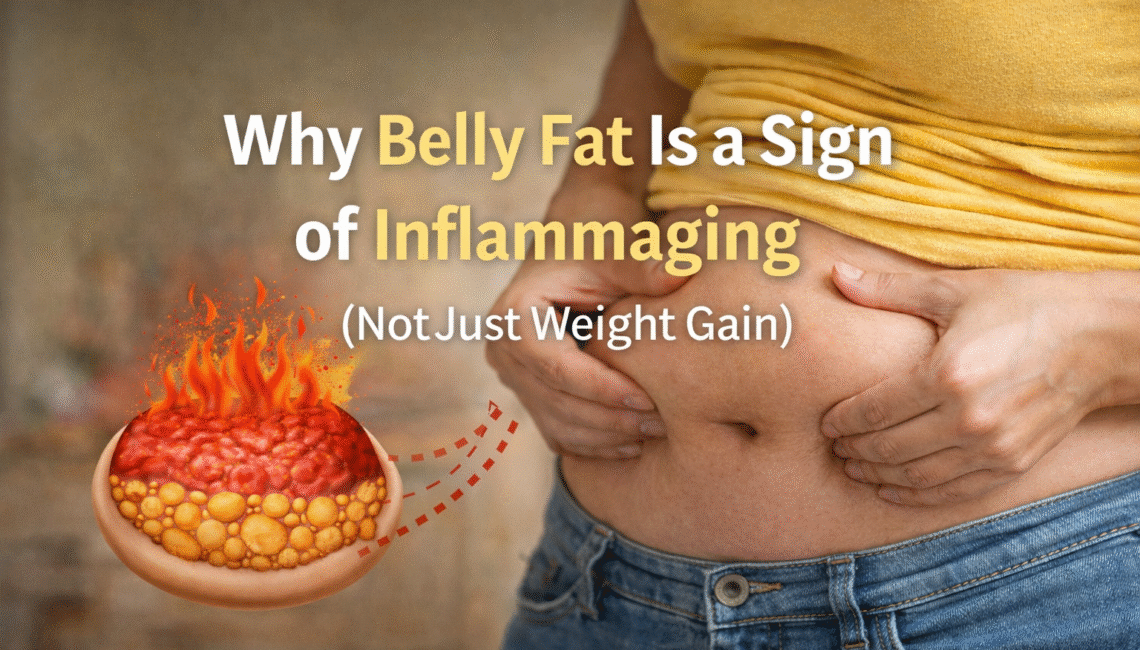
Why Belly Fat Is a Sign of Inflammaging (Not Just Weight Gain)
Many people believe that belly fat is only a result of eating too much or exercising too little. While calories and movement do matter, this explanation is incomplete. In reality, stubborn belly fat is often a deeper signal from the body — a sign of chronic inflammation, also known as inflammaging.
If you’ve noticed that fat around your waist is hard to lose even after dieting or walking regularly, your body may be dealing with internal inflammation rather than simple weight gain.
In this article, we’ll explore why belly fat is closely linked to inflammaging, how inflammation changes your metabolism, and what you can do naturally to reduce it and stay younger.
Recommended reading: Inflammaging: The Silent Process Making You Older
What Is Inflammaging?
Inflammaging is a term used to describe low-grade, long-term inflammation that slowly builds up in the body as we age. Unlike acute inflammation (which helps heal injuries or fight infections), chronic inflammation quietly damages tissues and organs over time.
This process affects:
- Hormones
- Metabolism
- Digestion
- Immune function
- Fat storage patterns
One of the most visible results of inflammaging is the accumulation of fat around the abdomen.
Why Belly Fat Is Different From Other Fat
Not all body fat behaves the same way. Fat stored around the hips or thighs is mostly subcutaneous fat, which is less harmful. Belly fat, however, is often visceral fat — fat that surrounds internal organs.
Visceral fat is metabolically active and releases inflammatory chemicals into the bloodstream. This creates a vicious cycle:
- Inflammation causes belly fat
- Belly fat produces more inflammation
- Inflammation slows metabolism
- Fat loss becomes harder
This is why belly fat is strongly linked with aging-related problems.
How Inflammation Causes Belly Fat
1. Inflammation Disrupts Insulin Sensitivity
Chronic inflammation interferes with how your body responds to insulin. When insulin doesn’t work properly, glucose stays in the blood instead of being used for energy. The excess is then stored as fat — especially around the abdomen.
This condition, called insulin resistance, is one of the main drivers of stubborn belly fat.
2. Stress Hormone Cortisol Promotes Belly Fat
Inflammation is closely linked with high stress levels. When stress becomes chronic, the body releases more cortisol.
Cortisol has a strong connection with abdominal fat storage. High cortisol:
- Encourages fat storage around the waist
- Breaks down muscle tissue
- Increases sugar cravings
This explains why people under long-term stress often gain belly fat even without eating much more.
3. Gut Inflammation Changes Fat Storage
Your gut health plays a major role in inflammation and fat distribution. When the gut lining becomes inflamed or imbalanced:
- Nutrient absorption is affected
- Hunger and fullness signals get confused
- Fat storage increases around the abdomen
Poor gut health also increases cravings for sugary and processed foods, further worsening inflammation.
4. Inflammation Slows Metabolism
When the body is inflamed, it enters a protective mode. Energy is redirected toward immune activity instead of fat burning.
This means:
- Calories burn more slowly
- Fat loss becomes harder
- You feel tired and sluggish
As metabolism slows, belly fat becomes one of the first places where excess energy is stored.
Signs Your Belly Fat Is Linked to Inflammaging
Belly fat related to inflammaging often comes with other symptoms, such as:
- Difficulty losing weight despite effort
- Frequent bloating or digestive discomfort
- Low energy levels
- Joint stiffness or body aches
- Puffy face or water retention
- Brain fog or poor concentration
If these sound familiar, reducing inflammation should be a priority — not just calorie cutting.
Why Dieting Alone Often Fails to Reduce Belly Fat
Many people try extreme calorie restriction to lose belly fat. While this may work temporarily, it often backfires.
Strict dieting can:
- Increase stress hormones
- Slow metabolism further
- Increase inflammation if nutrition is poor
- Cause muscle loss instead of fat loss
This is why belly fat often returns quickly once the diet ends. The root problem — inflammation — remains untreated.
How to Reduce Belly Fat by Calming Inflammation
The key to reducing belly fat linked to inflammaging is to create an internal environment where inflammation stays low and metabolism works efficiently.
1. Eat an Anti-Inflammatory Diet
Focus on whole, natural foods:
- Vegetables and leafy greens
- Fruits like berries, amla, oranges
- Healthy fats from nuts, seeds, olive oil
- Quality protein from dal, legumes, eggs, curd, fish
Avoid excessive sugar, refined flour, deep-fried foods, and packaged snacks.
2. Improve Sleep Quality
Poor sleep increases inflammation and cortisol levels, making belly fat harder to lose.
Try to:
- Sleep 7–8 hours nightly
- Avoid screens before bed
- Keep a consistent sleep schedule
3. Manage Stress Daily
Stress reduction is essential for reducing abdominal fat.
- Practice deep breathing or meditation
- Take short walks in nature
- Reduce overexposure to digital screens
Even 10 minutes a day can make a meaningful difference.
4. Move, But Don’t Overtrain
Gentle, consistent movement works better than extreme workouts for inflammation-related belly fat.
- Walking
- Light strength training
- Yoga and stretching
Overtraining without recovery can increase inflammation and stall progress.
5. Support Gut Health
Healthy digestion helps reduce systemic inflammation.
- Include curd, buttermilk, or fermented foods
- Eat fiber-rich foods
- Stay hydrated
How Long Does It Take to See Results?
When inflammation reduces, changes happen gradually but sustainably:
- Improved digestion within weeks
- Reduced bloating and puffiness
- Better energy and mood
- Slow but steady reduction in belly fat
The goal is not rapid weight loss, but long-term metabolic balance and healthy aging.
Final Thoughts
Belly fat is not just a cosmetic issue — it is often a sign that the body is dealing with chronic inflammation. Treating it with harsh dieting or excessive exercise rarely works in the long run.
By focusing on reducing inflammation through food, sleep, stress management, and gentle movement, you allow your body to restore balance naturally.
When inflammation goes down, metabolism improves — and belly fat follows.
Disclaimer: This article is for informational purposes only and does not replace medical advice. Please consult a healthcare professional for personalized guidance.