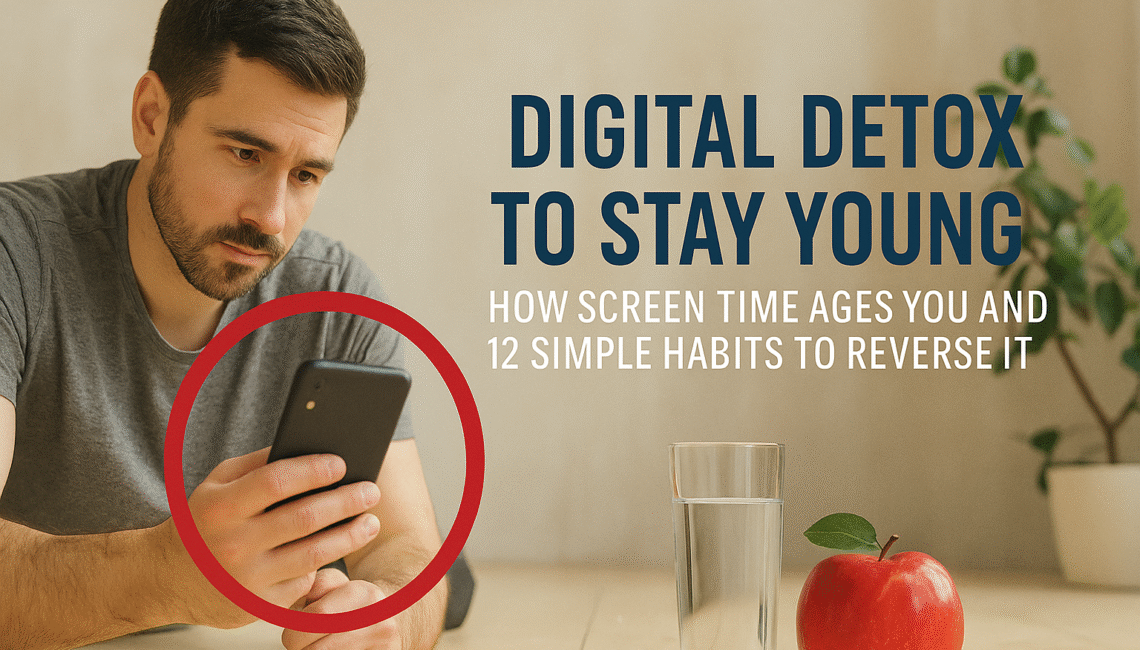
Digital Detox to Stay Young: How Screen Time Ages You and 12 Simple Habits to Reverse It
We usually think of wrinkles, grey hair, and joint pain when someone talks about aging. But in today’s world, there is a new silent factor that is speeding up the aging process for millions of people every single day:
Excess screen time.
From the moment we wake up till we fall asleep, our eyes and brain are flooded with the light, noise, and information coming from mobile screens, laptops, televisions, and tablets. While technology has made life easier, it has also created a lifestyle that quietly steals our sleep, strains our eyes, stresses our mind, and drains our energy.
If you want to look younger, feel fresher, and stay mentally sharp for long, it is not enough to only eat healthy or exercise. You must also learn how to manage your digital life. That is where the idea of a digital detox comes in.
How Too Much Screen Time Makes You Age Faster
It may sound surprising, but long hours on screens can affect almost every system in your body. Here are some ways in which your phone and laptop may be making you older before time:
1. Blue Light and Skin Aging
Most electronic screens emit blue light. Studies suggest that prolonged exposure to blue light may damage skin cells, increase pigmentation, and reduce collagen, leading to dullness, fine lines, and tired-looking skin. This kind of digital light is sometimes called “digital pollution” for your skin.
2. Eye Strain and Dark Circles
Staring at screens for long hours can cause dry eyes, burning, blurred vision, and headaches. Constant squinting and tired eyes contribute to the appearance of puffy eyes and dark circles, making you look older and more exhausted than you really are.
3. Poor Sleep = Faster Aging
Late-night scrolling on phones or watching shows in bed can disturb the natural sleep cycle. Blue light tricks your brain into believing it is still daytime, reducing the sleep hormone melatonin. Poor sleep affects:
- Hormones that control hunger and weight
- Cell repair and recovery
- Memory and concentration
- Skin regeneration
Over time, lack of deep sleep speeds up the visible and internal signs of aging.
4. Stress, Anxiety and “Brain Fatigue”
Endless notifications, news, social media comparisons, and work messages keep your brain in a state of alertness. This constant mental load increases stress hormones like cortisol. High cortisol for long periods is linked with:
- Weight gain around the belly
- Weaker immunity
- High blood pressure
- Faster aging of the brain and body
5. Sedentary Lifestyle
More screen time usually means less movement. When we spend hours scrolling or working at a desk, we sit more and walk less. This sedentary lifestyle is strongly associated with lifestyle diseases like diabetes, heart issues, stiffness, and muscle weakness — all of which make you feel and look older.
What Is a Digital Detox?
A digital detox doesn’t mean you must throw away your phone or quit your job. It simply means:
“Taking regular, intentional breaks from digital devices so your mind and body can rest, recover, and reset.”
The goal is to create a healthier relationship with technology, where you use screens consciously instead of being controlled by them.
Signs You May Need a Digital Detox
You might benefit from a digital detox if you notice any of these:
- You check your phone first thing in the morning and last thing at night.
- You feel restless, anxious, or “empty” when you are away from your phone.
- Your eyes feel tired, dry, or strained by evening.
- You struggle to fall asleep because your mind is too active.
- You often reach for your phone even when you don’t really need it.
- You spend more time on screens than on real conversations, hobbies, or outdoor activities.
If these sound familiar, your body and mind may already be asking for a break.
12 Simple Digital Detox Habits to Help You Stay Younger
You do not have to quit technology to stay young. Instead, follow these small but powerful habits to protect your eyes, skin, brain, and energy.
1. Start Your Day Without a Screen
Make it a rule that for the first 30–60 minutes after waking up, you will not touch your phone. Use this time to drink water, stretch, pray or meditate, walk on the balcony, or plan your day. Let your mind wake up peacefully instead of being attacked by news, messages, and social media.
2. Create “No-Phone Zones” at Home
Choose one or two spaces where phones are not allowed, such as the dining table or bedroom. This encourages real conversations, mindful eating, and better sleep.
3. Follow the 20–20–20 Rule for Your Eyes
Every 20 minutes of screen work, look at something 20 feet away for at least 20 seconds. This relaxes your eye muscles and reduces strain. You can also gently close your eyes and roll them slowly to keep them moist and relaxed.
4. Fix a “Digital Sunset” Time
Try to switch off non-essential screens at least one hour before bedtime. Use this time to read a book, listen to calm music, or talk with family. This simple habit can dramatically improve sleep quality and help your body repair itself overnight.
5. Turn Off Non-Essential Notifications
Do you really need constant alerts from every app? Turn off notifications for social media, shopping apps, and unnecessary groups. Check them only when you consciously choose to, instead of every few minutes.
6. Use Blue Light Filters
Most phones and laptops now have a built-in “Night Mode” or “Blue Light Filter.” Keep this turned on, especially in the evening. You can also use blue light–blocking glasses if you spend many hours on screens.
7. Take Mini Breaks From Social Media
Once a week, pick a half-day or full day as a social media holiday. Delete the app temporarily from your home screen if needed. Use that time for offline hobbies — cooking, gardening, sketching, playing with children, or simply resting.
8. Replace Random Scrolling With Intentional Usage
Before you pick up your phone, ask yourself: “What exactly am I going to do now?” If you don’t have a clear answer, put it down. Use your phone as a tool — for learning, connecting, or working — instead of a habit to fill every empty second.
9. Practice “Single-Tasking”
Multitasking on screens — checking mail while watching a video, chatting in multiple groups while working — tires the brain faster. Choose one main task at a time. Close unnecessary tabs and apps. You will feel calmer and more productive.
10. Protect Your Posture
Looking down at your phone for long hours can create “tech neck,” stiff shoulders, and back pain. Keep your screen at eye level, sit with a straight spine, and take stretching breaks. Good posture doesn’t only prevent pain — it also makes you look more confident and youthful.
11. Step Outside Every Day
A few minutes of natural daylight, fresh air, and greenery can do more for your body and mind than hours of online entertainment. Try a short morning or evening walk without your phone. Let your senses enjoy the real world.
12. Have at Least One Screen-Free Activity You Love
It could be playing a musical instrument, dancing, painting, yoga, sports, writing, or any creative hobby. These activities recharge your brain, reduce stress, and remind you that joy doesn’t always come from a screen.
Sample One-Day “Stay Young” Digital Detox Plan
Here’s a simple routine you can try:
- Morning: Wake up, drink water, stretch or walk for 10 minutes. No phone for the first 45 minutes.
- Work Hours: Use the 20–20–20 eye rule, keep your phone on silent, and check messages only every 2–3 hours.
- Evening: Go for a walk without headphones or do light exercise. Spend time with family or kids.
- Night: Switch off screens one hour before bed. Read a book, journal, or meditate. Sleep on time.
Even one such day each week can make you feel lighter, calmer, and more energetic. Over time, these habits become a natural part of your lifestyle.
How Digital Detox Helps You Stay Younger
When you reduce unnecessary screen time and adopt a digital detox routine, you may notice:
- Better and deeper sleep
- Brighter, more relaxed eyes
- Fewer headaches and less mental fatigue
- Improved mood and patience
- More time for real-life relationships and hobbies
- Lower stress levels and more stable energy
All of these are powerful “stay young” factors. Your body begins to repair properly, your mind slows down, and your face starts reflecting inner calm instead of constant tension.
FAQs – Digital Detox and Staying Young
1. Do I have to completely stop using my phone for a digital detox?
No. A digital detox is about healthy limits, not total removal. You can still use your phone for essential work, calls, or learning. The key is to reduce mindless scrolling and late-night use.
2. How long should a digital detox last?
You can start with small steps: a few screen-free hours daily, or one full screen-light day each week. Some people also try weekend digital detoxes once a month. Choose what is realistic for your lifestyle.
3. Will reducing screen time really help me look younger?
Yes. Better sleep, lower stress, improved posture, and less eye strain all contribute to a fresher, more youthful look. Your skin, eyes, and expression start to show the difference.
4. What if my job requires long hours on a computer?
In that case, focus on what you can control: use blue light filters, follow the 20–20–20 rule, sit with good posture, take short movement breaks, and avoid extra screen time for entertainment after work.
5. Is digital detox suitable for children and teenagers?
Absolutely. In fact, growing minds and bodies are even more sensitive to excessive screen exposure. You can gently set family rules such as no phones during meals and fixed “offline time” every evening.
Disclaimer: This article is for informational purposes only and should not replace professional medical or mental health advice. Please consult your doctor or a qualified specialist for personalised recommendations.