When I first read about the gut-inflammation connection, I was sceptical. It seemed like the kind of thing wellness influencers say to make everything about digestion. Then I started reading the actual research — and my scepticism flipped entirely. The gut is not a tangential part of the inflammation story. For many people, it is the origin point.
This post is about understanding how gut inflammation develops, why it matters beyond just digestive discomfort, and what the evidence says about addressing it.
The Gut as an Immune Organ
Most people think of the gut primarily as a digestive system. In terms of immune function, it is more accurate to think of it as a fortress wall. Approximately 70–80% of the body’s immune cells are located in and around the gut — this is not a coincidence. The gut lining is where the boundary between the inside of your body and the outside world is most permeable and most constantly challenged.
The gut lining is a single layer of epithelial cells — approximately one cell thick — held together by tight junction proteins. On one side: the interior of the intestine, containing digested food, bacteria, and toxins. On the other side: your bloodstream. The tight junctions are the gatekeepers, deciding what passes through and what doesn’t.
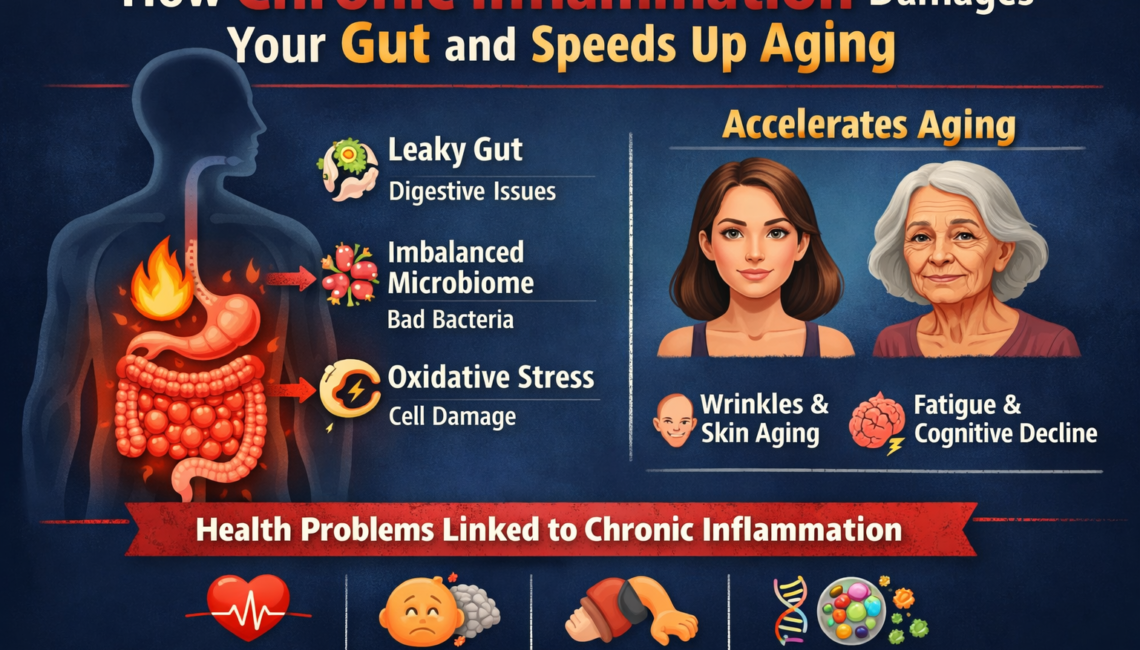
When these tight junctions become compromised — a condition researchers call intestinal permeability, or colloquially “leaky gut” — bacterial fragments, undigested food proteins, and lipopolysaccharides (LPS, a component of bacterial cell walls) leak into the bloodstream. The immune system treats these as invaders and mounts an inflammatory response. When this happens chronically, it creates a state of low-grade systemic inflammation that persists indefinitely.
What Damages the Gut Lining
Several factors that are extremely common in modern Indian urban life specifically damage gut barrier integrity:
- Chronic NSAID use. Ibuprofen and diclofenac — some of the most commonly taken over-the-counter medications in India — directly damage the gut lining with regular use. The irony is that they are taken for pain and inflammation, but chronic use worsens systemic inflammation through gut damage.
- Antibiotic overuse. India has one of the highest rates of antibiotic consumption in the world. Antibiotics kill pathogenic bacteria but also devastate the beneficial microbiome. A damaged microbiome weakens the gut barrier and increases inflammatory response.
- Refined carbohydrates and sugar. A diet high in refined flour (maida) and sugar feeds inflammatory bacterial species and reduces populations of beneficial bacteria that produce short-chain fatty acids — the primary fuel for gut lining cells.
- Chronic psychological stress. Stress activates the gut-brain axis and directly increases gut permeability through cortisol’s effects on tight junction proteins. The gut is exquisitely sensitive to the nervous system’s stress state.
- Emulsifiers in processed foods. Carboxymethylcellulose and polysorbate-80 — common in packaged biscuits, sauces, and processed snacks — have been shown in animal studies to disrupt gut microbiome composition and promote intestinal inflammation.
How Gut Inflammation Affects the Whole Body
This is where the story gets important beyond just digestive symptoms. Gut-derived inflammation does not stay in the gut.
LPS that enters the bloodstream through a leaky gut triggers systemic inflammatory responses. Elevated blood LPS levels are associated with insulin resistance, metabolic syndrome, atherosclerosis, non-alcoholic fatty liver disease, and neuroinflammation. A 2007 study in Diabetes journal (Cani et al.) demonstrated that LPS from gut bacteria directly causes insulin resistance and weight gain in mice — a finding that has since been replicated in human observational studies.
The gut-brain connection is particularly striking. The vagus nerve carries bidirectional communication between the gut and the brain. Gut inflammation produces cytokines that travel to the brain, where they contribute to neuroinflammation — associated with depression, anxiety, brain fog, and long-term dementia risk. The emerging field of psychobiotics — probiotics that affect mental health — is grounded in this gut-brain inflammatory axis.
Signs That Your Gut Inflammation May Be Driving Systemic Issues
- Bloating after most meals, especially wheat or dairy-containing meals
- Alternating constipation and loose stools
- Fatigue that does not improve with sleep
- Brain fog or difficulty concentrating after eating
- Skin conditions: acne, eczema, or psoriasis
- Frequent minor infections (indicating suppressed immunity)
- Joint aches without a specific injury
None of these symptoms alone confirm gut inflammation, but the pattern — particularly if several occur together — warrants investigation with a gastroenterologist.
Evidence-Based Approaches to Gut Healing
Dietary Fibre — The Most Important Variable
Beneficial gut bacteria ferment dietary fibre to produce short-chain fatty acids (SCFAs), particularly butyrate — the primary fuel for gut lining cells. Without adequate fibre, butyrate production falls, gut lining cells weaken, and barrier function deteriorates. The WHO recommends 25–30 grams of fibre daily; most urban Indians consume 10–15 grams.
The best Indian dietary sources of prebiotic fibre: dal (all varieties), cooked and cooled rice (retrograded starch acts as prebiotic), raw onions, garlic, raw bananas, and amla. These specifically feed Lactobacillus and Bifidobacterium species — the beneficial populations associated with gut lining integrity.
Fermented Foods
Traditional Indian fermented foods — dahi (curd), kanji, idli, dosa, and dhokla — naturally introduce beneficial bacteria and support microbiome diversity. A 2021 Stanford study published in Cell found that a diet high in fermented foods significantly increased microbiome diversity and reduced inflammatory markers over 10 weeks. Diversity is associated with resilience and health; low diversity is associated with inflammatory disease.
Reducing Gut Irritants
This means: reducing NSAID use where possible (paracetamol is less gut-damaging for minor pain), limiting ultra-processed foods and refined carbohydrates, and managing chronic stress through whatever sustainable practice works for you.
Frequently Asked Questions
Is leaky gut a real medical diagnosis?
Intestinal permeability is real and measurable (via lactulose/mannitol ratio urine tests). The term “leaky gut” is colloquial, and some medical professionals are cautious about it because it has been over-claimed by supplement marketers. The underlying science of gut barrier dysfunction and its systemic effects is legitimate and increasingly well-studied in mainstream gastroenterology research.
Should I take probiotic supplements?
Probiotic supplements vary enormously in quality, strain specificity, and evidence. The best-evidenced approach is food-based: regular dahi, fermented vegetables, and prebiotic-rich whole foods. Supplements are useful in specific situations (post-antibiotic recovery, specific diagnosed conditions) but are not a substitute for a fibre-rich, diverse whole food diet.
The Bottom Line
The gut is not just where digestion happens. It is where a large fraction of the immune system lives, where inflammation is often initiated, and where the difference between a life of chronic disease and one of relative health is often determined — meal by meal, over years. The foods that support your gut lining are, in most cases, the traditional foods of Indian cooking: dal, dahi, fermented grains, fibre-rich vegetables, and the spices your grandmother used. Modern food processing and prescription habits have disrupted what traditional diets maintained intuitively. The science is now telling us what our great-grandmothers knew by practice.
This article is educational only. Consult a qualified healthcare professional for any digestive health concerns.