My aunt in Jaipur is 68 and regularly gets mistaken for her daughter’s older sister. She doesn’t have a skincare routine beyond coconut oil. She’s never been to a gym. She has no idea what collagen supplements are. But she walks two kilometres to the market and back every morning, eats fresh food cooked the same day, sleeps by 10 PM, and laughs very easily.
She’s also the healthiest 68-year-old I know.
The anti-ageing industry would like you to believe youthfulness requires expensive interventions. The research says otherwise. The factors that most reliably predict biological youthfulness — energy levels, skin health, mobility, cognitive sharpness, immune resilience — are predominantly influenced by daily habits that cost almost nothing. Here are ten that are well-supported by evidence and accessible regardless of income or geography.
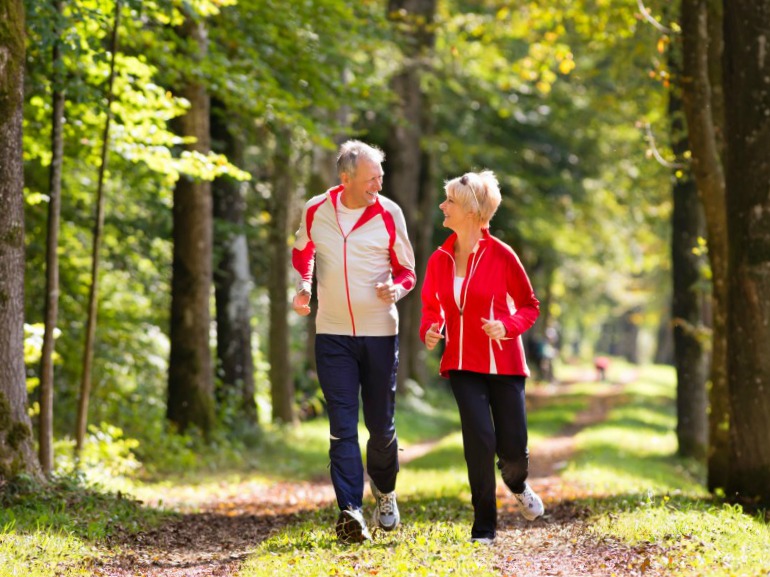
1. Walk Every Day
Daily walking is one of the most thoroughly studied anti-ageing interventions in existence, and the evidence is remarkably consistent. A 2022 study in JAMA Internal Medicine found that walking 7,000-10,000 steps per day was associated with significantly lower all-cause mortality — with the benefit plateauing around 10,000 steps rather than continuing indefinitely.
Walking reduces visceral fat (the most inflammatory type), improves cardiovascular fitness, stimulates BDNF production (which supports brain health and neuroplasticity), reduces cortisol levels, and improves sleep quality. It does this without injury risk, without equipment, and without disrupting your day if you work it into existing routines like commutes, errands, or phone calls.
My aunt’s daily market walk is not incidental to her health. It is, by the research, one of the most important things she does.
2. Eat Real Food, Mostly Plants, Not Too Much
Michael Pollan’s seven-word food philosophy (“Eat food, not too much, mostly plants”) has more scientific backing behind it than most entire nutrition textbooks. The pattern of diet associated with longevity across the world’s Blue Zones — Okinawa, Sardinia, Nicoya, Ikaria, and Loma Linda — is strikingly consistent: predominantly plant-based, minimally processed, mostly cooked at home, eaten in social settings, with moderate caloric intake.
Traditional Indian home cooking — dal, sabzi, roti, rice with seasonal vegetables and fermented foods like curd — already fits this pattern well. The divergence that’s happened over the last 30 years in urban India, toward highly processed packaged foods, seed-oil-heavy restaurant food, and significantly higher sugar and refined carbohydrate intake, is precisely the divergence associated with accelerated biological ageing.
The habit: cook from whole ingredients more often than you eat out or eat packaged food. Your grandmother’s cooking style, applied consistently, is anti-ageing nutrition.
3. Protect Your Sleep With the Same Seriousness as Your Work Calendar
During deep sleep, your body secretes growth hormone, repairs cellular damage, consolidates memory, and runs the glymphatic clearance system that removes metabolic waste products from the brain — including the amyloid-beta associated with Alzheimer’s disease. Sleep deprivation accelerates essentially every biological marker of ageing that has been studied.
The habit isn’t just sleeping longer; it’s sleeping consistently. Going to bed and waking at roughly the same time every day — including weekends — stabilises your circadian rhythm and improves sleep architecture. The metabolic disruption of sleeping at 11 PM on weekdays and 2 AM on weekends (“social jet lag”) is associated with higher inflammation and metabolic syndrome risk even when total sleep hours are adequate.
4. Maintain Strong Social Connections
The Harvard Study of Adult Development — which followed adults over 80 years in one of the longest-running studies in history — found that the quality of close relationships was the single strongest predictor of late-life health and happiness. Not wealth. Not IQ. Not professional success. Close relationships.
Social connection reduces stress hormones, lowers blood pressure, improves immune function, and provides the sense of purpose that keeps people engaged with life. In Indian culture, joint family systems and strong community bonds historically provided this automatically. As these structures fragment in urban life, the effort to maintain genuine relationships — not social media connections, but real, reciprocal, in-person relationships — becomes increasingly deliberate and necessary.
5. Sit Less, Stand and Move More Throughout the Day
“Sitting is the new smoking” became a cliché quickly, but the underlying finding is real. Prolonged sitting — independent of overall exercise levels — is associated with higher all-cause mortality, cardiovascular risk, and metabolic dysfunction. People who exercise for an hour but then sit for the remaining 15 hours show significantly different biomarkers than people who take regular movement breaks throughout the day.
The habit: interrupt sitting every 30-45 minutes. Stand up, walk to the kitchen for water, do a brief stretch sequence, take a call while walking. These micro-breaks disrupt the metabolic stagnation of prolonged sitting and cumulatively add up to significant movement volume. A standing desk helps if you can arrange one, but it’s not necessary — the movement breaks are the key element.
6. Manage Sun Exposure Intelligently
India is the world’s most vitamin D-deficient country by some measures — which is absurd given our sunlight levels but explained by cultural practices (staying indoors, covering skin, avoiding “dark” complexion) and the fact that urban pollution blocks UVB rays significantly.
Vitamin D is essential for immune function, bone density, muscle function, and reducing inflammatory ageing. Getting 15-20 minutes of direct midday sun on your arms and face (without sunscreen) 3-4 times weekly maintains vitamin D synthesis adequately for most Indians. This is different from prolonged unprotected sun exposure, which does accelerate skin ageing and raise cancer risk. Short, regular exposure followed by sun protection for longer outdoor time is the intelligent approach.
7. Practice One Daily Stress Recovery Technique
Chronic psychological stress elevates cortisol, shortens telomeres (directly accelerating cellular ageing), increases systemic inflammation, suppresses immune function, and disrupts sleep. The Framingham Heart Study found that high anxiety and chronic stress were associated with accelerated cardiovascular ageing comparable to moderate smoking.
One daily practice that activates the parasympathetic nervous system and counters this stress response: diaphragmatic breathing (slow, deep breaths from the belly for 5-10 minutes), meditation, yoga nidra, prayer, or simply sitting quietly in a garden. The technique matters less than the daily consistency. Ten minutes of genuine mental quieting per day produces measurable reductions in cortisol and inflammatory markers over weeks.
8. Stay Genuinely Curious
Cognitive decline in ageing is not inevitable; it is strongly influenced by how much you challenge your brain throughout life. Curiosity — the drive to explore, learn, and understand new things — is both a predictor of cognitive longevity and something that can be deliberately cultivated.
Read widely outside your professional field. Learn a new language even to basic proficiency. Travel to unfamiliar places. Take up a skill you have no prior expertise in — a musical instrument, a craft, a sport. The point isn’t excellence; it’s novel neural challenge. The brain responds to novelty by building new connections and strengthening existing ones — a process called neuroplasticity that continues into old age when stimulated.
9. Maintain Dental Health
This one surprises people: gum disease (periodontitis) is one of the most significant sources of chronic systemic inflammation in the body. The bacteria from periodontal infections enter the bloodstream and have been linked in multiple studies to cardiovascular disease, diabetes progression, Alzheimer’s risk, and accelerated cellular ageing.
Daily flossing and professional cleaning twice a year are not vanity — they’re inflammation management. A large study in BMJ Open found that tooth brushing frequency was inversely associated with incident cardiovascular disease and heart failure. The mouth-body connection is real and underappreciated in health conversations.
10. Laugh, and Look for What’s Good
Research consistently shows that positive emotional states — optimism, gratitude, laughter — are associated with better immune function, lower inflammation, higher resilience to stress, and longer lifespan. A 2019 study in PNAS found that optimism was associated with 11-15% longer lifespan and greater odds of achieving “exceptional longevity” (living to 85 and beyond).
This isn’t about toxic positivity or denying difficulty. It’s about the habitual orientation of attention — whether you tend to notice what’s working or what isn’t, what you have or what you lack, what’s possible or what’s foreclosed. Gratitude practices (even as simple as identifying three good things before sleep) measurably shift this orientation over time and have downstream effects on biology.
My aunt in Jaipur laughs easily. She’s present in conversations. She notices beauty in small things. Her biology, I suspect, reflects this orientation — not because of anything magical, but because the neurobiology of positive emotion is genuinely anti-ageing.
Frequently Asked Questions
Do anti-ageing supplements like NMN or resveratrol actually work?
The human clinical evidence for longevity supplements like NMN (nicotinamide mononucleotide) and resveratrol is currently weak — promising in animal models, not yet convincingly proven in human trials at typical supplement doses. They may have some benefit, particularly for people with metabolic dysfunction, but the effect sizes in humans are likely much smaller than the marketing suggests. The ten habits in this article have vastly more robust evidence behind them than any supplement currently available.
How long before these habits show visible results?
Some changes are rapid: energy levels often improve within 2-4 weeks of consistent sleep and exercise. Inflammatory markers (if you have them tested) can show improvement within 4-8 weeks. Visible skin changes from reduced inflammation and better nutrition typically take 3-6 months. Cognitive benefits from regular exercise and novel learning build over months to years. The habits compound; the longer you maintain them, the greater the cumulative benefit.
Can I get the benefits of cold exposure from Indian well water in winter?
Yes, Indian groundwater in winter (particularly in North India) is genuinely cold enough to constitute a cold exposure stimulus. A 2-3 minute cold wash with tap or well water at 15-18°C activates brown adipose tissue and produces a norepinephrine response similar to cold shower studies. The key is consistent practice — the adaptation benefits come from regular exposure, not occasional.
Consistency Is the Only Lever That Matters
None of these ten habits is difficult. None requires expensive equipment, a gym membership, or specialist knowledge. What they require is consistency — the accumulation of small right choices across days and years and decades.
My aunt in Jaipur isn’t young because she’s lucky or because she has exceptional genetics. She’s young because she’s been living in roughly this way for 45 years. The compounding of these habits across time is what you’re seeing in her face and her stride and her easy laughter. The same compounding is available to you — starting whenever you decide to start.