Most people treat sleep like a luxury.
Something to enjoy on weekends. Something to sacrifice for work, screens, or responsibilities. Something to “catch up on later.”
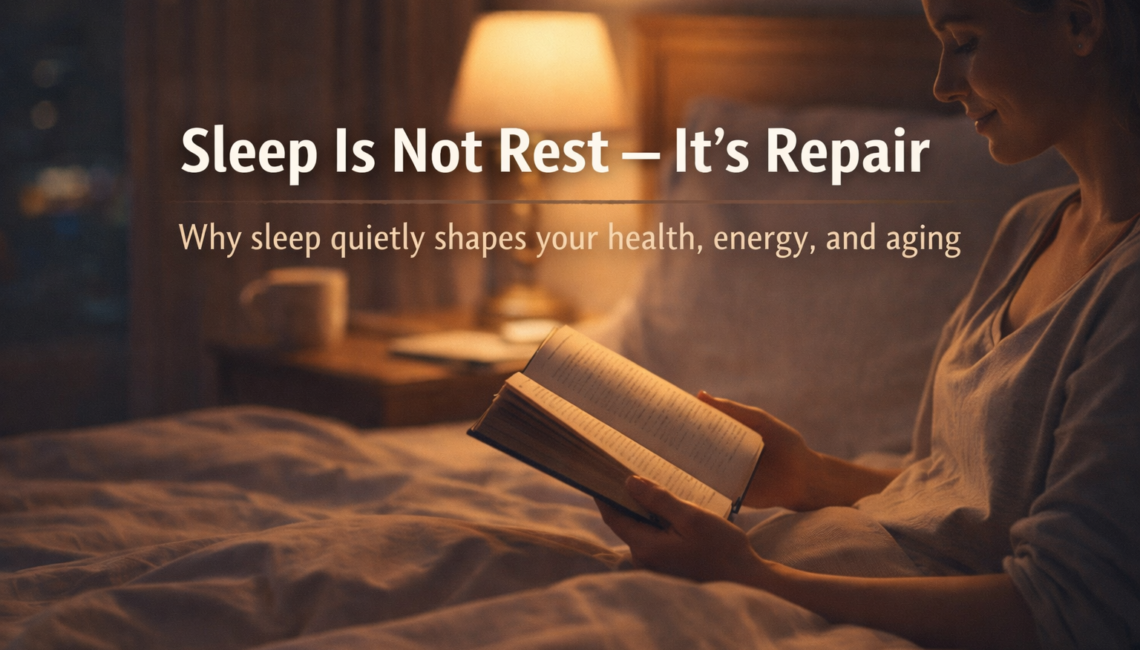
But what if sleep is not rest time — what if it is active repair time for your body and brain?
This is the powerful idea behind Why We Sleep, a book that quietly changed how scientists, doctors, and everyday people look at sleep.
Once you truly understand it, you’ll never see sleep the same way again.
The Biggest Sleep Myth We All Believe
The most common belief about sleep is this:
“As long as I get by, I’m fine.”
Many people sleep 5–6 hours regularly, feel tired but function, and use caffeine to compensate. Over time, this becomes normal.
But functioning is not the same as thriving.
Sleep loss doesn’t always hit you immediately. It works silently and slowly, affecting your health over time.
Sleep Is Not Passive — It’s When Your Body Does Its Deepest Work
When you sleep, your body is not switching off.
It is actively:
- Repairing damaged cells
- Resetting hormones
- Strengthening memory
- Regulating appetite
- Reducing inflammation
- Supporting immunity
No supplement, exercise, or diet can replace what happens during sleep.
Internal link suggestion:
Why Do I Feel Tired All the Time Even After Sleeping 8 Hours?
Why Sleeping Less Makes You Feel Older
Poor sleep accelerates aging — inside and out.
Chronic sleep deprivation is linked to:
- Faster skin aging
- Slower muscle recovery
- Joint stiffness
- Lower energy
- Hormonal imbalance
This explains why people who sleep well often look fresher, recover faster, and feel younger.
The Two Types of Sleep Your Body Needs
1. Deep Sleep (Physical Repair)
This stage supports muscle recovery, tissue healing, immunity, and growth hormone release.
2. REM Sleep (Mental & Emotional Repair)
This stage helps process emotions, reset stress, support learning, and improve mental clarity.
Sleeping enough hours doesn’t guarantee you get enough of both. Quality matters.
Why Poor Sleep Makes You Hungry and Weakens Control
After poor sleep, people often crave sugary or processed foods. This is not a lack of willpower.
Sleep affects hunger hormones:
- Ghrelin (hunger) increases
- Leptin (fullness) decreases
Your body pushes you to eat more when you don’t sleep well.
The Dangerous Illusion of “I’ll Catch Up on Sleep Later”
Sleep does not work like a bank account.
Irregular sleep:
- Disrupts your body clock
- Reduces sleep quality
- Increases long-term fatigue
Consistency matters more than occasional long sleep.
Why Screens Are Silent Sleep Killers
Late-night screen use keeps the brain alert and suppresses melatonin, the hormone that signals sleep.
Even if you fall asleep, the quality of sleep suffers.
Sleep and Mental Health Are Deeply Connected
Poor sleep increases anxiety, worsens mood, and reduces emotional resilience.
Good sleep improves emotional balance and stress tolerance.
Internal link suggestion:
Combatting Inflammation: Natural Strategies for a Younger You
Small Sleep Habits That Change Everything
- Fixed sleep and wake time
- Dim lights 1 hour before bed
- No heavy meals late at night
- Morning sunlight exposure
- Calm pre-sleep routine
Sleep loves regularity, not perfection.
Why Sleep Is the Foundation of a Healthy Lifestyle
Without good sleep:
- Exercise recovery slows
- Diet control weakens
- Stress tolerance drops
- Inflammation increases
Sleep is not optional self-care. It is biological necessity.
Final Thoughts
Sleep is not laziness. Sleep is not wasted time. Sleep is when your body repairs and prepares you for life.
Key takeaway: You don’t need more motivation. You need better sleep.