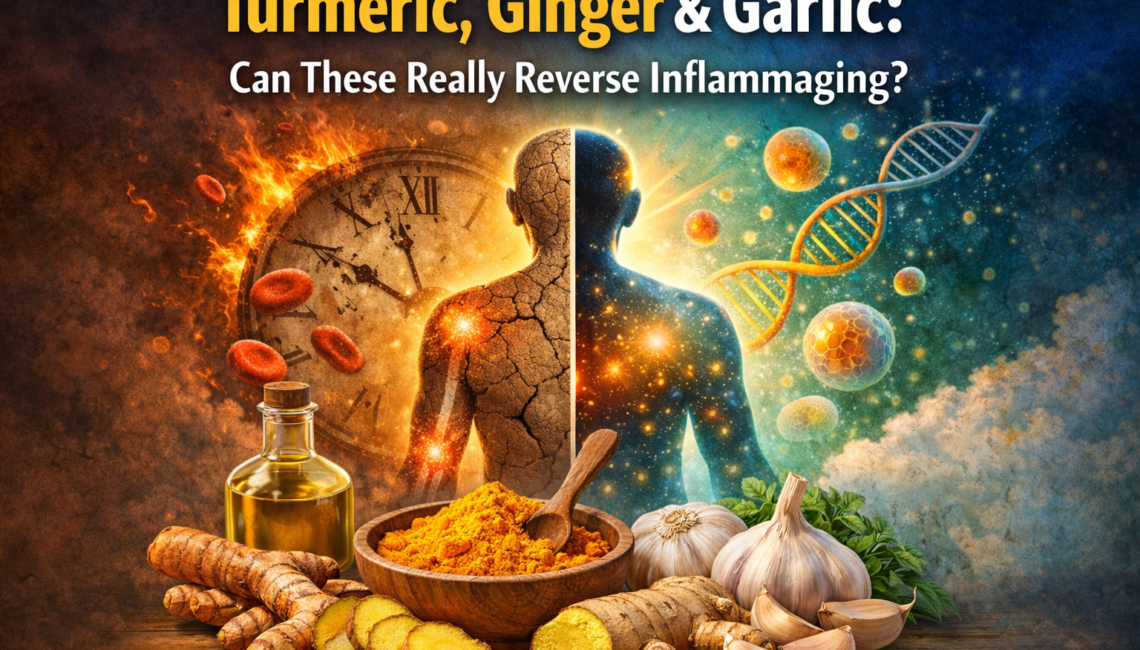
Turmeric, Ginger & Garlic: Can These Really Reverse Inflammaging?
For centuries, traditional kitchens have used turmeric, ginger, and garlic not just for flavor, but for healing. Long before modern medicine named it, these natural ingredients were quietly fighting inflammation in the body.
Today, science has given a name to the problem they help address: inflammaging — chronic, low-grade inflammation that accelerates aging, weakens immunity, slows metabolism, and increases the risk of lifestyle diseases.
But an important question remains: Can turmeric, ginger, and garlic really reverse inflammaging, or are they just health myths?
In this article, we explore how these three powerful natural ingredients work, what science says about them, and how you can use them correctly to support healthy aging.
Recommended reading: Inflammaging: The Silent Process Making You Older
What Is Inflammaging?
Inflammaging refers to persistent, low-level inflammation that builds up in the body over time. Unlike acute inflammation, which helps heal injuries, chronic inflammation damages healthy tissues and keeps the immune system constantly activated.
Inflammaging contributes to:
- Premature wrinkles and dull skin
- Joint pain and stiffness
- Slow metabolism and belly fat
- Brain fog and memory issues
- Weakened immunity
- Increased risk of diabetes, heart disease, and arthritis
Reducing this inflammation is one of the most effective ways to slow down aging from the inside.
Why Natural Anti-Inflammatory Foods Matter
While medicines can reduce inflammation, long-term health depends heavily on daily lifestyle and food choices. Natural foods that fight inflammation:
- Act gently and consistently
- Support multiple body systems at once
- Provide antioxidants and protective compounds
- Help the body heal without harsh side effects
Among the most powerful and accessible anti-inflammatory foods are turmeric, ginger, and garlic.
Turmeric: The Golden Anti-Inflammatory Spice
Turmeric has been used in Ayurveda and traditional medicine for thousands of years. Its active compound, curcumin, is responsible for most of its health benefits.
How Turmeric Reduces Inflammation
Curcumin works by blocking inflammatory pathways in the body. It reduces the production of inflammatory chemicals that damage cells and tissues.
Research suggests turmeric may:
- Lower inflammatory markers
- Protect joints and reduce stiffness
- Support brain and heart health
- Slow cellular aging
Turmeric and Aging
By reducing oxidative stress and inflammation, turmeric helps protect collagen, support immunity, and reduce age-related wear and tear.
Best Way to Use Turmeric
- Add turmeric to vegetables, dals, and curries
- Drink warm turmeric milk at night
- Always combine with black pepper for better absorption
Ginger: Nature’s Digestive and Anti-Aging Root
Ginger contains powerful compounds such as gingerol, which have strong anti-inflammatory and antioxidant effects.
How Ginger Helps Fight Inflammaging
Ginger works on multiple levels:
- Reduces inflammation in joints and muscles
- Improves digestion and gut health
- Helps regulate blood sugar
- Supports immune function
Since gut inflammation plays a major role in inflammaging, ginger’s digestive benefits are especially important.
Ginger and Brain Health
Studies suggest ginger may improve cognitive function by reducing inflammation in the brain, which can help with memory, focus, and mental clarity.
Best Way to Use Ginger
- Drink ginger tea
- Add fresh ginger to sabzis, soups, or dal
- Use grated ginger in warm water in the morning
Garlic: A Natural Anti-Inflammatory and Immune Booster
Garlic is more than just a flavor enhancer. It contains sulfur compounds such as allicin, which have strong anti-inflammatory and immune-supporting effects.
How Garlic Reduces Inflammation
Garlic helps:
- Lower inflammatory markers
- Reduce oxidative stress
- Improve blood circulation
- Protect blood vessels
Garlic and Aging
By supporting heart health and immunity, garlic helps reduce age-related decline and supports long-term vitality.
Best Way to Use Garlic
- Use fresh garlic in cooking
- Crush garlic and let it rest for a few minutes before cooking
- Avoid overcooking to preserve active compounds
Can These Three Ingredients Really Reverse Inflammaging?
Turmeric, ginger, and garlic are not magic cures that instantly erase aging. However, when used consistently as part of a healthy lifestyle, they can significantly reduce the drivers of inflammaging.
Together, they help:
- Lower chronic inflammation
- Protect cells from damage
- Improve digestion and gut health
- Support immunity and metabolism
- Slow age-related decline
Think of them as long-term protectors rather than quick fixes.
How to Combine Turmeric, Ginger & Garlic Daily
You don’t need supplements to benefit from these ingredients. Simple daily habits are enough:
- Cook most meals with turmeric, ginger, and garlic
- Drink ginger or turmeric tea
- Use garlic regularly in dals and vegetables
- Avoid heavily processed foods that cancel their benefits
Consistency matters more than quantity.
Who Should Be Careful?
While these ingredients are generally safe, some people should be cautious:
- Those with gallbladder issues
- People on blood-thinning medications
- Individuals with sensitive stomachs
If you have a medical condition or take regular medication, consult a doctor before making major dietary changes.
Final Thoughts
Inflammaging is one of the biggest hidden causes of early aging. While no single food can stop aging completely, turmeric, ginger, and garlic offer powerful, natural support in reducing chronic inflammation.
Used daily, combined with good sleep, stress management, movement, and whole foods, these traditional ingredients can help your body age more slowly and gracefully.
The secret is not in extreme solutions, but in small, consistent habits — often found right in your kitchen.
Disclaimer: This article is for informational purposes only and does not replace professional medical advice. Consult a healthcare professional for personalized guidance.