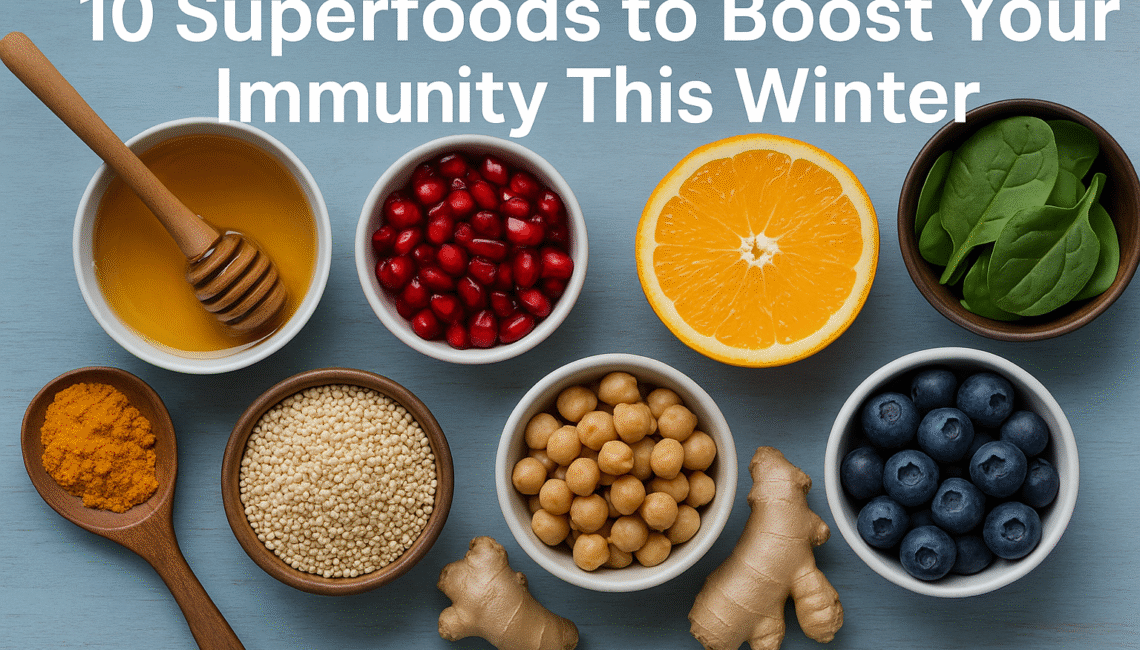
10 Superfoods to Boost Your Immunity This Winter
Winter is a beautiful season—cool breezes, warm blankets, and the inviting aroma of hot soups and herbal teas. But along with all the charm, winter also brings a higher risk of infections, cold, flu, and low immunity. The drop in temperature often weakens our body’s defense system, making it essential to nourish ourselves with foods that strengthen immunity naturally.
If you’ve been wondering how to keep your family healthy and energetic this winter, the answer lies in your kitchen. Nature has gifted us several superfoods that not only boost immunity but also help the body stay warm, fight infections, and recover faster.
In this article, you’ll discover 10 powerful winter superfoods that you should include in your daily diet to stay stronger, healthier, and more active this season.
1. Ginger – The Natural Immunity Booster
Ginger has been used for centuries in Indian and Asian traditional medicine. It contains compounds like gingerol, shogaol, and zingerone, which are known for their anti-inflammatory, antiviral, and immune-modulating properties.
Why Ginger Is a Winter Superfood
- Helps fight cold, cough, and throat infections
- Improves digestion and reduces bloating
- Supports metabolism and helps keep the body warm
- Reduces inflammation in joints and muscles
- Enhances nutrient absorption from other foods
How to Include Ginger in Your Diet
- Drink ginger tea with honey and lemon in the morning or evening
- Add grated ginger to soups, dals, and stir-fries
- Chew a small piece of fresh ginger with rock salt after meals
- Add ginger to your kadha or herbal decoctions
A warm cup of ginger tea on a winter morning is one of the simplest ways to jump-start your immunity.
2. Turmeric – The Golden Shield of Wellness
Turmeric has earned the title of the “Golden Spice” not just because of its color, but also for its exceptional healing power. Curcumin, the main active compound in turmeric, has strong anti-inflammatory, antiviral, and antioxidant effects.
Benefits of Turmeric for Immunity
- Protects against viral and bacterial infections
- Reduces internal inflammation
- Supports liver detoxification
- Promotes faster wound healing
- Enhances overall immune response
How to Consume Turmeric in Winter
- Have a glass of warm turmeric milk (haldi doodh) at bedtime
- Add turmeric to your daily curries, vegetables, and dals
- Mix ½ teaspoon of turmeric in warm water with a pinch of black pepper
Pro Tip: Black pepper increases the absorption of curcumin by many times, so combining them makes turmeric more effective.
3. Citrus Fruits – Vitamin C Powerhouses
Oranges, lemons, kinnow, grapefruits, and amla are some wonderful winter fruits rich in Vitamin C, one of the most important vitamins for immunity.
Why Vitamin C Is Important in Winter
- Boosts the production of white blood cells
- Helps the body fight infections more effectively
- Reduces inflammation and promotes healing
- Improves iron absorption from plant-based foods
- Keeps skin healthy and glowing
How to Add Citrus Fruits to Your Diet
- Drink a glass of fresh orange or sweet lime juice
- Have an amla shot in the morning
- Add lemon to soups, salads, and warm water
- Include citrus segments in mixed fruit bowls
If you catch colds frequently, adding more Vitamin C-rich fruits to your winter diet can make a big difference.
4. Garlic – Nature’s Strong Antibiotic
Garlic is often called a natural antibiotic. It contains a powerful compound called allicin, which has antiviral, antibacterial, and antifungal effects. That’s why garlic is considered a winter must-have in many traditional cuisines.
Garlic’s Benefits in Winter
- Protects against common cold and flu
- Strengthens respiratory health
- Helps lower bad cholesterol
- Improves blood circulation
- Supports heart health
How to Consume Garlic
- Eat 1–2 raw garlic cloves in the morning with warm water
- Add crushed garlic to soups, dals, and curries
- Use garlic in stir-fries and roasted vegetables
- Mix garlic with honey as a home remedy for cough
Garlic works best when it is chopped or crushed and allowed to rest for a few minutes before cooking—this helps activate its beneficial compounds.
5. Nuts and Seeds – The Winter Powerhouse
Almonds, walnuts, cashews, pistachios, flaxseeds, pumpkin seeds, and chia seeds are packed with healthy fats, protein, Vitamin E, zinc, and antioxidants. In winter, your body needs more healthy fats and energy, and nuts and seeds provide exactly that.
Why Nuts and Seeds Support Immunity
- Help reduce inflammation
- Support brain and heart health
- Keep the body warm and energetic
- Provide long-lasting energy without sugar crashes
- Promote healthy skin and hair
Ways to Add Nuts and Seeds
- Eat a handful of mixed nuts daily as a snack
- Sprinkle seeds over salads, oatmeal, or yogurt
- Use nut butters like almond or peanut butter on toast
- Add ground seeds to chapati dough or smoothies
Just remember not to overdo it—nuts and seeds are calorie-dense, so a small handful a day is enough for most people.
6. Honey – Nature’s Sweet Medicine
Honey is not just a natural sweetener; it is a powerful home remedy for many winter-related problems. It has antibacterial, antiviral, and antioxidant properties that support the body’s natural defense system.
Benefits of Honey in Winter
- Soothes sore throat and reduces cough
- Supports immunity and respiratory health
- Acts as a natural energy booster
- Helps digestion when taken with warm water
- Provides antioxidants that protect from cell damage
How to Use Honey
- Honey with warm water and lemon in the morning
- Honey added to herbal teas or green tea
- Honey with ginger or cinnamon as a cold remedy
- Drizzle a little honey on fruits or yogurt instead of sugar
Always use pure, good-quality honey for maximum benefit and avoid giving honey to children under 1 year of age.
7. Spinach and Other Green Leafy Vegetables
Spinach, methi (fenugreek), sarson (mustard greens), and bathua are some of the best winter greens. They are rich in iron, Vitamin A, Vitamin C, fiber, and antioxidants.
Why Winter Greens Are Essential
- Help fight infections and boost immunity
- Support red blood cell formation
- Improve digestion and prevent constipation
- Promote bone, eye, and skin health
- Help remove toxins from the body
How to Eat More Greens
- Prepare traditional dishes like sarson ka saag
- Drink spinach or mixed vegetable soups
- Make methi parathas or palak paneer
- Add chopped greens to dals and khichdi
Green leafy vegetables not only strengthen immunity but also help you feel lighter and more energetic during the colder months.
8. Yogurt and Probiotics – Support Gut Immunity
Did you know that a major part of your immune system is linked to your gut? Probiotic-rich foods such as yogurt, curd, buttermilk, and kefir help maintain a healthy balance of good bacteria in your digestive system.
Benefits of Probiotics
- Improve digestion and nutrient absorption
- Reduce digestive issues like constipation and bloating
- Support the immune system by maintaining gut health
- Help the body recover faster from infections
How to Add Yogurt and Probiotics
- Have a small bowl of curd with lunch
- Drink chaas or buttermilk during the day
- Try yogurt bowls with fruits and nuts
- Use yogurt as a base for healthy dips and raita
Even in winter, consuming a moderate amount of curd during the daytime can be very beneficial for immunity and digestion.
9. Jaggery – The Traditional Winter Sweetener
Jaggery (gur) is a traditional Indian superfood especially popular in winter. It is made from sugarcane juice or palm sap and is less processed than refined sugar.
Why Jaggery Is Good in Winter
- Helps keep the body warm
- Rich in iron and essential minerals
- Helps cleanse the respiratory tract
- Improves digestion after meals
- Provides steady energy without sudden spikes
Ways to Enjoy Jaggery
- Replace sugar with jaggery in tea or desserts (in moderation)
- Have til-gud (sesame and jaggery) laddoos during winter
- Drink warm water with a small piece of jaggery after meals
- Add jaggery to traditional sweets like chikki and kheer
Jaggery not only satisfies your sweet tooth but also supports your immune system and digestive health in colder months.
10. Amla – The Immunity King
Indian gooseberry, or amla, is one of the richest natural sources of Vitamin C. It is a true superfood for winter immunity and overall health.
Benefits of Amla
- Boosts immunity and helps prevent cold and cough
- Acts as a powerful antioxidant
- Supports liver health and detoxification
- Improves skin and hair health
- Enhances metabolism and energy levels
How to Include Amla
- Drink fresh amla juice in the morning
- Eat amla murabba or amla candy
- Use amla chutney as a side with meals
- Mix amla powder in warm water or honey
Daily consumption of amla during winter can significantly improve your natural defense system.
How to Build a Simple Winter Immunity Diet
You don’t need complicated diets to boost your immunity. Just combine these superfoods wisely throughout the day.
Sample Winter Routine
Morning:
- Warm water with lemon and honey
- Amla juice or one whole amla
- Ginger tea
- A handful of nuts and seeds
Afternoon:
- Roti or rice with seasonal saag
- Garlic-rich sabzi or dal
- A bowl of curd
Evening:
- Herbal tea with ginger, tulsi, or cinnamon
- Fruit like orange or sweet lime
Night:
- Light dinner with soup and vegetables
- Warm turmeric milk before bedtime
This kind of routine keeps your body nourished, warm, and more capable of fighting infections.
Additional Tips to Boost Immunity Faster
- Sleep at least 7–8 hours every night
- Stay hydrated with warm water and herbal teas
- Limit junk food, sugary snacks, and aerated drinks
- Exercise or walk for at least 30 minutes a day
- Practice deep breathing or meditation to reduce stress
- Get 10–15 minutes of sunlight daily for Vitamin D
Remember, immunity is not built in a day. Small consistent habits create a strong defense system over time.
FAQs – Superfoods and Winter Immunity
1. Which fruit is best for immunity in winter?
Amla and oranges are among the best winter fruits for immunity because they are rich in Vitamin C and antioxidants.
2. Can nuts and seeds really boost immunity?
Yes, nuts and seeds provide healthy fats, Vitamin E, zinc, and protein, all of which support immune function and help the body stay energetic and warm.
3. Is honey good for children in winter?
Honey is generally safe and beneficial for children above 1 year of age. It helps soothe the throat and reduces cough. However, avoid giving honey to infants under 12 months.
4. How often should I drink turmeric milk in winter?
One cup of warm turmeric milk at bedtime is usually enough for most adults. It helps improve sleep, reduces inflammation, and supports immunity.
5. Can these superfoods completely prevent illness?
No food can guarantee that you will never fall sick. However, regularly consuming these superfoods, along with a healthy lifestyle, can significantly reduce the frequency and severity of infections.
Disclaimer: This article is for informational purposes only and should not replace professional medical advice. Always consult your doctor or nutritionist for personalized recommendations.